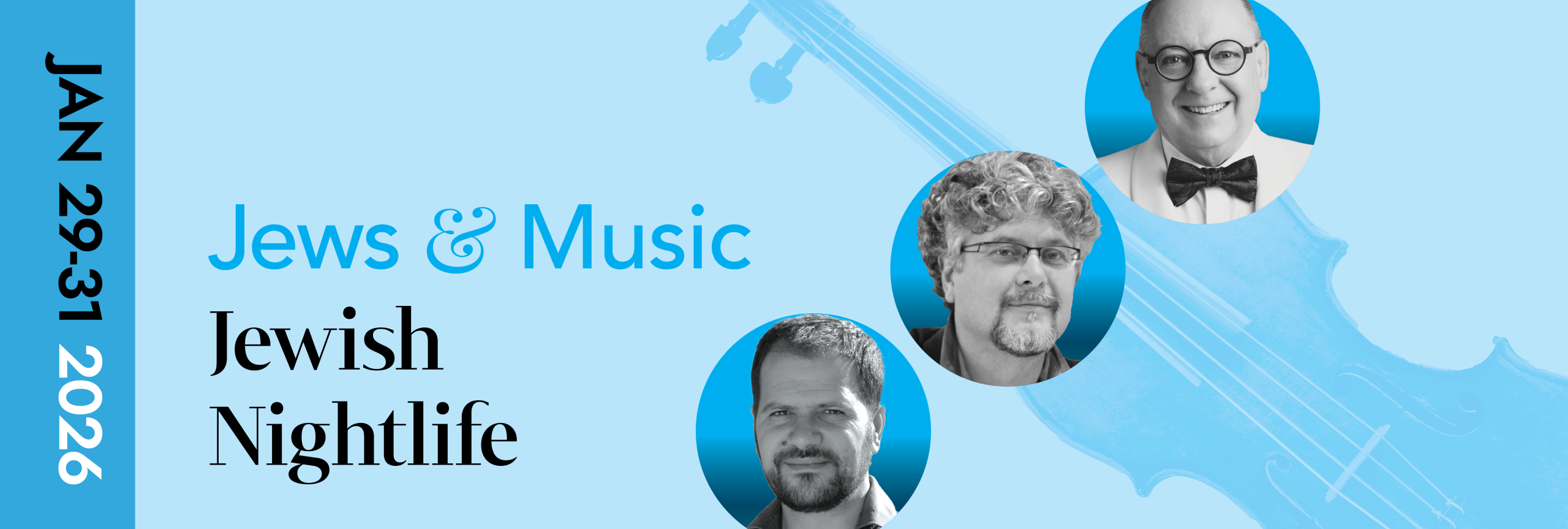
Jewish Nightlife

Hebrew Poetry, Kabbalah, and Coffee

Led by Music Director Emeritus Nicholas McGegan, this illuminating program explores how Jewish communities across time and place have used music, poetry, and ritual to transform the night into a space of reflection, resistance, and renewal. Journey from the candlelit Kabbalistic gatherings of 16th-century Italy to the vibrant performance traditions of Hebrew poetry in North Africa and the Middle East—and experience the modern revival of piyyut (Jewish liturgical poetry) in contemporary Israel.

Coffee included. Conversation guaranteed.

What’s Interesting About This Concert

    • Explore centuries of Jewish nocturnal traditions through music, mysticism, and poetry.
    • Hear traditional Syrian and Moroccan songs alongside evocative Baroque works by Rossi and Boccherini.
    • Insightful commentary from Francesco Spagnolo, Philharmonia’s Scholar-in-Residence, brings historical and cultural context to life.
    • Nicholas McGegan leads from the harpsichord, joined by Yair Harel (Jerusalem) on voice and percussion with Philharmonia Baroque Chamber Players and Chorale Quintet.

Performances

1/29/26
Oshman Family JCC, Palo Alto
7:30 PM
1/31/26
Congregation Emanu-El, San Francisco
7:30 PM

Program

Nicholas McGegan conductor and harpsichord
Francesco Spagnolo Jews & Music Scholar-in-Residence
Yair Harel voice/percussion
Philharmonia Baroque Chamber Players & Chorale Quartet

Preview the Music

About the Jews & Music Series

Since its inception in 2015, Philharmonia Baroque Orchestra & Chorale’s Jews & Music initiative has taken audiences on journeys of discovery that deepen connections for Jews and non-Jews to historical, political and social contexts that inform the creation of music.

Jews & Music (JAM) is a continuous exploration that probes the rich legacies of Jewish composers and performers; non-Jews who worked with Jews or drew inspiration from them; the socio-political milieu they inhabited; and Jewish themes that have emerged across music and visual art over time. Programs illuminate the achievements of Jewish composers such as Felix Mendelssohn, as well as those who were obscured by time and persecution, such as Salamone Rossi and Ignaz Moscheles. Canonical oratorios by George Frideric Handel gain historical heft and depth when revisited with insightful analysis of his scriptural sources and the social forces that supported his music. Rare gems of the repertoire that draw inspiration from Jewish culture, such as Maurice Ravel, a non-Jew who wrote one of the most famous adaptations of the Kaddish, shines a light on the inspiration of Jewish history, heritage and music.