This November, Philharmonia Baroque Orchestra & Chorale opens the 2026/27 season with Handel’s The Power of Music, featuring Alexander’s Feast. Here are eight reasons this remarkable work and this remarkable performance deserve your attention.
1. It’s A Premiere 284 Years in the Making
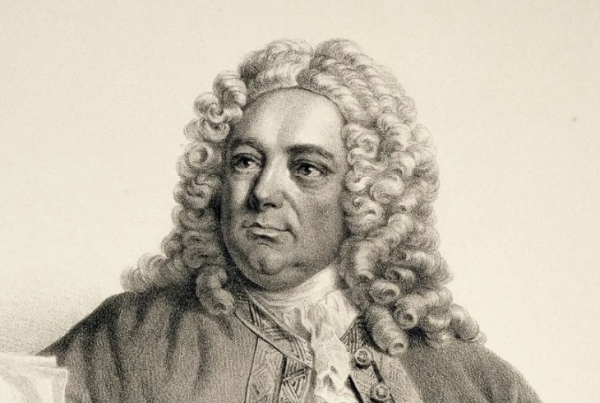
Handel originally composed Alexander’s Feast (alternatively titled The Power of Music) in London in 1736 and he substantially reworked the score during his extended stay in Ireland in 1742. That version was performed just twice during Handel’s lifetime before disappearing from concert stages for nearly three centuries.
In 2025, Peter Whelan brought the Dublin version back with performances in Dublin and at the BBC Proms in London, and this November, Bay Area audiences will be the first in the United States to hear it.
2. Can Music Change the Course Of History?
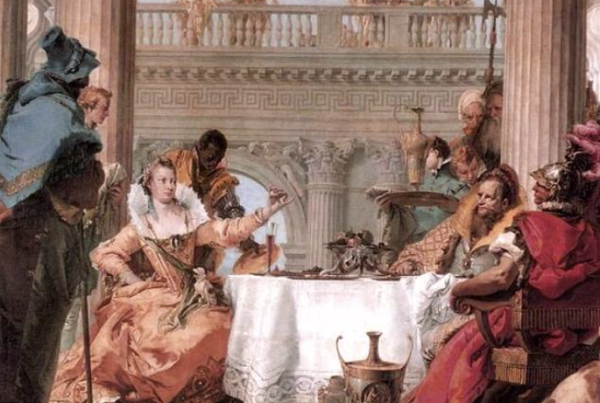
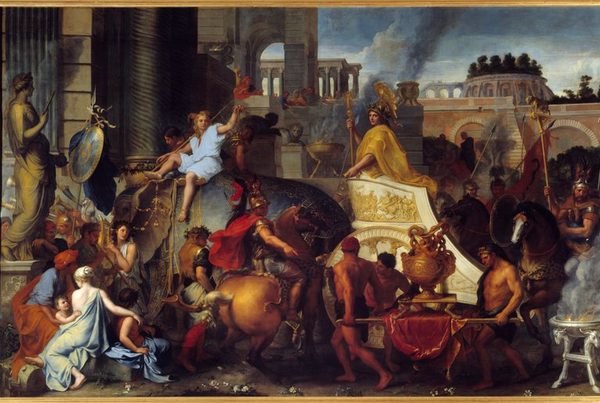
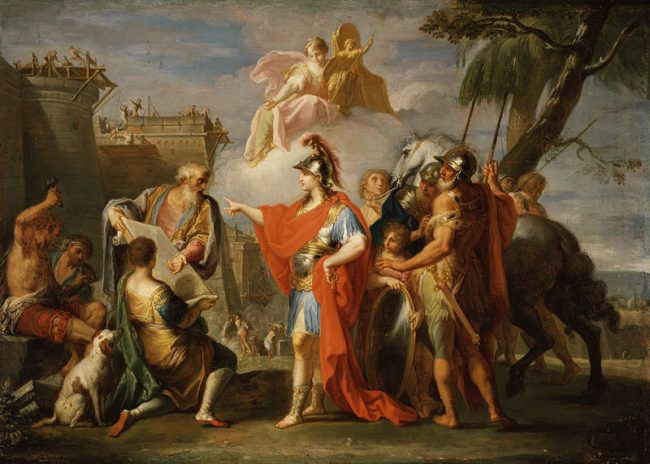
That’s the question at the heart of Alexander’s Feast. Set at a banquet celebrating Alexander the Great’s victory over Persia, the work follows the musician Timotheus as he leads the conqueror through a series of emotions, from pride, love, and melancholy, to drunken exuberance and fury.
But Timotheus is doing more than entertaining his audience. Through his songs, he manipulates Alexander’s emotions, ultimately driving him to actions that impact the course of history.
3. Handel’s Remarkable Stay in Ireland
By 1741, Handel’s opera company had collapsed, his finances were under pressure, and his popularity was waning. An invitation to Dublin offered a welcome change of scenery.
He spent almost a year in Ireland, giving concerts, composing, and revising earlier works. Among them was Alexander’s Feast, which he expanded from two parts to three and adapted for the singers available to him, even reassigning music originally written for soprano and bass to the tenor.
The revised work was first performed in Dublin just weeks before the premiere of Messiah.
4. It Was One of Handel’s Greatest Successes
Today, Messiah overshadows almost everything else Handel wrote, however Alexander’s Feast was a major success in his lifetime, with the original London version receiving more than 20 performances.
Its dramatic solos and powerful choruses helped establish Handel’s reputation as a composer of large-scale English vocal works, a direction that would define much of his later career.
5. The Story Comes from a Celebrated English Poem
Alexander’s Feast is based on a poem written in 1697 by John Dryden in honor of St. Cecilia, the patron saint of music.
Dryden drew on the legendary banquet of Alexander the Great to explore the extraordinary influence a musician could wield over even the most powerful ruler. Handel’s librettist, Newburgh Hamilton, adapted the poem into a sequence of arias, recitatives, and choruses.
The result is not an opera, but a dramatic celebration of music itself, with the orchestra, soloists, and chorus bringing Dryden’s words to life.
6. Three Outstanding Handel Specialists Take Center Stage
Alexander’s Feast calls for singers who can navigate demanding vocal passages while conveying the drama and shifting emotions of the story.
Philharmonia welcomes three internationally acclaimed Baroque specialists: soprano Sherezade Panthaki, mezzo-soprano Rachael Wilson, and tenor James Way.
They are joined by Philharmonia Chorale, directed by Valérie Sainte-Agathe, whose singers play a central role in some of the work’s most dramatic moments.
7. You’ll Hear the Music Much as the First Audiences Did
What difference does it make to hear Handel on period instruments?
Philharmonia’s musicians perform on instruments of the kind used in the 18th century, employing techniques and musical styles informed by historical practice. From gut strings to the distinctive sound of Baroque winds and brass, these instruments bring you closer to the music as Handel’s audiences would have experienced it.
8. Peter Whelan: Music Director, Musician, Scholar
Music Director Peter Whelan has not only led the revival of the Dublin score in performance, he was also part of its rediscovery. Peter collaborated with leading Handel scholar Donald Burrows to reconstruct the score of the 1742 Dublin version, piecing together a missing vocal part together from surviving historical sources and adding a third part that’s unique to the Dublin version.
It’s a fitting opening to Peter’s inaugural season with Philharmonia Baroque Orchestra & Chorale: a work that combines scholarship, discovery, and Handel at the height of his powers.
Preview the Music
Music Director Peter Whelan leads the first U.S. performances of Handel’s 1742 Dublin version of Alexander’s Feast in Handel’s The Power of Music, performed on period instruments and in the style of the time. The concerts feature soprano Sherezade Panthaki, mezzo-soprano Rachael Wilson, tenor James Way, Philharmonia Baroque Orchestra, and Philharmonia Chorale under the direction of Valérie Sainte-Agathe.
Program
George Frideric HANDEL — Alexander’s Feast, or The Power of Music (1742 Dublin Version) (U.S. PREMIERE)
Peter Whelan, conductor
Sherezade Panthaki, soprano
Rachael Wilson, mezzo-soprano
James Way, tenor
Philharmonia Chorale, directed by Valérie Sainte-Agathe
Performances
Wednesday, November 11, 2026 • 7:30 PM
Bing Concert Hall
327 Lasuen St., Stanford, CA 94305
This program is co-presented as part of Stanford Live’s 2026/27 season.
Friday, November 13, 2026 • 7:30 PM
Herbst Theatre
401 Van Ness Ave, San Francisco, CA 94102
Saturday, November 14, 2026 • 2:30 PM
First Congregational Church of Berkeley
2345 Channing Way, Berkeley, CA 94704
Tickets
Tickets start at $40, and three-concert subscriptions start at $96. For tickets or information, call (415) 295-1900 (Mon-Fri, 10 AM-4 PM) or visit philharmonia.org/power.