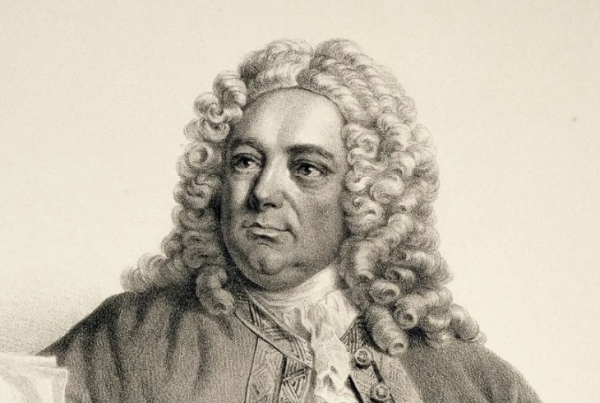
George Frideric Handel (1685–1759)
“Let the Bright Seraphim” from Samson (1741)
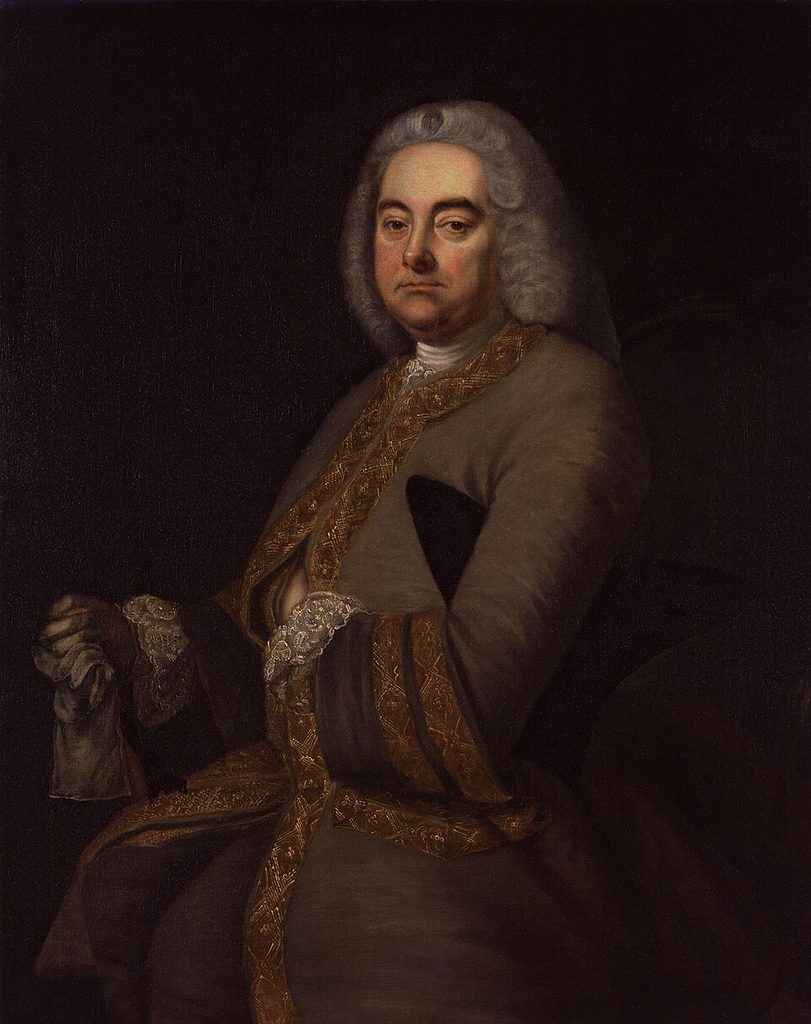
Handel’s muse was soaring ecstatically in the early 1740s: Messiah, Samson, Semele, Joseph and his Brethren, Hercules, and Belshazzar. Having made the transition from opera to oratorio with roaring success, he gifted the world with a seemingly inexhaustible bounty of glorious creations. Samson is one of his more operatic oratorios—it has even been staged from time to time—and it contains some of his most celebrated arias.
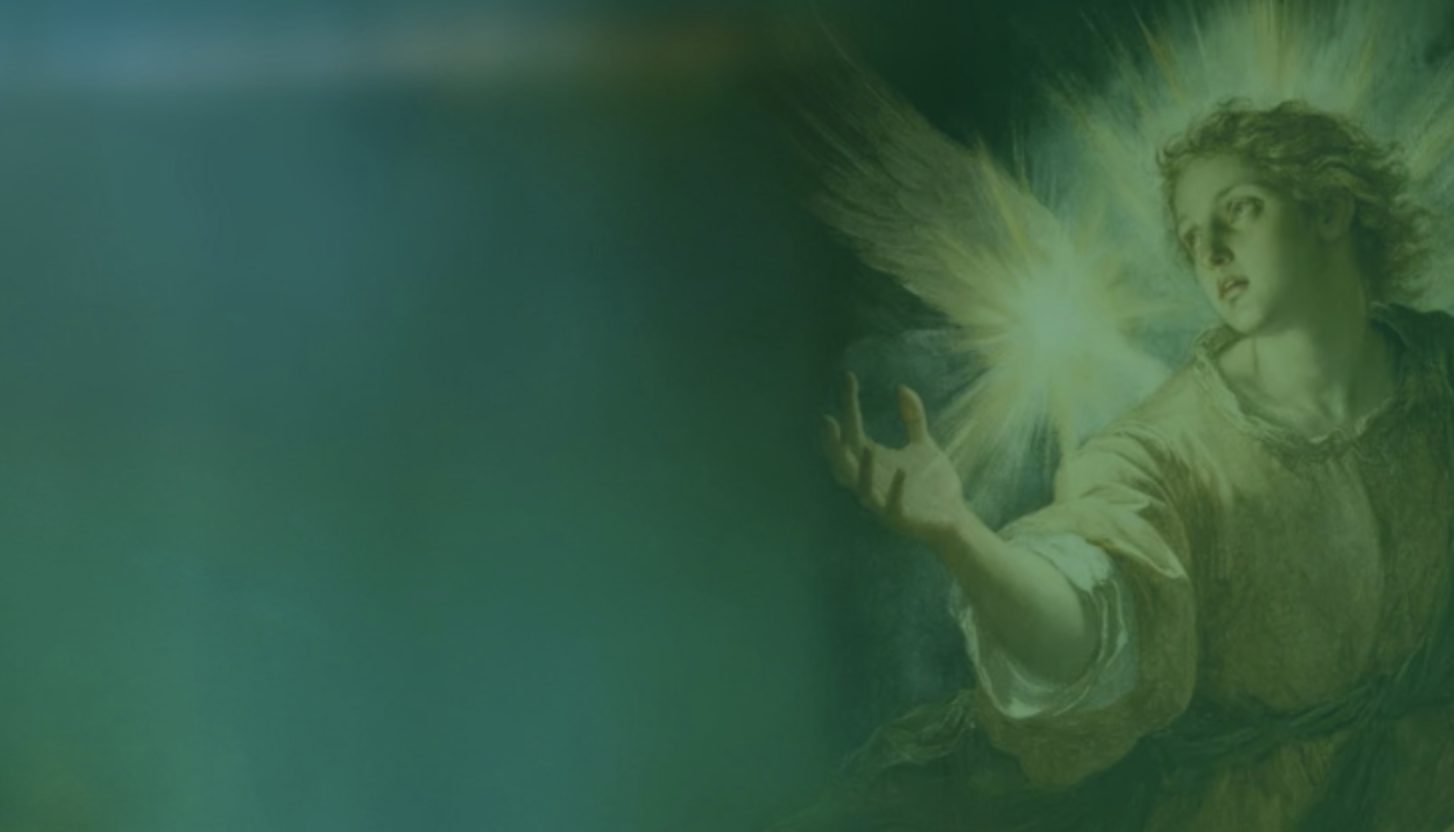
The glittering showpiece “Let the Bright Seraphim” blew the socks off a dazzled audience of first-nighters when Christina Maria Avolio introduced it in Samson’s premiere on February 18, 1743 at Covent Garden. Since then it has been irresistible catnip for generations of sopranos and trumpeters alike.
Marianna Martines (1744–1812)
O virgo, cui salutem debet orbis (West Coast Premiere) (ca. 1764)
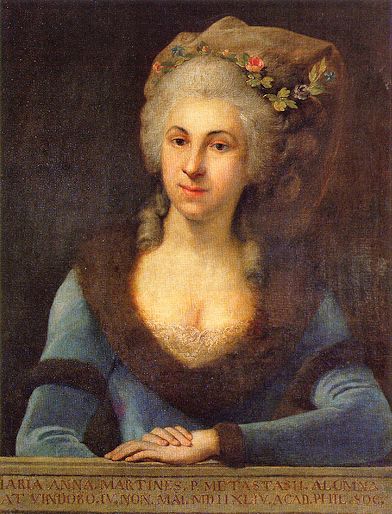
The name Marianna Martines might not be familiar to modern music lovers, but the names of those in her circle likely are: composers Joseph Haydn, Johann Adolph Hasse, and Giuseppe Bonno, Vienna court poet Metastasio, English critic and musical gadfly Charles Burney, Empress Maria Theresa and her son Emperor Joseph II. She was considered a glowing prodigy and was the first woman ever to be admitted to the Accademia Filarmonica in Bologna—a membership she shared with Wolfgang Amadeus Mozart, among others. She was a masterful keyboard player and an enchanting singer. She was the real McCoy, in other words—an A-list artist with substantial published compositions and a solid coterie of highly discriminating admirers.
Her reputation was almost entirely local to Vienna, however. And posterity has imposed stringent filters on those many excellent musicians who were active in Enlightenment Austria but whose names weren’t Haydn or Mozart. Martines is hardly the only one whose fame has faded, but fate’s workings seem particularly cruel given the high quality of those compositions that have survived.
The Latin solo motet O virgo, cui salutem debet orbis (Hail the Virgin, to whom the world owes salvation) is just now entering the repertory after its long sleep since the mid-1760s. It’s a particularly Viennese-flavored composition, set for soprano solo, oboe, two violins, viola, and continuo, in the standard layout of two recitatives flanking one aria, the whole concluding with a brillante Alleluia.
Georg Philipp Telemann (1681–1767)
Burlesque de Quixotte, TWV 55:G10 (ca. 1720)
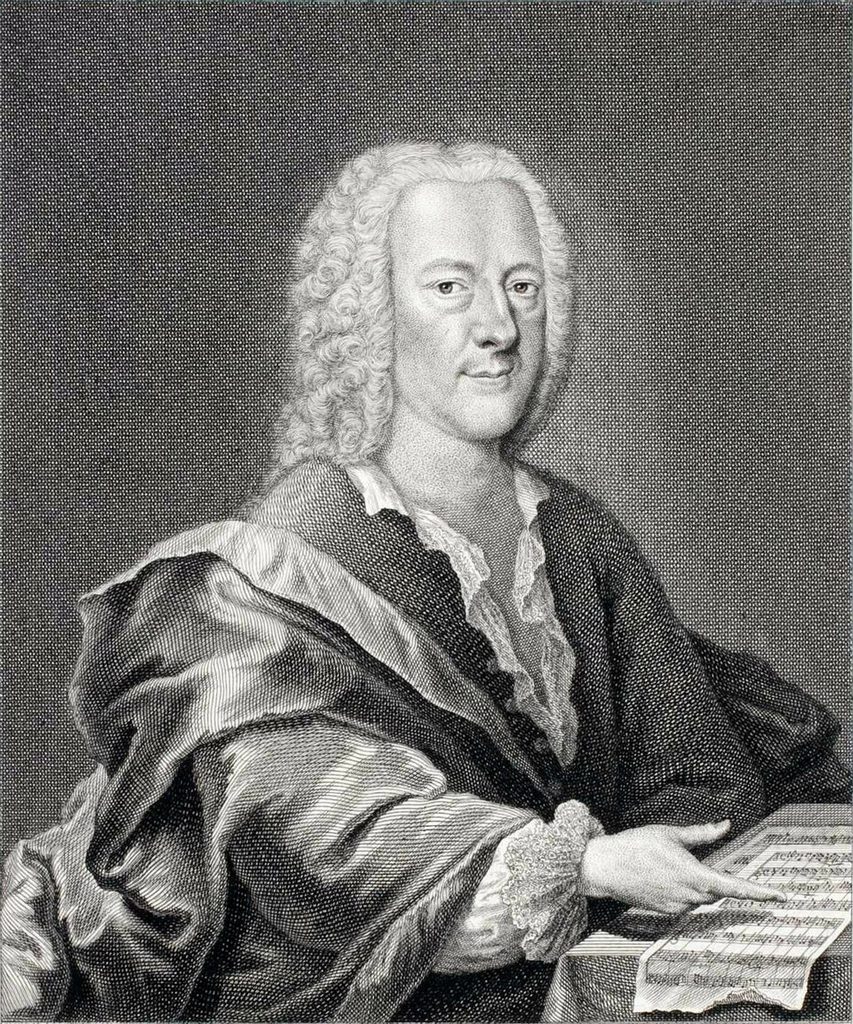
Some Baroque composers were fuss-budget perfectionists à la Arcangelo Corelli who produced the occasional jewel-box of a piece for a discriminating and wealthy patron. Georg Philipp Telemann was the polar opposite. His responsibility in Frankfurt (later in Hamburg) was to produce music in quantity, and he did just that while maintaining enviable standards of craftsmanship and inventiveness.
He wrote acres upon acres of music, and sometimes individual works can be nearly impossible to date with any security. The best we can say about the orchestral suite Burlesque de Quixotte is that it’s from around 1720 and that Telemann wrote it in either Frankfurt or Hamburg. That puts it almost 180 years before a better-known musical exploration of the beloved Cervantes novel, Richard Strauss’s Don Quixote.
Telemann, master of brilliant orchestral effects, could draw a lot of color out of a string orchestra. For Quixotte he takes on such immortal scenes as the befuddled knight-errant wannabe attacking windmills, thinking that they are giants—some dandy turbine sounds in there—or Quixote’s delusion that poor Sancho Panza is being tormented by evil wizards, when actually it’s just a bunch of hooligans at a local inn. The Don’s glorious war-horse Rosinante—in reality an old farm plug—gallops (plods) along while Sancho’s mule trudges behind. The suite ends with Quixote’s dreams of knightly glory via an effervescent galop over a drone-like bass.
Carl Philipp Emanuel Bach (1714–1788)
Concerto for violoncello in A major, Wq 172 (ca. 1753)
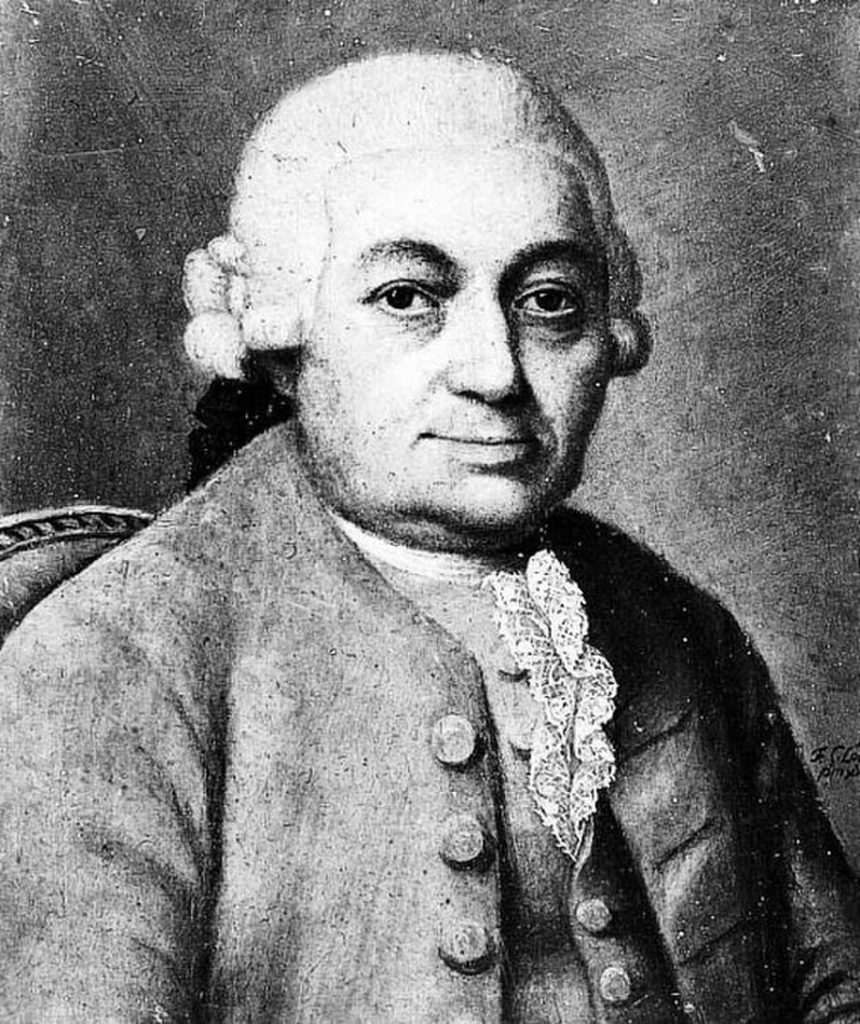
When Wolfgang Mozart gushed that Bach was “the father, and we are the children,” music lovers will inevitably assume that Mozart was referring to you-know-who. But he wasn’t. He meant you-know-who’s second son Carl Philipp Emanuel, a composer-pianist of lofty reputation, legendary skill, and spellbinding originality.
That said, even Emanuel had to put up with haughty, overbearing aristocratic employers, chief among those being Frederick the Great of Prussia. Bach entered his service in 1738 and cringed his way through thirty long years until he escaped to Hamburg, where he succeeded Telemann as the city’s Director Musices.
Even though Frederick tended to bully and demean his court musicians, they were a high-powered bunch who produced a steady stream of first-rate compositions, Emanuel included. His Concerto for violoncello in A major belongs to his middle years in Frederick’s court, written in 1753 or thereabouts. It’s a prime example of what is sometimes called the pre-classical style, meaning that it demonstrates both Baroque and Viennese Classical qualities, typical of the mid-18th century when older idioms were giving way to newer.
The concerto’s first movement, Allegro di molto, clearly savors the Baroque style; it could almost pass for something by Vivaldi, albeit a Vivaldi who lived about a decade longer. The ritornello form is very much in evidence with its lob-and-volley layout between soloist and orchestra, and the overall gestalt of the music evinces that bright Baroque rhythmic sheen.
The second-place Largo con sordini, mesto is an altogether different affair. It cultivates the ‘style of sensibility’ (Empfindsamer Stil) that favored highly emotive expression and abundant chromaticism. Emanuel was to become the leading proponent of Empfindsamkeit, and here we have this characteristic idiom in its early formation. The Allegro assai finale returns to the Vivaldian bailiwick, but with a twist: the cheery clockwork rhythms of the Italian Baroque are often interrupted by sad little interludes that provide a preview of the rich weave of moods that was to become the norm in the Viennese Classical style to come.
Johann Sebastian Bach (1685–1750)
Jauchzet Gott in allen Landen, BWV 51 (1730)
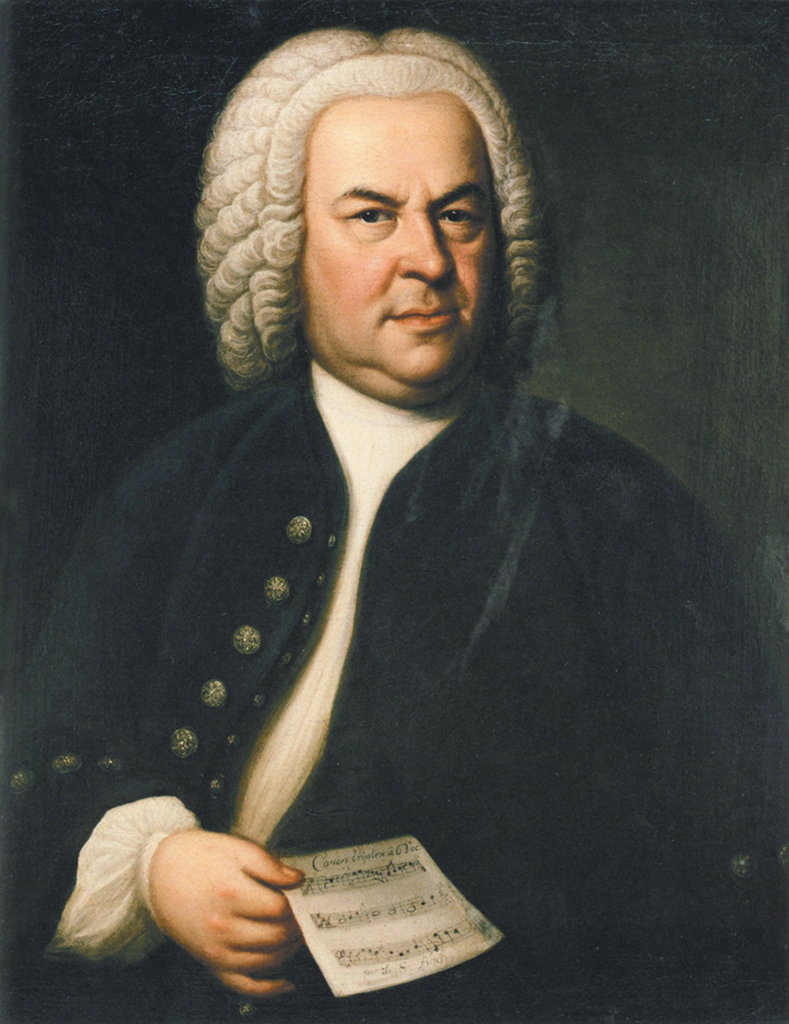
The Music, they called it. Nice clear name. Lacks bling. While in principle it referred to all of the music performed during a Lutheran church service, in practice it was generally restricted to a remarkable musical interlude that has been described as a ‘second sermon.’ Typically based on a chorale melody, it is an assemblage of arias, recitatives, and choral movements, with a text that reflects the liturgical topic assigned to specific dates of the Lutheran calendar. Thus for Easter and Ascension, the libretti tend to focus on rebirth and resurrection; for Christmas, joy and light, and so forth.
Fortunately, we denizens of posterity have come up with something better to call it than The Music. (Not exactly a challenge, that.) Our name comes from an Italian Baroque vocal genre that resembles a brief opera scene: cantata, i.e., something sung. That’s in accordance with terms such as sonata (something sounded) for instrumental chamber music or toccata (something touched) for keyboard pieces. Bach knew the term and even used it occasionally—for example, as the title to BWV 56, which he refers to as a cantata à voce sola. But The Music was his name of choice as a rule, as it was for just about everybody throughout that vast Lutheran network of churches and dioceses, cantors and kapellmeisters.
Prior to his 1723 appointment as Leipzig’s Director Musices Bach had written relatively few church cantatas, at least compared to such productivity champs as Georg Philipp Telemann or Christoph Graupner—both composers that the Leipzig city council tried and failed to hire before they finally settled on Bach. By the time 1750 rolled around, Bach had amassed something in the neighborhood of 300 cantatas, although about 100 are irretrievably lost. Within that vast treasure trove we find a fair sprinkling of ‘solo’ cantatas, meaning that they are written for a single singer and eschew choral movements, rather like their Italian counterparts. Among those we find four for solo soprano, and of those four, Jauchzet Gott in allen Landen BWV 51 distinguishes itself as a virtuoso showpiece for both voice and trumpet. For those who treasure Bachian jubilation, all aglow with sparkling rhythms and punchy, scintillating brass, this is the cantata for you.
If it weren’t for its religious text (Sing God’s praise in every land!) the opening movement could pass as a bravura aria from some showy Baroque opera. It’s quite the workout for both voice and trumpet, and one can’t help from wondering how any of those boy sopranos in the Thomaskirche kapelle could possibly have navigated the thing. (They probably used a grown-up female soprano instead.) It’s followed by an accompanied recitative that leads into an ‘arioso’—i.e., melodic but not substantial enough to qualify as a full aria—to the words ‘Of course our weak mouths.’ Then comes the second full aria, in minor mode and plaintively subdued. What follows is a two-part finale, beginning with a beautiful intonation of the chorale melody ‘Now praise the Lord, my soul’ and culminating in vintage Bach, a knockout Alleluia constructed as an elaborate fugue.
Preview the Music
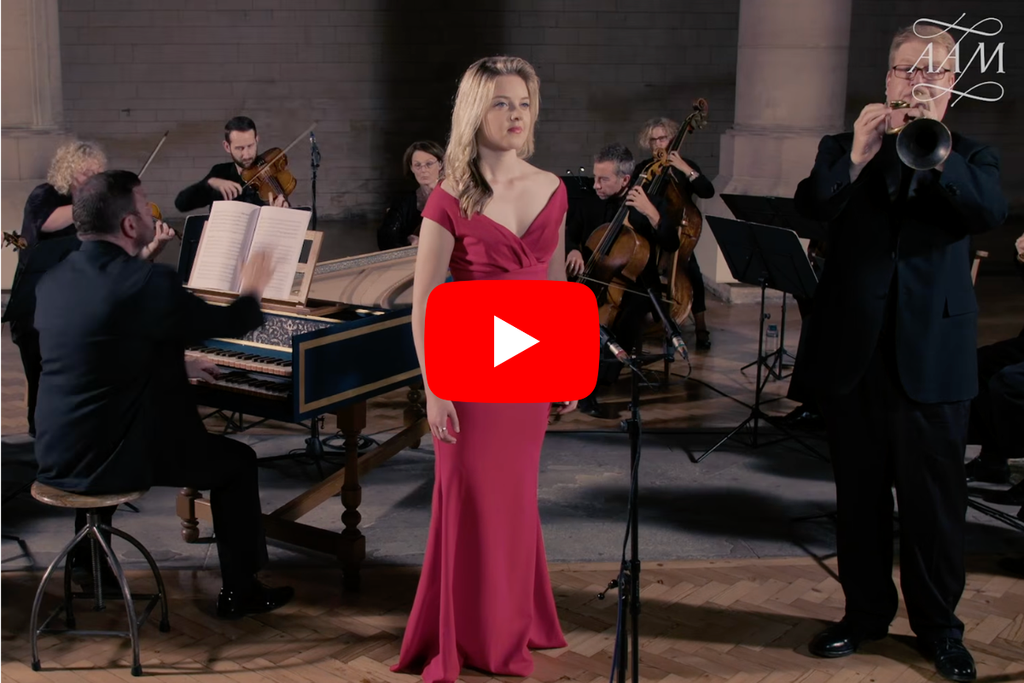
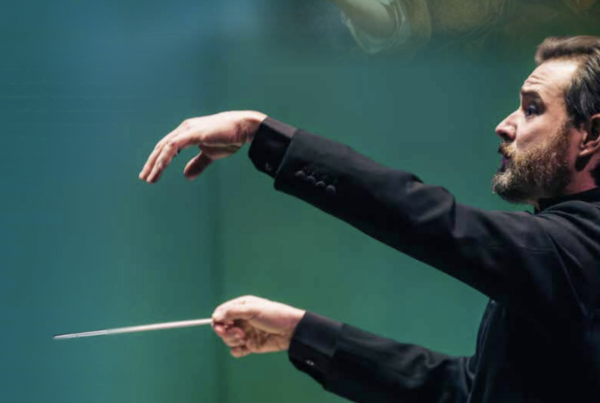
Under the direction of conductor Patrick Dupré Quigley, Philharmonia Baroque Orchestra is joined by soprano Kathryn Mueller, cellist William Skeen, oboist Gonzalo X. Ruiz, and trumpeter Kathryn Adduci for Baroque Brilliance, a festive program featuring dazzling works by Handel, Bach, and more. Experience these virtuosic showpieces performed on period instruments, capturing the authentic sound and style of the Baroque era.
Program
HANDEL – “Let the Bright Seraphim” from Samson
MARTINES – O virgo, cui salutem debet orbis (WEST COAST PREMIERE)
TELEMANN – Burlesque de Quixotte, TWV 55:G10
C.P.E. BACH – Concerto for violoncello in A major, Wq 172
J.S. BACH – Jauchzet Gott in allen Landen, BWV 51
Patrick Dupré Quigley, conductor
Kathryn Mueller, soprano
William Skeen, violoncello
Gonzalo X. Ruiz, oboe
Kathryn Adduci, trumpet
Performances
Thursday, December 3, 2026 • 7:30 PM
First United Methodist Chruch
625 Hamilton Ave, Palo Alto, CA 94301
Friday, December 4, 2026 • 7:30 PM
Herbst Theatre
401 Van Ness Ave, San Francisco, CA 94102
Saturday, December 5, 2026 • 2:30 PM
First Congregational Church of Berkeley
2345 Channing Way, Berkeley, CA 94704
Tickets
Tickets as low as $40 and $20 for Under 30s. Learn more at philharmonia.org/brilliance or call (415) 295-1900.
Scott Foglesong is the award-winning Chair of Music Theory at San Francisco Conservatory of Music. He also writes program notes for San Francisco Symphony, California Symphony, Las Vegas Philharmonic, New Hampshire Music Festival, and Left Coast Ensemble.