By Scott Foglesong
Baldassare Galuppi (1706–1785)
Concerto a quattro No. 4 in C minor (ca. 1740)
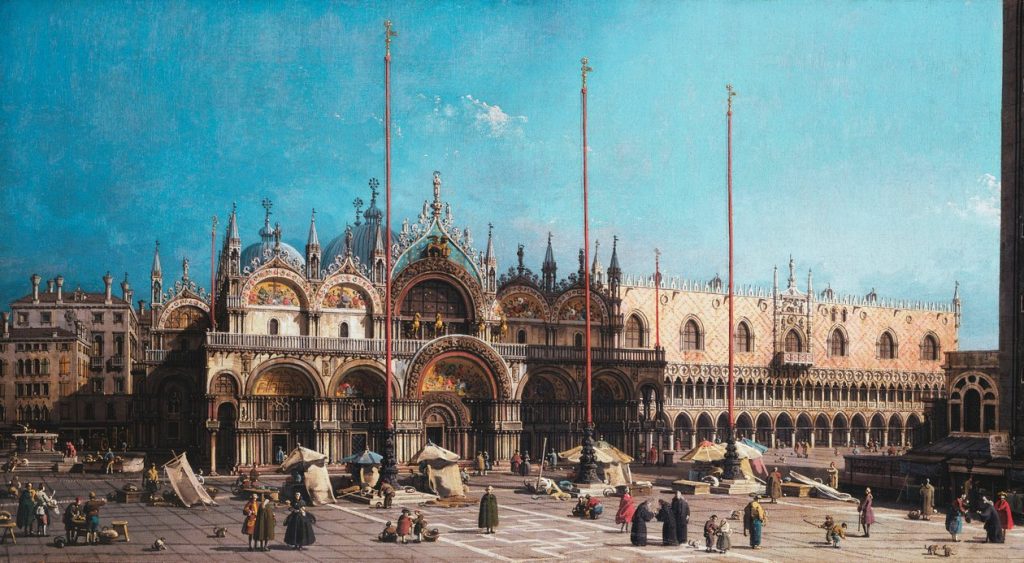
Fame is a fickle thing. Baldassare Galuppi was such a hotshot in his day that one would think that he would be ranked amongst the big guns of the Baroque era. After all, Antonio Vivaldi became a household name in the 20th century after nearly two centuries of utter neglect. But Galuppi wasn’t as lucky. Nowadays he’s considered a marginal figure, if he’s considered at all.
Consider some of his achievements. He taught for over a decade at Venice’s Ospedale dei Mendicanti, a school with all-female musical ensembles, similar to the Ospedale della Pietà where Vivaldi served for so long. He spent four years at the court of Catherine the Great in St. Petersburg. As chorus master at both the Basilica di San Marco and the Ospedale degli Incurabili, he composed ample amounts of sacred music. He was a busy opera composer, not only in Italy but also in London, where he directed 11 operas at the King’s Theater – three of which might have been his own compositions.
Seven concerti a quattro (concertos in four parts) survive from about 1740. Whether or not they were conceived as a uniform collection is uncertain, but certainly they share certain characteristics in common, such as excellent contrapuntal writing and operatic melodic lines. Structured in “church sonata” form à la Corelli, they place three movements in a slow-fast-medium tempo arrangement. The opening pair of movements of Concerto a quattro No. 4 in C minor resemble a “French Overture” in that a stately opening passage leads to a fast concertante affair; the concerto ends with an elegant minuet-like Andante.
Benedetto Marcello (1686–1739)
Cantata for Soprano and Strings Arianna abbandonata
To begin with: cantata means something sung, as compared to sonata (something played) or toccata (something touched – i.e., a keyboard.) Cantatas were the after-dinner music of choice amongst the Italian upper crust. A small orchestra accompanied one or more singers in a mix of recitatives and arias, telling stories that might stem from myth, antiquity, or the pastoral traditions. Typically they’re about love, joyous or tragic, consummated or unrequited.
Benedetto Marcello was born into the Venetian nobility. Unlike most Italian composers of his generation, he had little interest in opera; his bailiwick was primarily cantatas, oratorios, and instrumental chamber music. More skilled dilettante than professional musician, he followed the usual aristocratic path in government service. However, he seems to have gotten into considerable hot water with the authorities during his last decade; he was even exiled for three years.
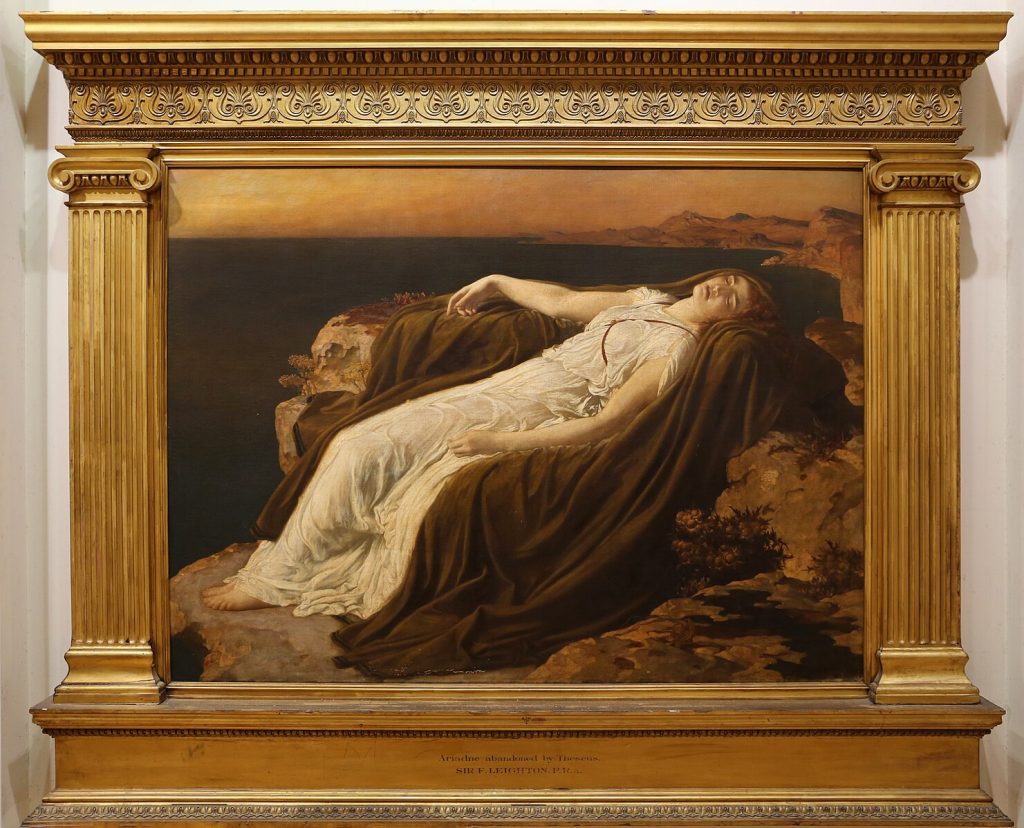
Arianna abbandonata is concerned with the myth of Cretan princess Ariadne (Arianna), who helps Theseus defeat the Minotaur, only to be betrayed when the despicable heel abandons her on the island of Naxos. At first she reacts with heartbreak: I did not expect my unwavering love, my faithfulness be repaid with such harsh ungratefulness, she wails in the opening recitative. Then she feels exceedingly sorry for herself, in her aria How can you leave me weeping? Finally she gets mad: I feel a sweet fire in my breast. That’s where the cantata ends, but know that according to myth Ariadne has the last laugh when she marries Dionysius, the god of wine and song, and the two have a high old time in mutual immortality.
George Frideric Handel (1685–1759)
Cantata for Soprano and Strings Armida abbandonata, HWV 105
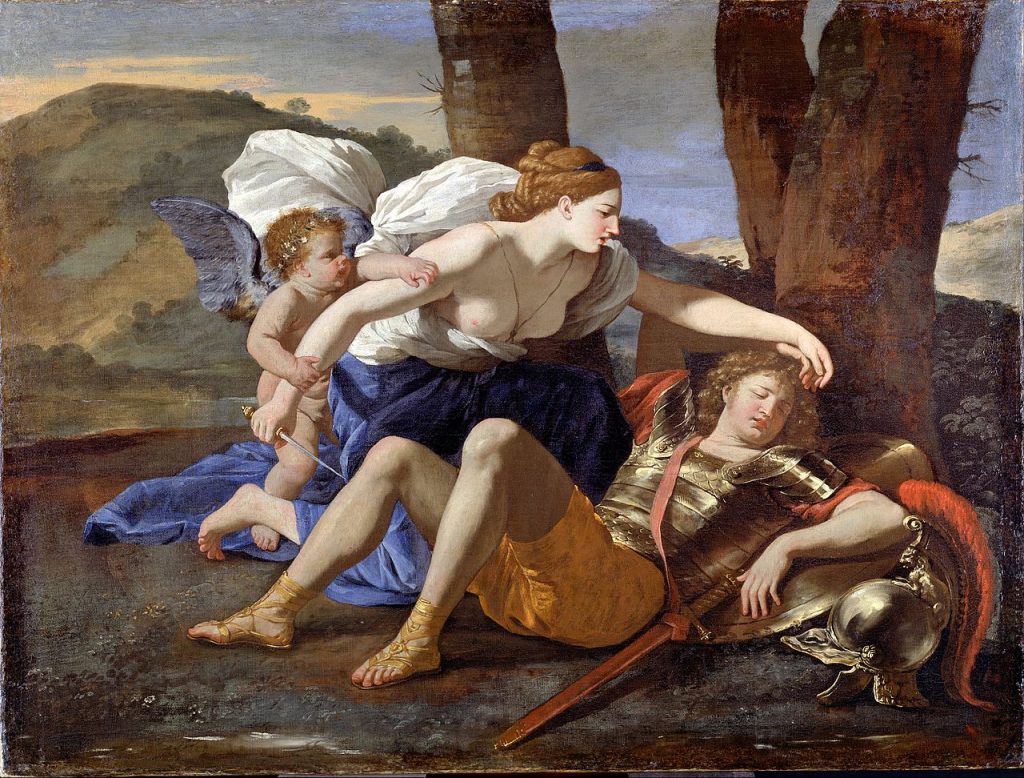
Torch songs have been with us since antiquity. Consult your classics and consider Medea, Ariadne, and Dido, all of them abandoned by some insensitive clod. The sorceress Armida is another one, but she’s not wholly undeserving, having trapped the heroic knight Rinaldo (Roland) on her enchanted island. Alas, Rinaldo escapes with the help of his Crusader companions. In his early Italian cantata Armida abbandonata Handel gives his soprano full license to explore Armida’s heartbreak, her seething rage, and her longing to be rid of her all-consuming infatuation.
Il Sassone, they called him in Rome – The Saxon. A product of the same central German breadbasket as Johann Sebastian Bach, Handel was keen on writing opera, and in those days opera meant Italy. And while Venice and Florence had their strengths, the big money was in Rome, home of patrons on the order of Cardinals Ottobone and Pamphili, Queen Christina of Sweden, and Prince Francesco Maria Marescotti Ruspoli, for whom Handel wrote Armida abbandonata.
Handel must have presented as a burly exotic to the refined Italian musicians of mid-Baroque Rome. One story has the fastidious violinist-composer Arcangelo Corelli throwing up his hands at a particularly virile passage in a Handel work. “That music is in the French style, of which I understand nothing,” he whined.
Shortly before Handel’s arrival in Rome, a fit of prissy righteousness had led to a Papal edict banning opera. (All that sex, after all.) Thus Roman nabobs turned to secular cantatas as postprandial entertainment for their glittering soirées. During his Roman years Handel wrote well over 100 such cantatas for various well-heeled customers.
Handel’s lyrical abundance flows bountifully in Armida abbandonata. Three arias chart Armida’s psychological progression, from the exquisite dying fall of Ah! crudele with which she expresses her dejection, to the colorful orchestral writing as she asks the winds to be kind to her escaping swain in Venti, fermate, si. Finally comes a stately Siciliana rhythm as she sings In tanti affani miei – In my distress you at least help me, God of love! Particularly vivid is the accompanied recitative O voi, dell’incostante (You horrible monsters of the deep) as Armida inveighs the ocean’s alpha predators to eat that ungrateful so-and-so as he sails away.
Francesco Durante (1684–1755)
Concerto a quattro No. 2 in G minor (ca. 1740)
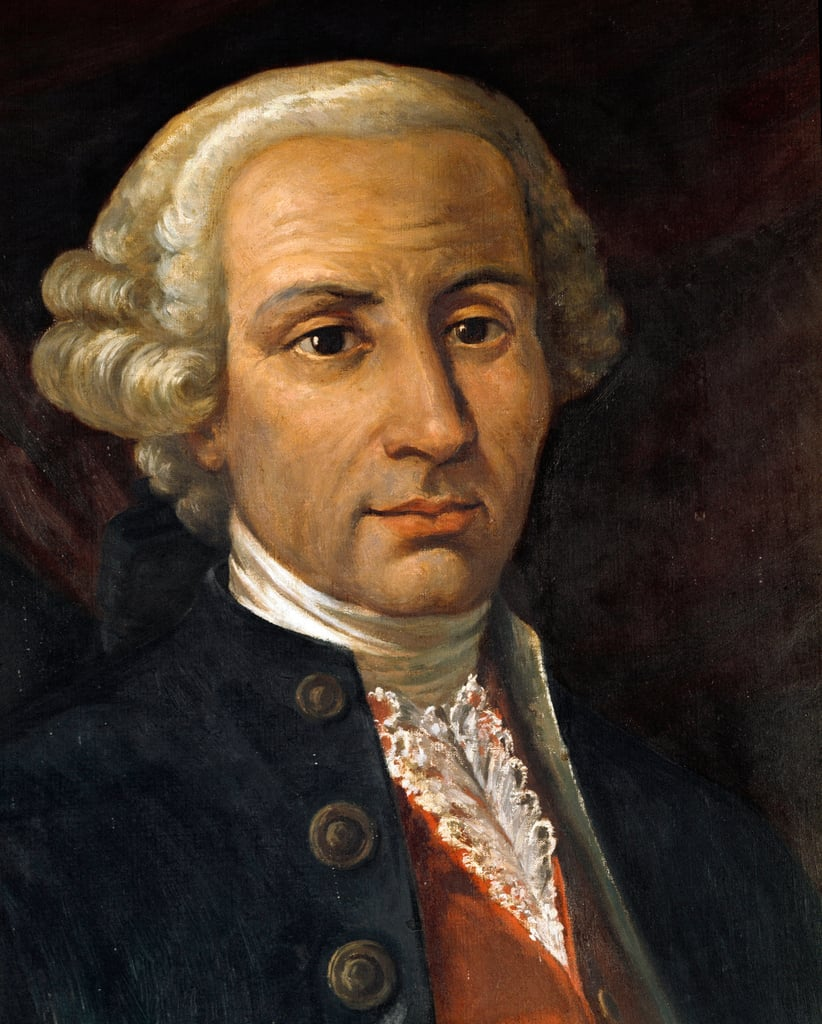
His fertility as a teacher was matched by his resolutely forward-thinking attitude; he favored a distinctly Classical style, notable for its discreet counterpoint, expressive dynamics and chromaticism. In some ways he resembles Arcangelo Corelli in his avoidance of the opera house (rare for a Neapolitan composer), and also in the painstaking care he took with his compositions, each a paragon of harmonic mastery and structural balance.
Well after his death, Durante’s masses and motets provided teachers with models of correct writing, serving much the same role as do Sebastian Bach’s fugues and chorales in today’s conservatories.
Durante’s nine Concerti a quartetto, dating from the late 1730s or early 1740s, are valued as outstanding Neapolitan contributions to the burgeoning Classical style and can be understood as steppingstones on the way to the symphony, then only one generation away from its first maturity. The second concerto, in G minor, is laid out as a Corellian “church sonata” with four movements in slow-fast-slow-fast tempi. The opening Affettuoso offers richly evocative harmonies amidst its rather stern melodies, followed by a fugal Presto that savors of Neapolitan composers such as Pergolesi. The third-place Largo affettuoso provides harmonic relief by being in major mode, while the concluding Allegro returns to minor in a quickstep triple meter.
Antonio Vivaldi (1678–1741)
In furore iustissimae irae, RV 626 (ca. 1723)
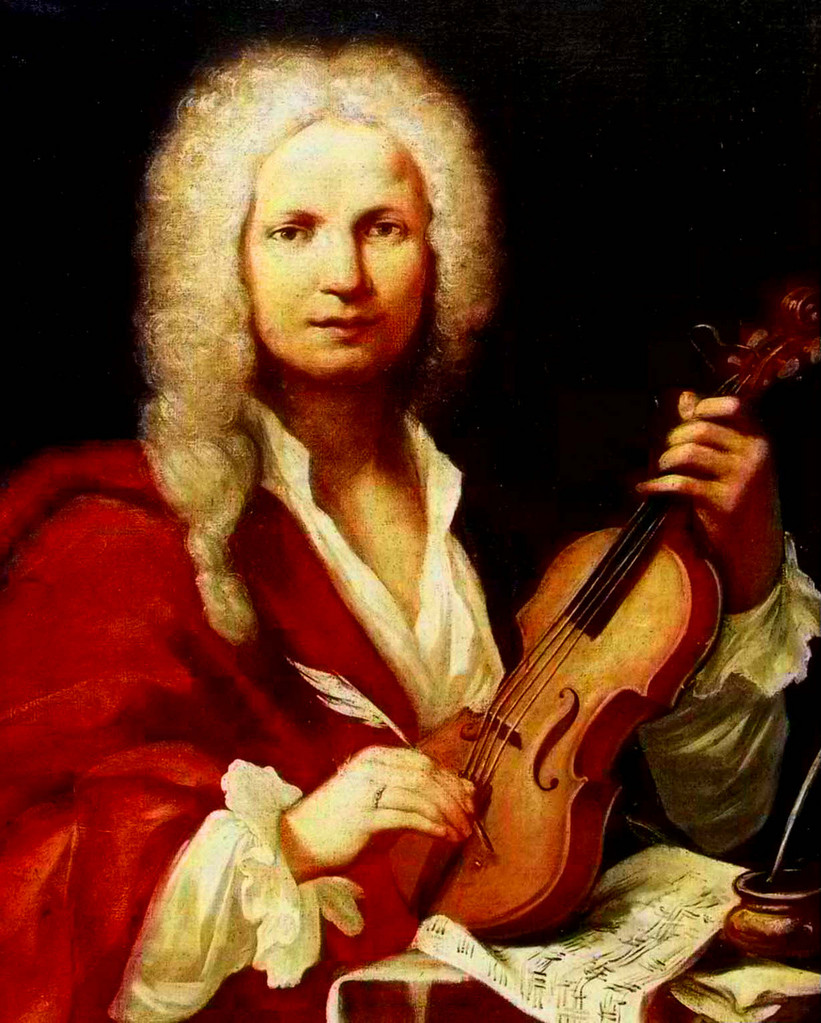
Vivaldi spent many years teaching at the Ospedale della Pietà, a leading Venetian institution for orphaned girls. In that capacity he wrote a number of motets for solo voice and accompaniment. These are four-movement affairs in which the first and third movements are arias, the second is a recitative, and the whole thing ends with an exuberant ‘Alleluia.’ (Motets differ from cantatas by being in Latin instead of Italian; furthermore, they’re intended for church services rather than posh shindigs.)
In furore iustissimae irae would seem to date from Vivaldi’s visits to Rome around 1723. The text is all about contrition, in which the soprano thanks God for sparing her dire punishment. Exactly what she’s contrite about isn’t specified, but we can guess.
Vivaldi always sounded like Vivaldi, and so it should not be surprising that the melodies of In furore could pass for one of Vivaldi’s concerto movements, direct and unaffected, with passages of intense tenderness amidst all that spunky Vivaldian brio.
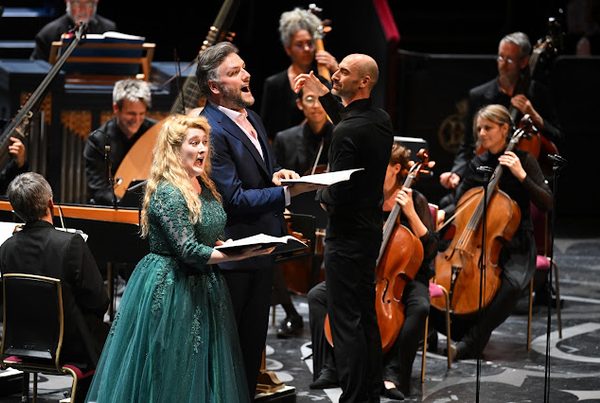
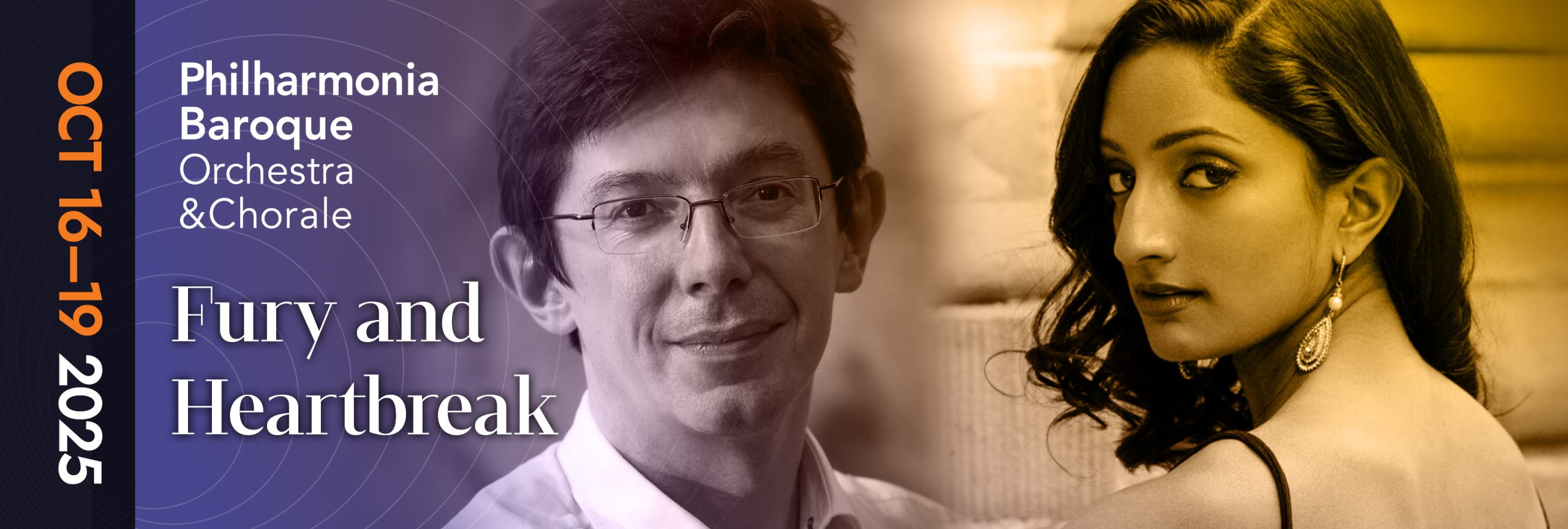
Soprano Maya Kherani portrays two heroines forsaken in love in works by Handel and Marcello in season opener Fury and Heartbreak. With Václav Luks conducting, Philharmonia brings the sound of period instruments to Venetian elegance and Neapolitan fire, culminating in Vivaldi’s In furore iustissimae irae—a dazzling storm of strings and vocal fireworks.
- Thursday, October 16, 2025 – 7:30 PM | Herbst Theatre, San Francisco
- Saturday, October 18, 2025 – 2:30 PM | First Congregational Church, Berkeley
- Sunday, October 19, 2025 – 2:30 PM | Mountain View Center for the Performing Arts
Tickets: $40 to $125 | $20 tickets available for Under 30s. Save more with a subscription—as low as $84 for 3 concerts. Get tickets online or call the Box Office at (415) 295 2111.
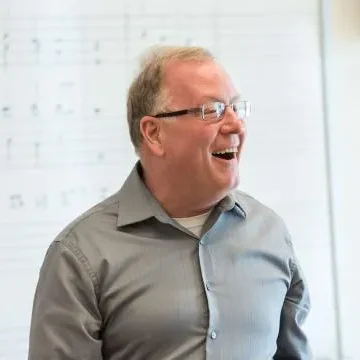
Scott Foglesong is the award-winning Chair of Music Theory at San Francisco Conservatory of Music. He also writes program notes for San Francisco Symphony, California Symphony, Las Vegas Philharmonic, New Hampshire Music Festival, and Left Coast Ensemble.