
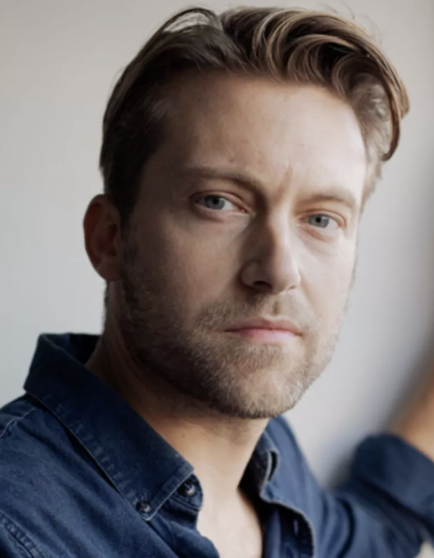
By Director James Darrah Black
Handel’s Tolomeo, re d’Egitto begins in a world after an implied period of collapse and follows a literal upheaval of social order.
Our title character has lost almost everything that once made him recognizable: his throne? Gone. His birthright, homeland, marriage, very public name, and the life he believed was secured by birth? All gone too. He arrives into Handel’s world as a flawed human in exile under an assumed identity. He has been stripped not only of power but even of the costume that allowed power to be felt and seen. Around him, the other “survivors” are also caught in unstable forms of disguise fueled by longing, ambition, loyalty, and misrecognition. Love? (Handel’s characters do love to love). Love survives, but only barely. Desire advances but rarely without uphill resistance. Political violence has already done its damage offstage before the opera begins; what remains is the intimate and quite literal human wreckage.
I find this juxtaposition of affirmed greatness and questioned identity is what makes Tolomeo so quietly devastating and artistically alluring. This is not simply another opera about kings and power. It is an opera about what happens when identity must shift and be placed under unfamiliar and unbearable human pressures.
Handel’s characters still thrive and live inside the high formal world of opera seria, with its codes of nobility, honor, constancy of tonality, and vocal displays of brilliance, but the emotional life beneath those codes is anything but formulaic. The arias do not merely decorate the drama, they suspend time—stretch it—so that a private crisis can be examined from the rich interior of the mind.
Premiered in 1728, Tolomeo comes near the end of one of Handel’s most intense periods of prolific operatic creation in London. The machinery around him was changing. Italian opera production in England via Handel’s familiar avenues was crumbling in slow motion, both financially and culturally. The old structures of taste, patronage, and star-driven theatrical (often supernatural) spectacle were beginning to show some cracks. This simple historical context imbues Tolomeo with eerie resonance. It is for us a work about a ruler without a kingdom, written at a moment when Handel’s own operatic kingdom was being challenged and evolving.
And yet this opera is not ever the music of defeat. It is music that speaks to human endurance, and the composer definitely seems to have understood something radical about deep human feeling and drive: he senses that the most painful states are often not the loudest ones. Grief can become beautifully controlled and hushed in its intensity. Fidelity can become almost unbearable in its restraint and what is not said more of a weapon to wield than rage. Jealousy can wear the mask of elegance well. Despair can unfold inside a melodic line of astonishing poise before being unleashed in true fury. Tolomeo asks us to listen for pressure beneath all of the beauty, fracture beneath the form, and ultimately find survival beneath ritual.
For a contemporary audience, opera’s capacity to evoke emotion through unexpected and sometimes even contradictory musical gestures may be its greatest power. We all know something about living through collapsed certainties. We know about public selves becoming unstable, about exile from the life one thought one had earned, about the strange difficulty of being recognized correctly. In Tolomeo, characters are not simply hiding from one another. They are trying to survive the terrifying gap between who they are, who they have been, and who the world now allows them to become.
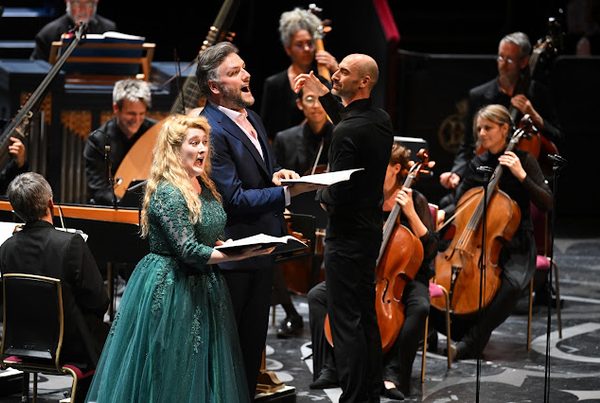
This production brings together historically rooted musical performance and theatrical investigation as equal partners. Philharmonia Baroque offers the living pulse of Handel’s sound world: period instruments, rhetorical clarity, and the sharp expressive intelligence that this music demands. Long Beach Opera’s role as co-producer gives the project another crucial dimension. LBO has long understood that opera’s past is not a museum wing but a volatile archive, a place where old forms can be made newly dangerous, intimate, and present. In joining forces, these institutions make a statement about how early opera can live now: not by softening its strangeness, but by allowing that strangeness to speak with full force.
This is the signature significance of the collaboration. Philharmonia Baroque brings us close to the historical body of the score, its instruments, colors, articulations, and expressive grammar. Long Beach Opera brings a progressive theatrical appetite for risk, immediacy, and transformation as visual art. Together, they allow Tolomeo to exist neither as an antique nor as a concept imposed from the outside, but as a living encounter.
Handel’s world is filled with rulers, exiles, lovers, rivals, captives, and survivors who all have agendas. But beneath titles or strong self-determination of purpose or identity, the opera asks: what remains of you when the world no longer recognizes you? Tolomeo answers not with certainty, but with music that reveals, with precise clarity and tenderness, that there is always a flawed human being beneath any crown. A person’s true complexity is hardly ever captured by one simple reflection glimpsed in a mirror.
Learn more about Director James Darrah Black here.
Preview the Music
Philharmonia Baroque presents Handel’s Tolomeo as Music Director Peter Whelan opens his first season with a semi-staged production, combining historically informed performance with theatrical elements that sharpen the drama.
Concert Dates
Thursday, July 23 | 7:30 PM
Herbst Theatre, San Francisco
Friday, July 24 | 7:30 PM
First Congregational Church of Berkeley
Sunday, July 26 | 4:00 PM
Caramoor Center, NY – Venetian Theater
Get tickets online or call the Box Office at (415) 295 1900.