By Shunske Sato
Violinist and season finale concert leader Shunske Sato traces the influence of Carl Philipp Emanuel Bach on the music of Wolfgang Amadeus Mozart, Ludwig van Beethoven, and Felix Mendelssohn.
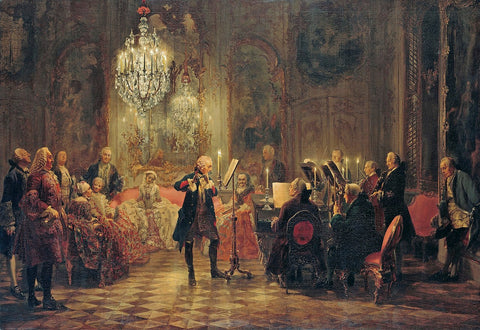
“After dinner… I prevailed upon [CPE Bach] to sit down again to a clavichord, and he played, with little intermission, till near eleven o’clock at night. During this time, he grew so animated and possessed, that he not only played, but looked like one inspired. His eyes were fixed, his under lip fell, and drops of effervescence distilled from his countenance.” (Charles Burney,The Present State of Music in Germany, the Netherlands, and United Provinces, 1773)
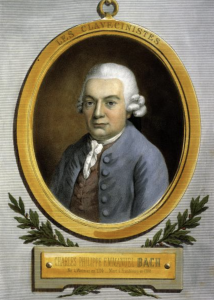
Possessed and entranced too is the F-major symphony by CPE Bach: kinks and coils at every turn, heaps of non-sequiturs…and yet fitting bizarrely and beautifully together. Written around 1776, the set of 4 symphonies remained in concert programs into the 19th century (quite an unusual phenomenon!) The first of them (in D major) was particularly popular: Felix Mendelssohn himself directed a performance of the work at the Gewandhaus in Leipzig in 1847.
“He is the father, we are the children”, wrote Mozart about CPE Bach – though the two never met, Mozart collected, copied and found enduring inspiration in the works of Johann Sebastian’s second eldest son, even directing a performance of his oratorio “Die Auferstehung und Himmelfahrt Jesu” in 1788. Echos of CPE’s rhapsodic, vivid style can be found in abundance in Mozart’s incidental music to the play “Thamos, King of Egypt” K. 345 – in itself a quirk, as this is the only instance of Mozart ever writing incidental music. The score reveals that some of the music was to be performed as a melodrama – music accompanying spoken text – and the tosses and turns of mood reflect the quick and exciting pace of drama of the play.
Mendelssohn wrote his Concerto in D minor for violin and string orchestra at the age of 13, in 1822. By this time, the scoring for four-part string orchestra for a concerto was firmly obsolete; an older, quirky language of the likes of CPE Bach is apparent in the turbulent material, angular turns and interruptions. As it happens, Sarah Levy – Felix’s great-Aunt – was an admirer and patron to CPE Bach, and it was she who insisted that her grandnephew Felix receive musical instruction from Carl Friedrich Zelter who, despite being described as a “bristly like a shoe-brush” [Todd, “Mendelssohn: A Life in Music”, p. 38], instilled Felix with a love for 18th-century musical craftsmanship, and for the music of the Bach family.
As a budding musician in Bonn, Beethoven was introduced to CPE Bach’s seminal work “Essay on the True Art of Playing Keyboard Instruments”, studied it thoroughly and revered the work so much so that he not only carried it along everywhere, but instructed his student Carl Czerny to obtain a copy and bring it along to every lesson. Like CPE, Beethoven too was a peerless improviser, and subscribed firmly to CPE’s belief that surprising the listener with originality and changes of mood were amongst the duties of the performer. Beethoven’s First Symphony is nothing if not chock-full with surprises, right from bar one, beat one: an unprepared dominant (dissonant) chord sounded by bizarre, jarring combination of forte pizzicatos and winds. The audiences took note: at the premiere, they were properly confused – and the piece had only just begun!
Program
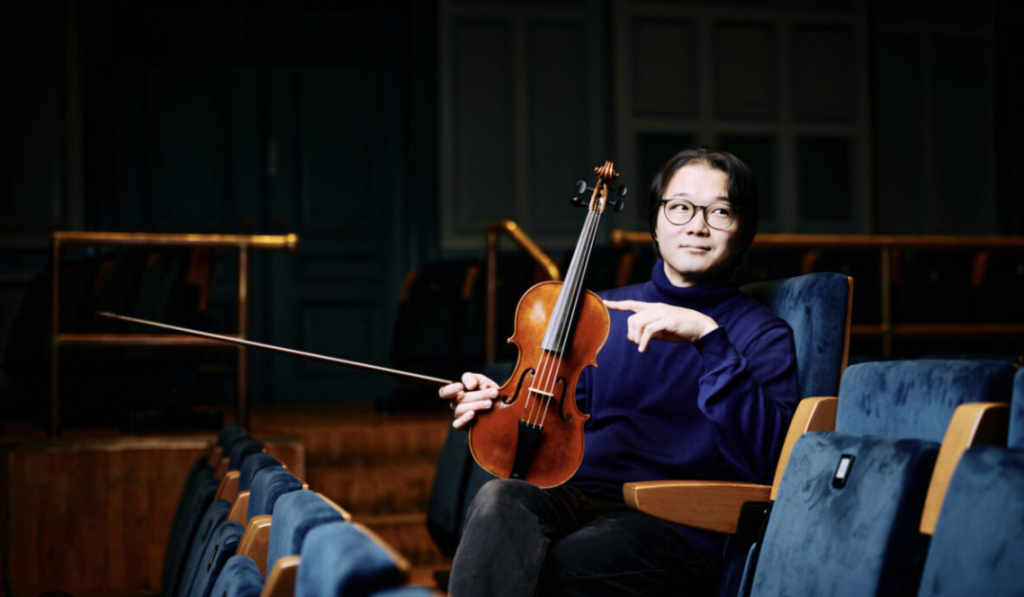
Shunske Sato violin and leader
C.P.E. BACH – Symphony No. 3 in F major
MOZART – Incidental Music from Thamos, King of Egypt
MENDELSSOHN – Concerto for Violin and Strings in D minor
BEETHOVEN – Symphony No. 1 in C major
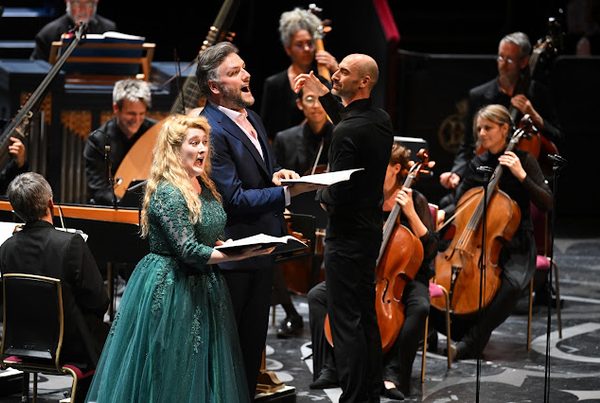
Philharmonia Baroque’s season finale, Kinks and Quirks, pairs Beethoven’s First Symphony with works by C.P.E. Bach, Mozart, and Mendelssohn—full of unexpected “kinks and quirks.” Performed on period instruments, the program includes Mendelssohn’s youthful Violin Concerto and C.P.E. Bach’s surprising Symphony in F major, led by audience favorite violinist Shunske Sato.
Concert Dates
Thursday, April 23, 2026 – 7:30 PM | San Francisco: Herbst Theatre
Friday, April 24, 2026 – 7:30 PM | Palo Alto: First United Methodist Church
Saturday, April 25, 2026 – 2:30 PM | Berkeley: First Congregational Church
Get tickets online or call the Box Office at (415) 295 1900.