
By Scott Foglesong
George Frideric Handel (1685–1759)
Tolomeo (1728)
When early 18th-century Londoners went out for a night at the opera, they were also going out for a night on the town. From our point of view, their behavior during performances was appalling and their attitudes reprehensible. They chatted, catcalled, milled about, ate and drank, came and went as they pleased. They weren’t really there for the music or the drama. They were there to see and be seen, to strut their stuff in society. Couture was frequently lavish, just as today at the Metropolitan Opera Gala or the equivalent. Even the nobility liked to hang out at the opera. To be a regular opera-goer was to be somebody.
But it wasn’t all about hobnobbing. Fandom played a large part. Favored singers were treated with adulation by their claques, who never hesitated to heap abuse on rival stars. That’s despite the general suspicion that opera singers were people of low character, rather like certain modern celebrities whose fame rests on their extreme lifestyles or outrageous behavior. Many singers played into those expectations with outsized displays of ego and onstage shenanigans, egged on by their fans. It could get seriously rowdy in a London opera house.
It must have been stifling in there. Most operas began at 6:00 PM, after an hour of light music starting around 5:00 for the early arrivals. Candles were the only lighting source and the room would have been not only dim but airless. Heat rises, so those unfortunates who couldn’t afford the expensive boxes in the lower tiers would be gasping away in the higher elevations. (Onstage waterfalls were popular, since they acted rather like swamp coolers.) The main floor, or parterre, was typically a standing area that served as a meeting place; business—either respectable or not—could be conducted there. Intermissions were long and offered instrumental performances from the stage. All in all, the opera provided an entire evening’s entertainment, with something for everybody. And from time to time, some gloriously fine music was introduced in those smelly, murky, noisy theaters.
We call it opera seria, a term that contrasts with the opera buffa of Mozart’s day (think The Marriage of Figaro) and the singspiel of German-speaking countries (think The Magic Flute.) The classic Italian seria was a highly stylized affair, its plots drawn from mythology or ancient history, its music consisting mostly of recitatives alternating with arias, the whole occasionally enlivened by an onstage processional or a duet. Composers eventually began incorporating dance sequences in a bid to energize what could all too easily become a stultifying plod. Elaborate staging and theatrical effects helped to keep audiences engaged.
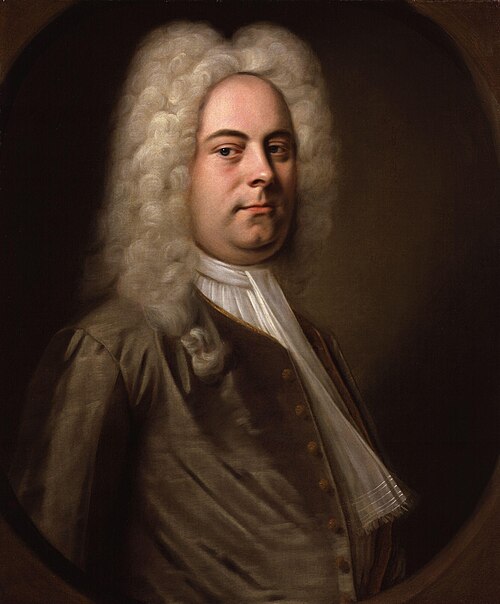
Opera seria’s great exemplar George Frideric Handel was born and raised in the same general area of Germany that was home to the prolific Bach clan. Unlike his celebrated contemporary Johann Sebastian Bach, Handel took firm charge of his own destiny by leaving Saxony. He didn’t go far at first: just to Hamburg. A few years later (this would be about 1706) he travelled to Italy, where he wrote for the well-heeled and influential, performed with musicians on the order of Arcangelo Corelli, and morphed from an intriguing rustic type into a fully matured and polished master composer.
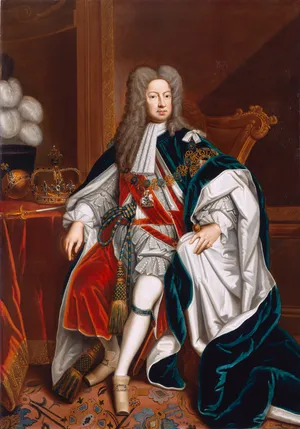
In 1710 Handel went to work for George, Elector of Hanover. Even though he remained in that job for less than a year, it was a connection that would prove priceless. In 1714 his former boss became Britain’s King George I and inaugurated the Hanoverian dynasty that, after a few name changes, remains on the throne to this day. But Handel beat George to England. He settled there permanently starting in 1712; a naturalized British subject from 1727 onwards, he lived the rest of his life as a Londoner, and was highly valued by both George I and II. (His house at 25 Brook Street is still there. It’s a museum, and you can visit it.)
Although he wrote mostly instrumental and choral music during his early years in England, Handel retained a keen taste for opera seria. In 1719 he became involved in the Royal Academy of Music, a new enterprise that performed at the Queen’s Theatre in the Haymarket; His Majesty’s Theatre stands at the same location nowadays. As an active opera impresario, Handel was responsible for hiring and training the performers. Knowing full well the value of headline stars, Handel cheerfully spent a fortune on the leading Italian singers of the day. Two in particular—Francesca Cuzzoni and Faustina Bordoni—became bitter rivals during their Royal Academy years. They even got into a physical scuffle onstage while hurling (unscripted) obscenities at each other during a performance of Giovanni Bononcini’s Astianatte. It was they, together with Handel’s favorite castrato Senesino, who skippered Tolomeo, Handel’s final Royal Academy opera, on its 1728 maiden voyage.
Many serie are saddled with labyrinthine plots, and Tolomeo is no exception. The title character, Ptolemy Lathyrus (Ptolemy is the English translation of Tolomeo), is a king of the dynasty established by Alexander the Great when he elevated his general Ptolemy to the rulership of conquered Egypt. (A later Ptolemy, Cleopatra VII, has provided a toothsome role for generations of Hollywood screen goddesses.) The opera opens in about 108 BCE, when Ptolemy has been deposed and exiled to Cyprus—by his own mother, no less. From there is spun a web of intrigue, disguise, deception, and misdirection, all the more tangled by Nicola Francesco Haym’s barely-coherent libretto.
From which one might rather suspect that Tolomeo is a bit of a stinker, but in fact it provides a remarkably clear example of Handel’s Sunday-best operatic art. Rather than writing spectacle pieces that the ailing Royal Academy could no longer afford, he focused instead on his star singers and gave them material perfectly tailored to their voices. Tolomeo provides scholars with a prime opportunity to reconstruct what those superstar legends might have sounded like—Senesino’s power and astounding breath capacity, Cuzzoni’s exquisite high notes and razor-sharp intonation, and Faustina’s gut-buster ‘rage’ arias that never failed to knock the socks off her adoring fans.
About Baroque arias: they are usually structured in da capo form, which consists of two stanzas of text placed in an A-B-A arrangement. The ‘B’ stanza is in a contrasting key and usually takes on a different overall affect than the longer and more involved ‘A’ stanza. In the score, the notation ends with the ‘B’ stanza, followed by the words da capo; that’s an instruction to return to the beginning (‘from the head’) and repeat the ‘A’ stanza—but during the da capo the singer is fully expected to let loose with as much embellishment as the market (and the composer) will bear.
Consider Ptolemy’s opening aria Cielo ingiusto, potrai fulminari. Having just been dumped on a Cyprus beach and feeling most exceedingly sorry for himself, Ptolemy spots a fellow who is swimming desperately to the beach from a small boat that had run against the rocks. Said fellow turns out to be Ptolemy’s brother Alexander, co-conspirator with their mother in Ptolemy’s downfall. Originally charged with assassinating Ptolemy, he’s had a change of heart. The aria is florid and dramatic, calling on Senesino to manage long passages on a single breath and to sustain a heightened dramatic mood. We can count on Senesino’s milking the da capo for all he was worth.
Tolomeo takes full advantage of the ‘pastoral’ movement that had swept from Italy to England; nymphs and shepherds were all the thing, reminiscent of Shakespeare’s bucolic Arden Wood in As You Like It. Ptolemy is in disguise as the shepherd Osmin, leading to mistaken-identity complications such as an iron-willed maiden—she’s actually the local king’s sister—who is in love with him as Osmin. Ptolemy’s wife Seleuce also takes on pastoral garb as the shepherdess Delia; she has her own problems with an overly-ardent suitor—he’s actually the local king.
One aria outlasted the opera, a lovely cavatina sung by Ptolemy’s brother Alexander. Non lo dirò col labbro, a yearning love song, became a popular recital piece following its 1928 adaptation as ‘Silent Worship’ by Arthur Somervell. Otherwise, Tolomeo left only faint traces. Two brief revivals (1730 and 1733) were followed by two centuries of silence until the opera’s restoration in 1938. Overshadowed by other Handel operas such as Giulio Cesare in Egitto, it’s well-worth getting to know for the sheer skill with which Handel fashioned its custom-tailored arias, and for the simple unaffected beauty of its score.
Nota bene: Faustina Bordoni left London in 1728. Two years later she married the composer Johann Adolf Hasse, who was soon appointed kapellmeister to the Dresden court. Faustina sang the first performances of Bach’s Mass in B Minor, written in 1733 for Dresden. She died in Venice in 1781 after a long and distinguished career. Francesca Cuzzoni, on the other hand, died in poverty. Senesino enjoyed a prosperous retirement in Naples. And Handel? Post-Tolomeo he went on to even greater things and ended his days as an imperishable cultural monument..
Preview the Music
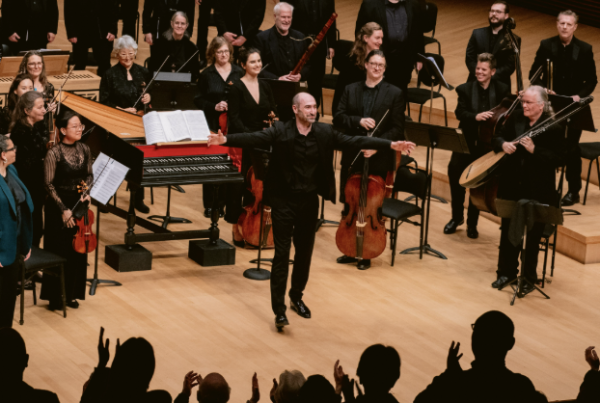
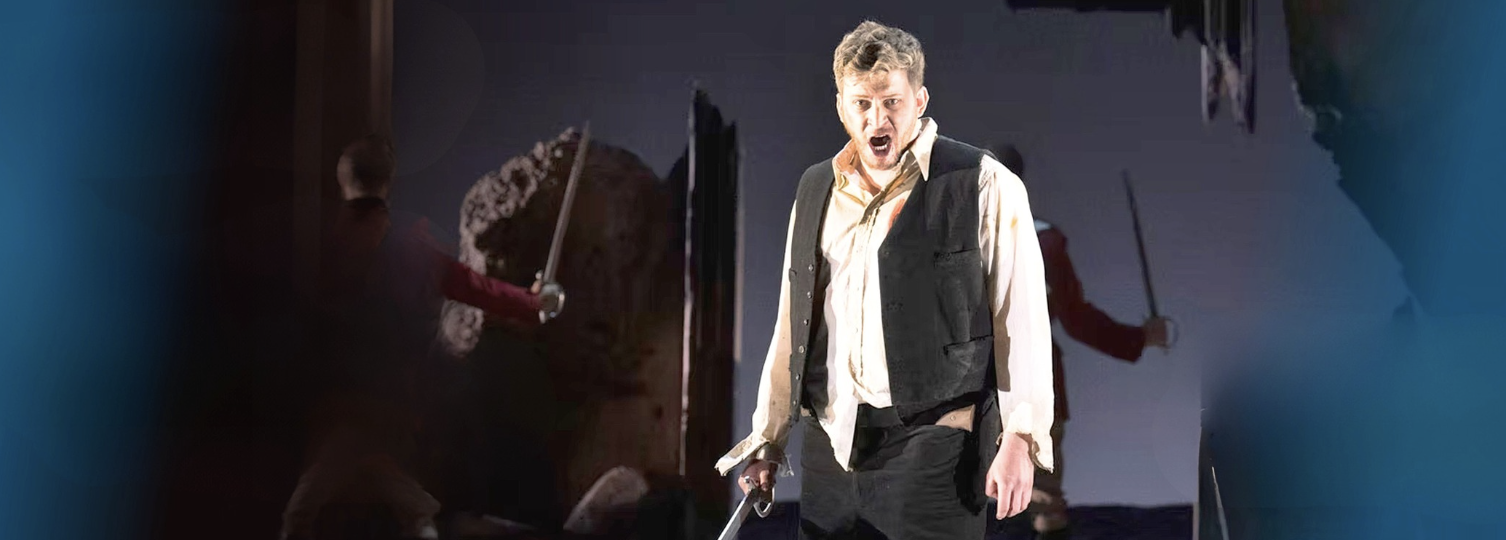
Philharmonia Baroque presents Handel’s Tolomeo as Music Director Peter Whelan opens his first season with a semi-staged production, combining historically informed performance with theatrical elements that sharpen the drama.
Concert Dates
Thursday, July 23 | 7:30 PM
Herbst Theatre, San Francisco
Friday, July 24 | 7:30 PM
First Congregational Church of Berkeley
Sunday, July 26 | 4:00 PM
Caramoor Center, NY – Venetian Theater
Get tickets online or call the Box Office at (415) 295 1900.
Scott Foglesong is the award-winning Chair of Music Theory at San Francisco Conservatory of Music. He also writes program notes for San Francisco Symphony, California Symphony, Las Vegas Philharmonic, New Hampshire Music Festival, and Left Coast Ensemble.