1. Tell us a little about yourself. Are you from a musical family?
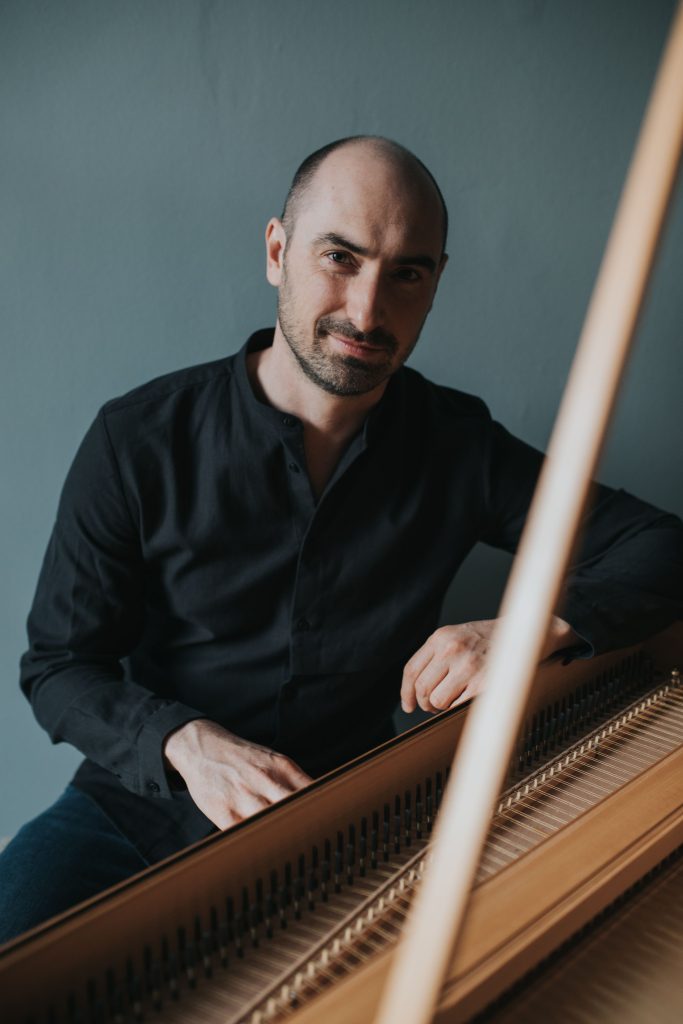
I grew up in Dublin, and music wasn’t really part of the family landscape – I came to it entirely through my own obsession. I started on the bassoon as a teenager, which is already a fairly eccentric choice, and that instrument became my whole world for a long time. Dublin has an enormous energy to it, and I think that shaped me. I’m still very much a Dubliner, even after many years based in London.
2. How did you come to specialize in Early Music?
The bassoon was the gateway. In a baroque ensemble, the bassoon sits at the heart of the bass line – it’s almost like the drum and bass section of the orchestra, this deeply physical, rhythmic foundation that everything else is built on. When you’re inside that, feeling the music from the ground up, you start to hear it completely differently. The music asks different things of you: a different relationship to ornamentation, to rhythm, to the rhetoric of a phrase. I started playing with period ensembles and realized that early music wasn’t a niche or a specialism so much as a philosophy – a way of being in conversation with the composer’s own moment rather than smoothing everything into a modern sound. Conducting felt like the natural next step, letting me engage with that conversation more fully across a whole ensemble rather than from one seat.
3. First impressions of your time in the Bay Area so far?
The light is extraordinary – that quality of California afternoon light that feels almost Mediterranean but completely its own thing. And the audiences. I’ve been struck immediately by how genuinely curious and engaged people are –not just appreciative in a polite sense but actually hungry to understand what they’re hearing and why it matters. That’s the best possible environment for the kind of music we make, where so much depends on the audience being a genuine participant in the event rather than a passive recipient.
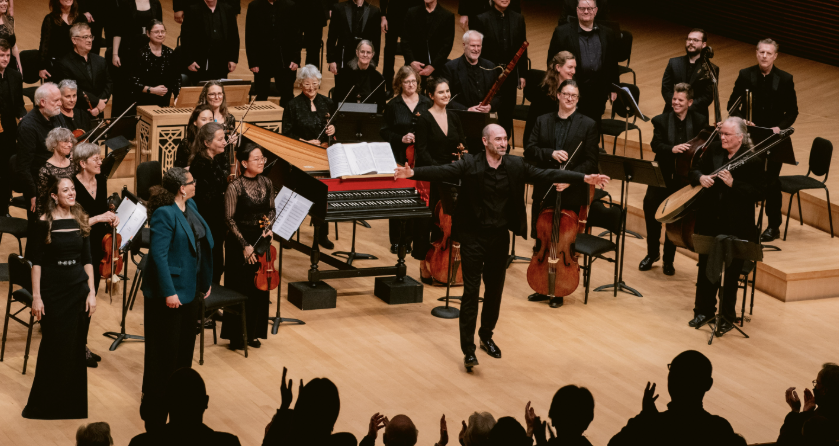
4. What’s something you hope to achieve during your tenure with Philharmonia Baroque?
I want audiences to feel that the ink is still wet on the page – that Handel or Bach or Rameau wrote this thing recently, urgently, for us, in this room. Philharmonia Baroque has an extraordinary legacy and an extraordinary level of craft. What I hope to bring is a particular kind of intensity and curiosity, a sense that we’re always asking why this piece, why now, what does it have to say to us today. If people leave our concerts feeling that something has happened to them – not just that they’ve enjoyed an evening but that something has shifted slightly in how they hear or feel – that would feel like success to me.
5. What’s one thing our patrons would be surprised to learn about you?
That I played bassoon on the soundtrack of one of the Harry Potter films – the fifth one, Order of the Phoenix. It’s not something that comes up often in conversations about baroque performance practice, but there it is. Being part of that as a session musician is one of those experiences that reminds you how wide the world of music really is.
6. Any message to our patrons?
Just that I feel an enormous sense of privilege in being trusted with this ensemble and this audience. Philharmonia Baroque occupies a genuinely rare place in the musical world – an organization of this calibre, with this depth of commitment to historical performance, and a community around it that has been built over decades. I come to it with real humility and real excitement, and I hope we can make something together that surprises us all. I can’t wait to get started.