What do a knight tilting at windmills, a soprano sparring with a trumpet, and a cellist wrestling with his emotions have in common? They are all part of the wonderfully unpredictable world of Baroque music, where composers could conjure extraordinary drama, humor, and virtuosity with seemingly limitless imagination.
In Philharmonia Baroque Orchestra’s Baroque Brilliance, December 3–5, we’ll encounter musical fireworks, a few spectacularly misguided adventures, and some of the most astonishing writing for the human voice ever put on paper. Along the way, we’ll rediscover a remarkable woman composer whose music has been waiting more than two centuries to be heard again.
To whet your appetite, I’ve chosen a few favorite recordings that offer a taste of what’s in store when we bring these musical adventures to life.
Handel: “Let the Bright Seraphim”
Handel’s “Let the Bright Seraphim,” from his oratorio Samson, is one of the most spectacular duets for voice and instrument in the Baroque repertoire. Its brilliant, explosive writing for soprano and trumpet has thrilled audiences as a stand-alone concert aria for generations.
Two performances are particularly memorable. Dame Kiri Te Kanawa sang it at the 1981 wedding of Prince Charles and Lady Diana Spencer, accompanied by trumpeter John Wallace. A decade later, Kathleen Battle and Wynton Marsalis brought their unforgettable partnership to the recording Baroque Duet.
The soprano and trumpet are equal partners in this exuberant musical conversation. Listen for the way the trumpet echoes the soprano’s exclamations, sometimes almost exactly, as the two virtuosos trade brilliant musical ideas.
Listen:
Marianna Martines: O virgo, cui salutem debet orbis
Our performances of Marianna Martines’ O virgo, cui salutem debet orbis mark a milestone for this extraordinary work: its West Coast premiere. In March 2025, I had the pleasure of conducting its modern world premiere with soprano Rebecca Myers and the Seraphic Fire Period Orchestra in Miami.
Martines was at the center of Vienna’s musical world in the late eighteenth century. Her mentor and close family associate, Pietro Metastasio, the poet of the Habsburg imperial theater and librettist of operas including Il re pastore and La clemenza di Tito, arranged an extraordinary musical education for her.
A young Joseph Haydn taught her keyboard; Giuseppe Bonno instructed her in counterpoint; and Nicola Porpora, the teacher of Farinelli, nurtured her exceptional vocal talent. The English music historian Charles Burney praised her keyboard playing and singing during his visit to Vienna. The tenor Michael Kelly, an original cast member of Mozart’s Le nozze di Figaro, later recalled the affection between Martines and her younger colleague Wolfgang Amadeus Mozart, with whom she played piano duets.
Martines was herself an exceptional singer, and she most likely performed this virtuosic, multimovement Latin cantata herself.
As in Handel’s “Let the Bright Seraphim,” the solo voice is paired with a formidable instrumental partner. Here, it is the oboe, which matches the soprano’s agility note for note in a brilliant, concerto-like exchange during the first aria.
Listen:
Telemann: Burlesque de Quixotte
Telemann’s Burlesque de Quixotte is a tongue-in-cheek musical cartoon of Cervantes’ chivalric and rather dotty knight-errant, Don Quixote de la Mancha, and his faithful squire, Sancho Panza.
The overture, with its stumbling slow section and whirling fugue, gives us a taste of what is in store for our hero.
Quixote jousts with windmills. Listen for the accented down-bows of the strings. His sighs for the beautiful Lady Dulcinea are communicated through expressive suspensions and fluttering bow vibrato.
In another episode, Sancho Panza is tossed into the air in a blanket at an inn. Quick ascending gestures, followed by loud, accented drops, paint a vivid musical picture of his ordeal.
Rocinante, Quixote’s imagined great steed, has a noble stride, while Sancho Panza ambles behind on his donkey.
At the end, we encounter Don Quixote asleep, dreaming of many further exciting adventures.
Listen:
C.P.E. Bach: Cello Concerto in A major, Wq 172
C.P.E. Bach wastes no time introducing us to his musical personality. Sudden changes from loud to soft create an almost theatrical sense of tension and release.
This wonderfully adaptable concerto also exists in versions for flute and harpsichord, instruments with strikingly different musical personalities.
In the first movement, our hero, Philharmonia Baroque’s principal cellist Bill Skeen, takes us on a restless journey through a succession of keys. In the slow, minor-key movement, that adventurous spirit gives way to something approaching mournful longing. The composer’s remarkably detailed use of sudden piano (soft) and forte (loud) markings makes the emotional contrasts even more striking.
Finally, a joyful finale in triple meter brings the concerto to an exhilarating conclusion. Our cellist seems to combine the striving and longing of the previous movements into a spirited dance-off with the orchestra.
Listen:
J.S. Bach: Jauchzet Gott in allen Landen, BWV 51
At the heart of our program is one of the great peaks of writing for solo voice and trumpet.
Bach’s Cantata 51 is practically a textbook of the many ways to combine the seemingly modest forces of soprano, trumpet, strings, and continuo. From its iconic opening bar, we understand that this is not simply a cantata, but a concerto-journey through the astonishing range of techniques Bach had at his disposal.
The first movement is less a duet than a double concerto. Each soloist has an independent musical line, and those lines eventually combine into the long, sweeping phrases that are a hallmark of Bach’s writing.
This concerto-like opening is followed by an accompanied recitative, replete with pulsing figures in the strings.
The third movement, a slower aria in the minor mode, allows the continuo section, here comprising lower strings, lute, bassoon, and keyboard, its moment in the spotlight as an equal partner to the soprano.
The following chorale is constructed like a trio sonata: two violins and a bass line weave together three independent parts while the soprano sings the Lutheran hymn “Sei Lob und Preis mit Ehren” above them.
Without a pause, Bach launches into a final “Alleluia,” transforming the exuberance of the opening into a dazzling, high-wire display of vocal and instrumental virtuosity with the full orchestra.
For a favorite recorded interpretation, I return to Barbara Hendricks, whose performance with trumpeter Håkan Hardenberger captures the work’s brilliance and lyricism.
Listen:
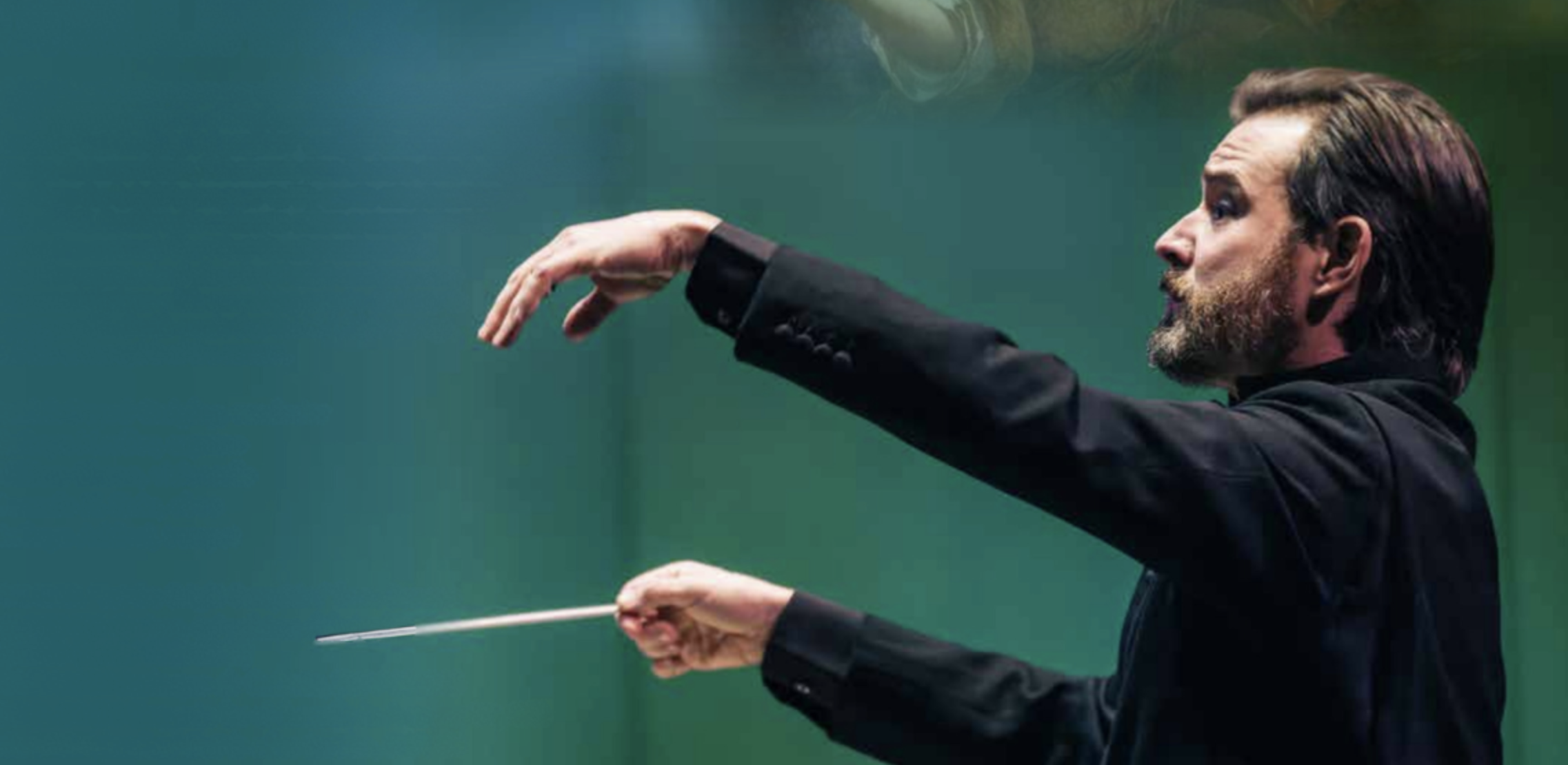
Under the direction of conductor Patrick Dupré Quigley, Philharmonia Baroque Orchestra is joined by soprano Kathryn Mueller, cellist William Skeen, oboist Gonzalo X. Ruiz, and trumpeter Kathryn Adduci for Baroque Brilliance, a festive program featuring dazzling works by Handel, Bach, and more. Experience these virtuosic showpieces performed on period instruments, capturing the authentic sound and style of the Baroque era.
Program
HANDEL – “Let the Bright Seraphim” from Samson
MARTINES – O virgo, cui salutem debet orbis (WEST COAST PREMIERE)
TELEMANN – Burlesque de Quixotte, TWV 55:G10
C.P.E. BACH – Concerto for violoncello in A major, Wq 172
J.S. BACH – Jauchzet Gott in allen Landen, BWV 51
Patrick Dupré Quigley, conductor
Kathryn Mueller, soprano
William Skeen, violoncello
Gonzalo X. Ruiz, oboe
Kathryn Adduci, trumpet
Performances
Thursday, December 3, 2026 • 7:30 PM
First United Methodist Chruch
625 Hamilton Ave, Palo Alto, CA 94301
Friday, December 4, 2026 • 7:30 PM
Herbst Theatre
401 Van Ness Ave, San Francisco, CA 94102
Saturday, December 5, 2026 • 2:30 PM
First Congregational Church of Berkeley
2345 Channing Way, Berkeley, CA 94704
Tickets
Tickets as low as $40 and $20 for Under 30s. Learn more at philharmonia.org/brilliance or call (415) 295-1900.