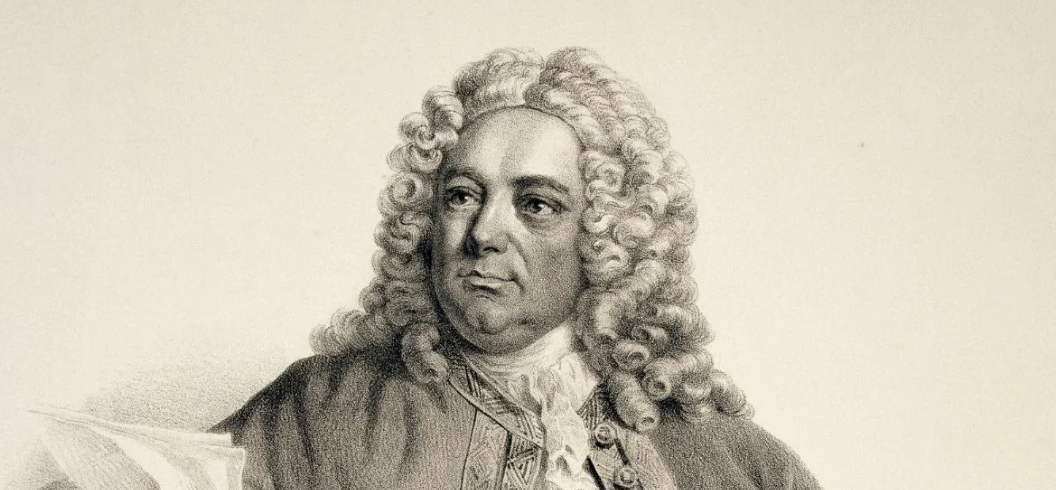
When Handel set sail for Dublin in 1741, professional setbacks and financial pressures had taken their toll. An invitation to Ireland offered a welcome escape from London’s competitive music scene.
What he found was more than a change of scenery: Dublin welcomed him enthusiastically, and his visit became an extremely productive nine-month stay that included performances of two of his greatest works.
Here are six aspects of Handel’s time in Ireland that deserve a closer look.
1. Even Handel Needed a Break
By 1741, Handel had spent decades navigating London’s competitive music scene. Italian opera, once the foundation of his success, was losing ground, and his latest ventures had struggled. An invitation to Dublin offered the chance to step away from those pressures, find new audiences, and concentrate on making music.
2. Dublin Was No Musical Backwater
Eighteenth-century Dublin already had a flourishing concert scene, with professional musicians, theatres, cathedral choirs, and audiences eager for the latest European music. Among its leading figures was violin virtuoso Matthew Dubourg, a friend of Handel’s who directed the orchestra for his Dublin performances. Dubourg had studied with the celebrated Italian composer Francesco Geminiani, whose connections to Ireland were part of a wider exchange of musical talent across Europe.
“The Politeness of this generous Nation cannot be unknown to you, so I let you judge of the satisfaction that I enjoy, passing my time with Honour, Profit and Pleasure.” – George Frideric Handel letter, dated December 29, 1741
3. The Irish Welcome Was Hard to Leave Behind

Handel arrived in November 1741 and remained until August 1742, spending almost nine months in Ireland.
What began as an invitation to perform became an extended stay filled with concerts, composition, and revisions of earlier works. Among them was Alexander’s Feast, which Handel substantially reworked for his Irish audiences.
4. Dublin Helped Shape a New Chapter in Handel’s Career
Handel was already moving away from Italian opera toward English-language oratorios and other large-scale vocal works. His Dublin visit came at a pivotal moment in that transition.
For Alexander’s Feast, he rewrote solo movements to suit the singers available to him and expanded the work from two parts to three, creating the distinctive 1742 version that Philharmonia performs this November.
5. Alexander’s Feast Came Just Weeks Before Messiah
Handel presented his revised Alexander’s Feast in Dublin on March 2, 1742, just six weeks before Messiah received its world premiere in the same city, on April 13.
In another fun connection to Philharmonia’s season, Irish-born writer Newburgh Hamilton, who helped adapt Alexander’s Feast, has been suggested as a possible author of the original English text that eventually became Haydn’s The Creation. (Philharmonia closes the 2026/27 season with Haydn’s masterpiece next spring.)
6. A New Champion for the Dublin Version
For nearly three centuries, Handel’s 1742 Dublin version of Alexander’s Feast was largely overlooked in favor of the more familiar 1736 version.
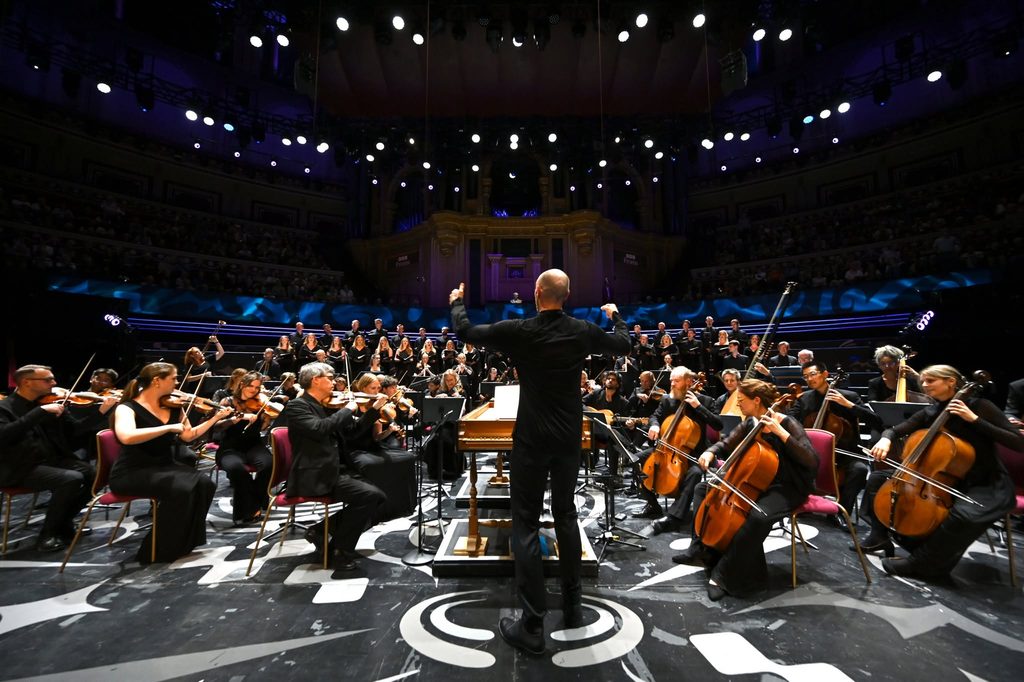
Philharmonia’s Music Director Peter Whelan, who grew up in Ireland, collaborated with Handel scholar Donald Burrows to reconstruct the Dublin score, reconstructing a missing vocal aria from surviving historical sources and restoring the third part that is unique to the Dublin version. Following acclaimed performances in Ireland and at the BBC Proms in 2025, Whelan brings this version to the United States for the first time with Philharmonia Baroque Orchestra & Chorale.
Preview the Music
Music Director Peter Whelan leads the first U.S. performances of Handel’s 1742 Dublin version of Alexander’s Feast in Handel’s The Power of Music, performed on period instruments and in the style of the time. The concerts feature soprano Sherezade Panthaki, mezzo-soprano Rachael Wilson, tenor James Way, Philharmonia Baroque Orchestra, and Philharmonia Chorale under the direction of Valérie Sainte-Agathe.
Program
George Frideric HANDEL — Alexander’s Feast, or The Power of Music (1742 Dublin Version) (U.S. PREMIERE)
Peter Whelan, conductor
Sherezade Panthaki, soprano
Rachael Wilson, mezzo-soprano
James Way, tenor
Philharmonia Chorale, directed by Valérie Sainte-Agathe
Performances
Wednesday, November 11, 2026 • 7:30 PM
Bing Concert Hall
327 Lasuen St., Stanford, CA 94305
This program is co-presented as part of Stanford Live’s 2026/27 season.
Friday, November 13, 2026 • 7:30 PM
Herbst Theatre
401 Van Ness Ave, San Francisco, CA 94102
Saturday, November 14, 2026 • 2:30 PM
First Congregational Church of Berkeley
2345 Channing Way, Berkeley, CA 94704
Tickets
Tickets start at $40, and three-concert subscriptions start at $96. For tickets or information, call (415) 295-1900 (Mon-Fri, 10 AM-4 PM) or visit philharmonia.org/power.