
The Fictional Diary of Elizabeth Carter
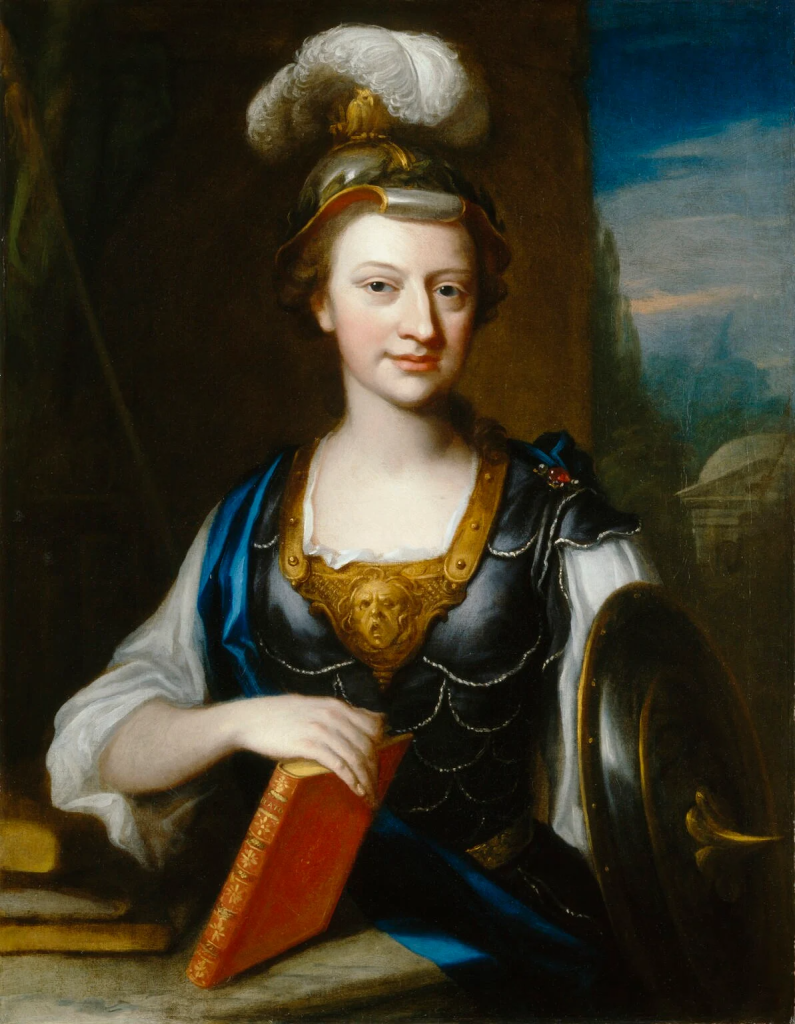
My new gown lay across the bed: pale blue silk, underpinned by modest hoops, with lace at the sleeves and a narrow ribbon across the stomacher. I ran my fingers over it, examining the fabric and marveling at the workmanship of the mantua-maker. It seemed very extravagant, but my father called it an “investment” and reminded me that a young woman has just one season of first impressions. I felt myself both a child at play and a woman under scrutiny, for such a gown is not mere clothing, rather it announced my new place in the world. At my throat, I wore the single string of pearls that had belonged to my mother, now passed to me as the eldest daughter of the house.
Stepping from the carriage, my new gown rustled stiffly about me, and I felt the weight of my father’s words as I took in the scene. The theatre was daunting: chandeliers ablaze, silks brushing, fans fluttering. My cousin Mrs. Ellison delighted in the bustle, whispering names of acquaintances, remarking on jewels, and nudging me to smile. “You must learn the world, my dear,” she said, “and the world must learn you.”
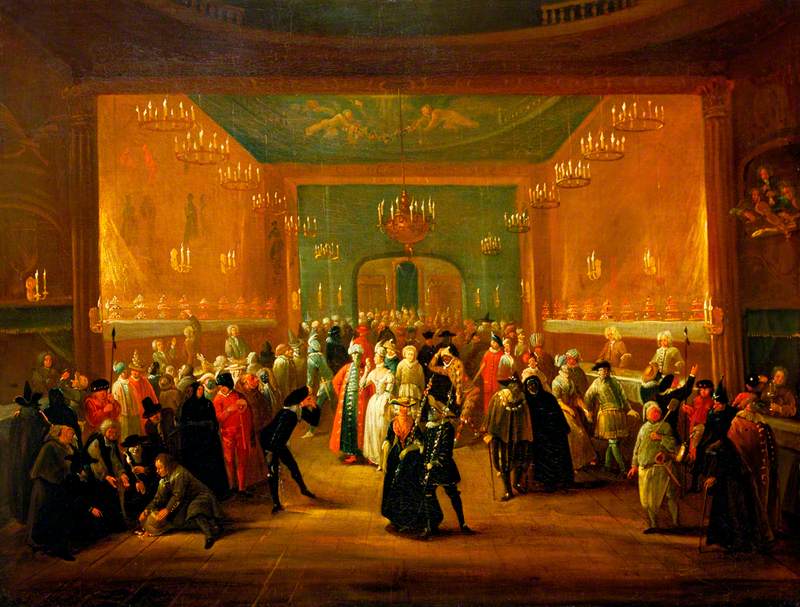
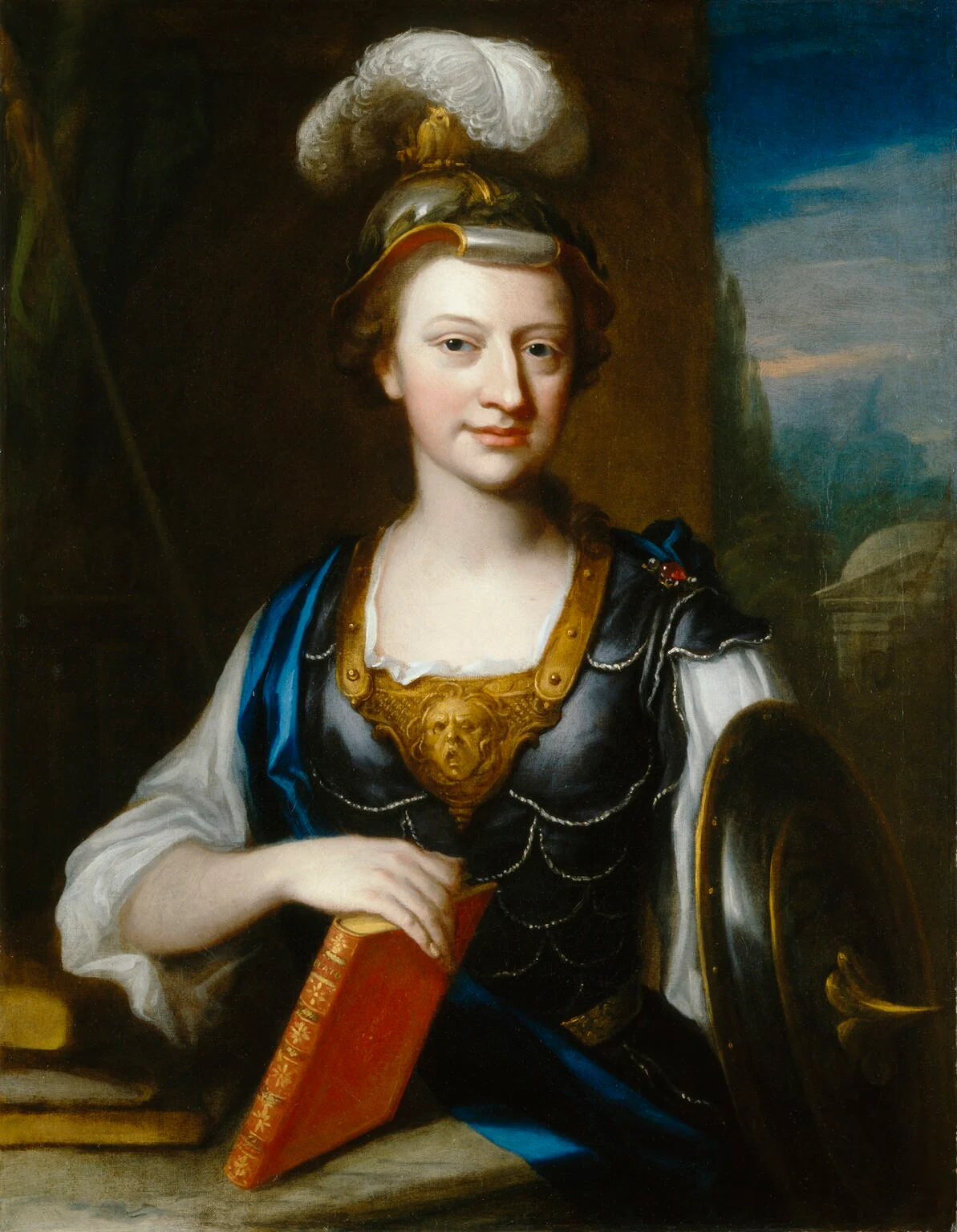
Image credit: Victoria and Albert Museum, London
Then the music began, and the crowd became hushed. Handel’s Armida abbandonata related the story of a sorceress in love with the hero Rinaldo, caught between duty and desire. Marcello’s Arianna abbandonata presented another heroine, abandoned by her lover, despairing, and pouring her grief into the sea. Mrs. Ellison sighed at the romance and drama of the stories and admired the singer’s passion, but to me they seemed cautionary tales: demonstrations of how easily the heart betrays us when not restrained by judgment. What good can come of surrendering reason to unruly affections?
Yet I was still touched by the display. The soprano’s voice conveyed both fury and heartbreak, and I could not resist testing myself against her Italian, catching familiar words and tracing the meaning as she sang. Each phrase I grasped felt like a small triumph. For all my disapproval of the sentiment in these works, I could not help admiring the art that portrayed it so vividly.
When we emerged into the chill night, Mrs. Ellison continued exclaiming over gowns and gossip, while I was glad to breathe the fresh air. The city’s noise faded, and I thought of my father, who would ask both how I had been received and what I had learned. I would tell him that music can move the soul — sometimes in ways we may distrust, but always in ways that instruct.
Learn more about the Elizabeth Carter Diaries project.
Read the next diary entry here: Part 2: Gloria! (1739, age 22)
Historical Note
London in the 1730s was at the height of its Italian music craze. Opera houses and concert rooms were brightly lit stages for social display, as much as for music. Carriages jammed the streets outside, and ladies in silk gowns and pearls mixed with men in embroidered coats as part of the spectacle. For a young woman making her first appearance in society, a new gown would have been an announcement of family standing, hopes for a suitable match, and careful calculation balancing the desire to make an impression against the expense of the investment.
Italian vocal music itself inspired both admiration and controversy in this time. Handel, newly established as London’s preeminent composer, had brought Italian opera to dazzling popularity, and works like his Armida abbandonata (1707) and Marcello’s Arianna abbandonata (1720s) circulated widely in manuscript and performance. While these cantatas are unlikely to have been paired in concert in 1735, it was common practice to revive older Italian works alongside newer imports. Their stories of heroines abandoned, overtaken by passion and undone by their own desires, drew rapturous applause from some, but worried moralists who saw them as dangerous examples of uncontrolled emotion.
Public debate reflected these mixed views. Joseph Addison had ridiculed the excesses of Italian opera as early as 1711 in The Spectator, and John Gay’s The Beggar’s Opera (1728) mocked the entire genre. Still, audiences still thronged to hear Italian music, even when the plots seemed weird or scandalous. For a pious young woman like Elizabeth Carter, the subject matter of these works may have been intriguing but troubling.
Carter is known to have spent time in London during “the season”, though it is not clear where she stayed and with whom. Mrs. Ellison, Carter’s chaperone in this diary entry, is a fictional character. Her delight in the spectacle illustrates that in 18th century London, concerts were as much occasions to see and be seen as they were opportunities to enjoy the music.
Elizabeth Carter (1717–1806)
Elizabeth Carter was born in Deal, Kent, the eldest daughter of Rev. Nicholas Carter, a Cambridge-educated clergyman. Her early life was shaped by both privilege and loss: her family lost much of their money in the South Sea Bubble, and her mother died in 1727 when Elizabeth was just ten. Her father ensured she received a rigorous education, teaching her Latin and Greek himself and encouraging Elizabeth’s pursuit of Italian, Spanish, German and Portuguese. By her teens, she was also fluent in French after being sent to live with a Huguenot family in Canterbury for a year.
Music formed part of Elizabeth’s upbringing: she learned the spinet and German flute, and dancing. Drawing, and needlework rounded out her education. At seventeen, the year imagined here, she had already begun her literary career with published submissions to The Gentleman’s Magazine under the pen name “Eliza.”
A girl of her age and background would have been expected to “come out” into society by attending assemblies, theatres, and concerts under the care of relatives or family friends. Her father hoped she would marry well, and a new gown and heirloom pearls would have been intended to launch her towards that outcome. For Elizabeth, whose piety and studiousness set her apart, such an occasion may have provoked a mix of emotions. The diary entry reflects this in her excitement over the silk and pearls, her moral caution at stories of heroines undone by passion, her playful testing of her Italian, and her awareness of being watched as both a scholar’s daughter and a young woman entering the world.
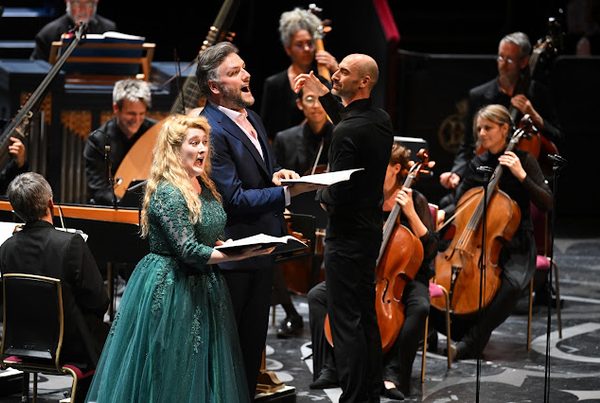
Soprano Maya Kherani portrays two heroines forsaken in love in works by Handel and Marcello in Philharmonia Baroque’s season opener Fury and Heartbreak. With Václav Luks conducting, Philharmonia brings the sound of period instruments to Venetian elegance and Neapolitan fire, culminating in Vivaldi’s In furore iustissimae irae—a dazzling storm of strings and vocal fireworks.
- Thursday, October 16, 2025 – 7:30 PM | Herbst Theatre, San Francisco
- Saturday, October 18, 2025 – 2:30 PM | First Congregational Church, Berkeley
- Sunday, October 19, 2025 – 2:30 PM | Mountain View Center for the Performing Arts
Tickets: $40 to $125 | $20 tickets available for Under 30s. Save more with a subscription—as low as $84 for 3 concerts. Get tickets online or call the Box Office at (415) 295-2111.

This project was conceived and developed by Theresa Madeira, Marketing Director of Philharmonia Baroque, drawing on her academic background in history (BA, Oxford University), her passion for storytelling and classical music, and her professional commitment to sharing what makes Philharmonia unique.
By performing on period instruments with attention to historical style, Philharmonia brings audiences as close as possible to hearing the music as its first listeners did. The Elizabeth Carter Diaries series aims to provide another point of access to that experience, inviting readers to step into the world of the 18th century and imagine hearing the music in its original context.
Learn more about the Elizabeth Carter Diaries project.
Read the next diary entry here: Part 2: Gloria! (1739, age 22)