
By Scott Foglesong
Roderick Williams (b. 1965)
Quem Pastores Laudavere (2023)
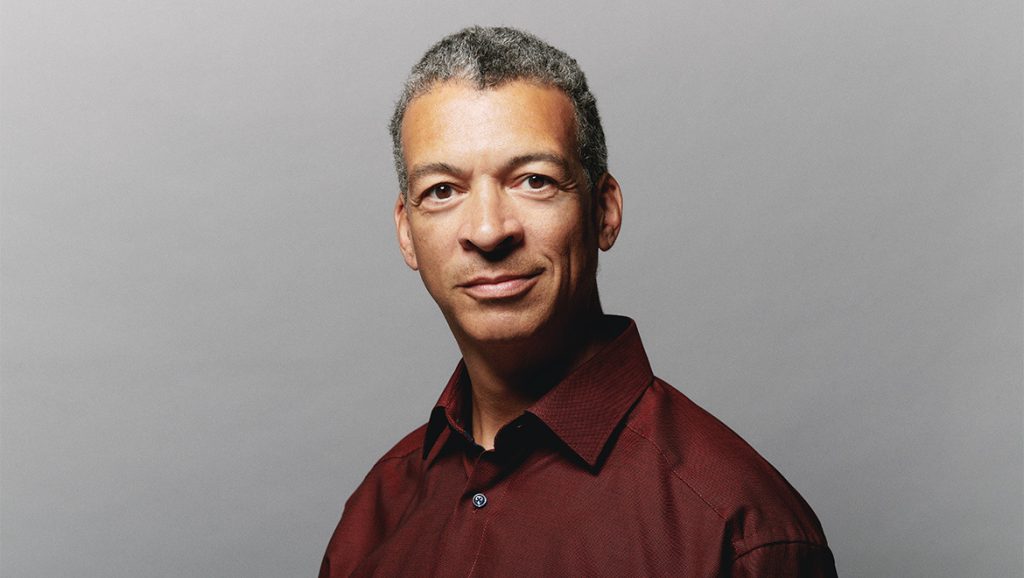
The frustrations of a life in music are a common trope in our modern world. As a refreshing palliative, consider the career of Roderick Williams, born in North London to a music-loving, if not musically professional, family. One of today’s busiest and most admired baritones, Williams began his career in opera with a bouquet of impressive performances in roles ranging from Britten’s The Rape of Lucretia to Rossini’s The Barber of Seville to Prokofiev’s War and Peace. He has been a distinguished recording artist for the past 30 years and an always welcome presence in concert and recital halls worldwide.
Just his vocal career alone is inspiring enough, but also consider that Williams is both an acclaimed voice teacher and, particularly, a highly successful composer. In that capacity, he brings his remarkable gifts to the Philharmonia Baroque Orchestra and Chorale with his a capella setting of the beloved Christmas tune Quem Pastores Laudavere (Whom the Shepherds Praised).
“The melody is old and is probably better known through its harmonization by the 16th and 17th century German composer Michael Praetorius*,” Williams tells us. “But it has received many harmonizations since then and mine is probably one of the more out there, shall we say. I got to know the piece as a singer when I was a boy.”
That doesn’t mean that he’s just adding chords to the tune and calling it a day. “What I’ve done is taken little scraps of the melody and put them under the microscope, as it were, to make a huge kaleidoscope of sound,” he explains. He structured the piece into sections “where I explore different parts of the song.” But after such an intrepid voyage of exploration, “at the end I put it all back together and we have the song as we know it traditionally.” But maybe not all that traditional: “with some very soupy schmaltzy chords underneath because it’s a favorite tune of mine.”
* A performance of the Michael Praetorius (1571-1621) setting of “Quem Pastores Laudavere” will precede the Roderick Williams premiere.
Arcangelo Corelli (1653–1713)
Concerto Grosso Op. 6, No. 8 in G minor, Christmas Concerto (ca. 1708)
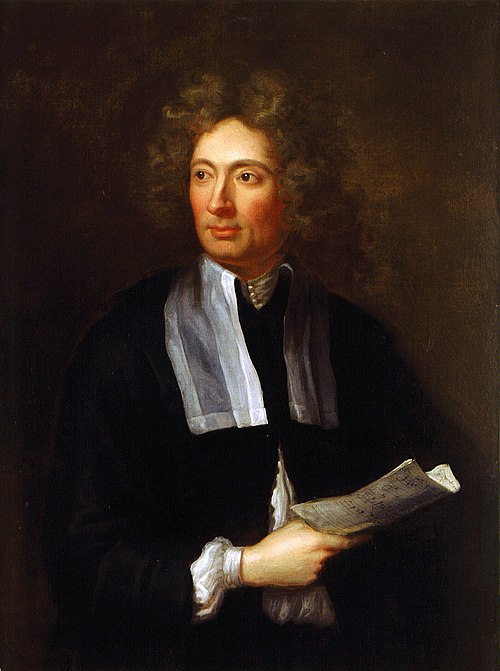
Life has never been easy for freelance musicians, but conditions in Rome during Corelli’s lifetime were especially precarious. The opera houses and theaters, usually reliable venues for steady employment, were closed more often than not, victims of ecclesiastical prudence in the face of political turmoil and natural disasters. Musical activity was largely private and confined to those patrons rich enough to afford it.
But Corelli never had anything to complain about. From the time he emerged from Bologna, where he had been admitted to the elite Accademia Filarmonica at age 17, Corelli was employed by the well-heeled and influential. Two cardinals (Ottoboni and Pamphili) and one queen (Christina of Sweden) saw to it that the patrician violinist and composer stayed fully occupied and well paid. The combination of steady income and discriminating listeners allowed Corelli the luxury of honing his works via frequent performances, so he never committed a piece to publication hastily or carelessly. Corelli was an exemplar of the ‘pure’ musician – i.e., dedicated to the highest standards of playing and composition, even if those ideals mandated a sharply limited output.
Corelli’s last published collection, the Opus 6 Concerti Grossi – works for a few solo instruments backed up by a larger ensemble – occupied him from 1708 onwards, after his retirement from public performances. (He may well have started work on them as early as the 1680s.) They come in two varieties: the sonata da camera (“courtly” sonata) type is kissing cousin to a dance suite, while the sonata da chiesa (“church” sonata) consists of four movements in alternating slow-fast tempi, often featuring rich contrapuntal textures.
The eighth concerto in the set carries the subtitle Fatto per la notte di natale – i.e., written for Christmas Eve. The final movement of the da camera work has ensured the work’s lasting appeal – it’s a ‘pastorale’ or shepherd’s song featuring an underlying bagpipe-like drone. But that’s just the icing on the cake, given the riches of the preceding movements, ranging from a solemn introduction, sprightly dance-like numbers, and particularly a central movement in which two harmonically lavish slow passages flank a quick contrasting section.
Caroline Shaw (b. 1982)
The Holdfast (2024)
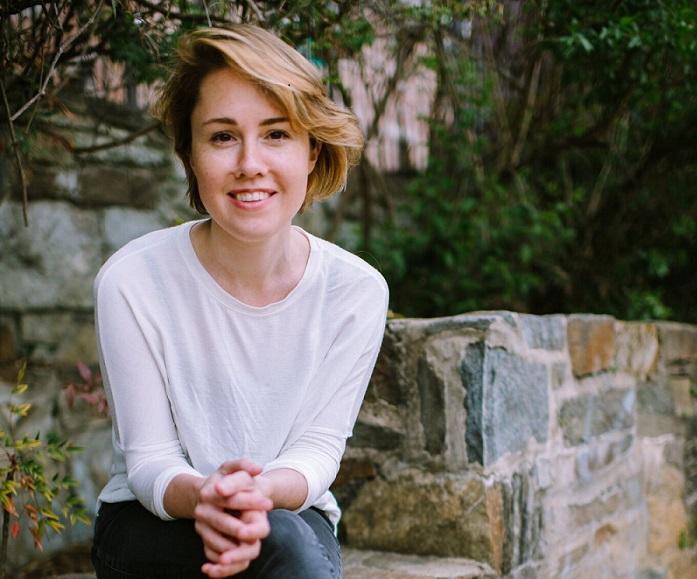
To begin with: a ‘holdfast’ is the structure that attaches a lichen to its support, but that’s only the surface meaning of the word. The idea here is to hold fast to your beliefs, even in the face of difficulty or opposition. To that we add the moist grey poetry of Thomas Hardy, particularly “The Darkling Thrush”, which is blended with some of Caroline Shaw’s own texts to create this new five-movement work for five voice parts with ensemble.
The voices are placed behind the ensemble, in the interest of creating a fluid blend between the text and period instruments in what is a contemplation on the very essence of it all. “I really love songs about wondering about the other side, the essential questions of life,” says Shaw. “What happens when you die? How do you get there, how do you understand it?”
Certainly Hardy’s poem asks those same questions, as amidst a gloomy landscape where “winter’s dregs made desolate the weakening eye of day” is heard a full-voiced evensong, filled with joy, from “an aged thrust, frail, gaunt, and small.” This is our message of hope in the face of despair. Somehow Hardy’s elderly thrush knows more about it than we do.
Antonio Vivaldi (1678–1741)
Gloria, RV 589 (1713–1717)
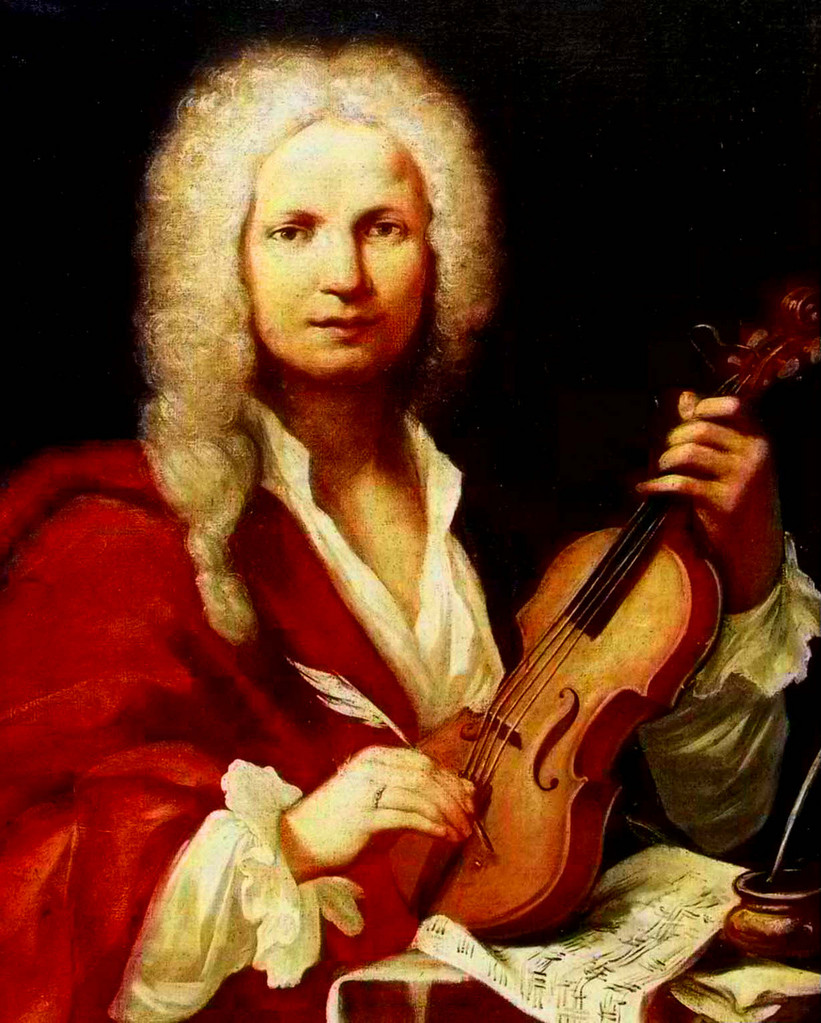
Vivaldi’s fluent inventiveness has sometimes worked against him. Eighteenth-century critics filed charges of carelessness, eccentricity, frivolity, and coarseness. Even now the dust hasn’t altogether settled; until recently it was still considered sporting for commentators to crack wise about Vivaldi’s writing the same concerto 500 times. But sage folk have always viewed the Red Priest of Venice differently. J.S. Bach, for example, learned concerto writing by transcribing parts of Vivaldi’s L’estro armonico for solo clavier. It is to Vivaldi that we owe the establishment of the ritornello form that allows instrumental music to break free of confining two-part structures and make the Baroque concerto, with its signature lob-and-volley between soloist and ensemble, possible. It is also Vivaldi who is turning out to be amongst the most challenging and enigmatic composers of the Baroque. As newly-rediscovered Vivaldi works emerge from their long silence, our awareness of his sheer scope and astonishing fertility broadens.
Among the most popular of Vivaldi’s rediscovered choral works is a Gloria in D Major, RV 589, one of his two extant settings of the text. That he would set the Gloria multiple times isn’t surprising. Of the five principal sections of the Ordinary of the Mass – Kyrie, Gloria, Credo, Sanctus, and Agnus Dei – it’s the Gloria that carves out the most clearly delineated emotional arch over its approximately two dozen lines. After a joyous celebration kicked off by “Glory to God in the Highest” the text drops into a mood of supplication with “You who take away the sins of the world, have mercy on us.” Brightness returns with “For you alone are the Holy One” and “With the Holy Spirit.” Thus the Gloria makes for a terrific three-part structure – fast, slow, fast – with a sustained “Amen” to bring it all home.
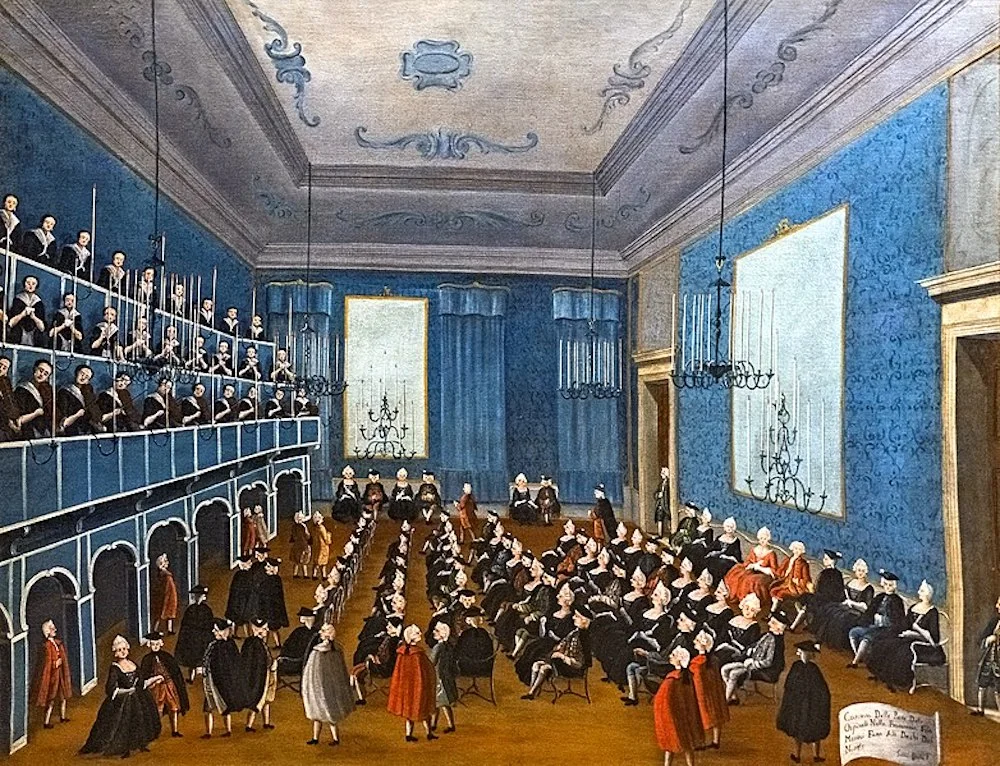
Vivaldi wrote the Gloria at some point between 1713 and 1717 for the chorus of the Ospedale della Pietà, where he had long served as a violin master and teacher to the school’s talented female orphans. Long lost but unearthed in the 1920s, the Gloria’s happy second life began with its first modern performance in 1939.
Vivaldi’s style is remarkably consistent. His opera arias sound like his concerto movements which sound like his sacred choral pieces. Thus the opening of the Gloria could easily be one of his concertos, rhythmically alert and downright snappy. But there’s far more to the Gloria than that. Some movements are serene and meditative, others are ruggedly etched. “Et in terra pax hominibus” manifests a much more shaded mood than we usually associate with Vivaldi. Lyrical effusion abounds, such as in the “Laudamus te” with its paired sopranos, or what may be the work’s standout movement, the soprano aria “Domine Deus, Rex coelestis,” which adds a solo oboe to the voice – a sonority for which J.S. Bach showed a marked affinity. As the mood lightens in the third section, the “Qui sedes ad dexteram Patris” brings back the music from the beginning.
The Gloria ends in a grand double fugue – i.e., a fugue with two principal subjects instead of the usual one – that Vivaldi actually borrowed from another composer, in this case his contemporary Giovanni Maria Ruggieri. Such plagiarism seems downright shocking to our modern sensibilities, but during the Baroque era the practice was common, albeit viewed with disapproval. (Handel’s ‘borrowings’ have long been a sticky wicket.) Vivaldi significantly improves Ruggieri’s original, by highlighting the solo trumpet and enhancing the orchestration, bringing this mid-Baroque jewel to an appropriately radiant conclusion.
Celebrate the holidays with Valérie Sainte-Agathe and Philharmonia Baroque Orchestra & Chorale. Vivaldi’s Gloria—a joyful choral masterpiece—shines with new brilliance when performed on period instruments, transporting you to the festive sound world of 18th-century Venice.
- Friday, December 5, 2025 – 7:30 PM | Herbst Theatre, San Francisco
- Saturday, December 6, 2025 – 2:30 PM | First Congregational Church, Berkeley
- Sunday, December 7, 2025 – 2:30 PM | Bing Concert Hall, Stanford
Tickets: From $40 | $20 tickets available for Under 30s in SF & Berkeley only. Save more with a subscription—as low as $84 for 3 concerts. Get tickets online or call the Box Office at (415) 295 2111.
Scott Foglesong is the award-winning Chair of Music Theory at San Francisco Conservatory of Music. He also writes program notes for San Francisco Symphony, California Symphony, Las Vegas Philharmonic, New Hampshire Music Festival, and Left Coast Ensemble.