

BBC Radio 3 Host: The Irish Baroque Orchestra, conducted by Peter Whelan, presents Alexander’s Feast at the Proms on Saturday and then on Sunday at Snape Maltings. Peter Whelan is here with me. Good evening to you.
Peter Whelan: Good evening.
Host: Great to have you here. The version that you’re going to perform is the one that he took with him in 1742 when he went on his great visit to Dublin when Messiah was premiered. It was a nine-month-long trip, wasn’t it?
PW: It was quite a big stay, yes. I think he really enjoyed himself, by the sounds of things. Things had not been going so well for him in London—the press were really critical of him; his health was bad, he was losing money—and I think a friend of his (and there were many Irish friends who would have popped across from Dublin, which was the second biggest city on these Isles at the time) maybe said, you know, you might have a better time in Dublin. And he certainly did, because we know that even before his boat arrived, with his organ and his instruments and clothes yet to be taken ashore, he was already wined and dined all over the city.
Host: As you note in the program note, the city’s famous hospitality almost killed him.
PW: That’s right, there’s a story of him in the Surgeon General’s house having some kind of stroke.
Host: Though overindulgence?
PW: A little bit, yeah, a typical Irish vice (!), but he was resuscitated by this Surgeon General himself and then was happy from there on out, I think.
Host: The reason that this is the Dublin version is in part thanks to Jonathan Swift—the author of Gulliver’s Travels, Dean of St. Patrick’s Cathedral—his sort of unwillingness to get involved.
PW: That’s right, it wasn’t unusual for Handel to rewrite his pieces for the singers he had available to the circumstances, and as you say, the circumstances in Dublin were very particular. Poor old Jonathan Swift, who maybe due to his advanced years, suddenly took huge exception to Handel using the singers in the cathedral choir, on whom Handel was very reliant. He didn’t like them singing in a secular venue in Fishamble Street, and he just said, “No, that’s it, no more.” And I think Handel really had to jump right before his second subscription series in Dublin, and the resulting casting that he had to use, using theater singers, including one guy called Callaghan, is the reason why we have the current version of Alexander’s Feast, which is normally in two parts, but for Dublin, there’s this extra third part.
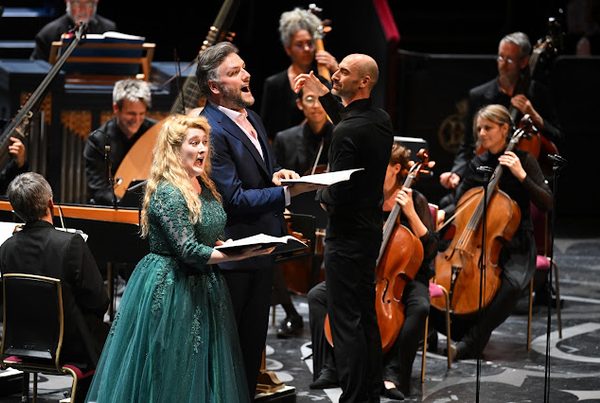
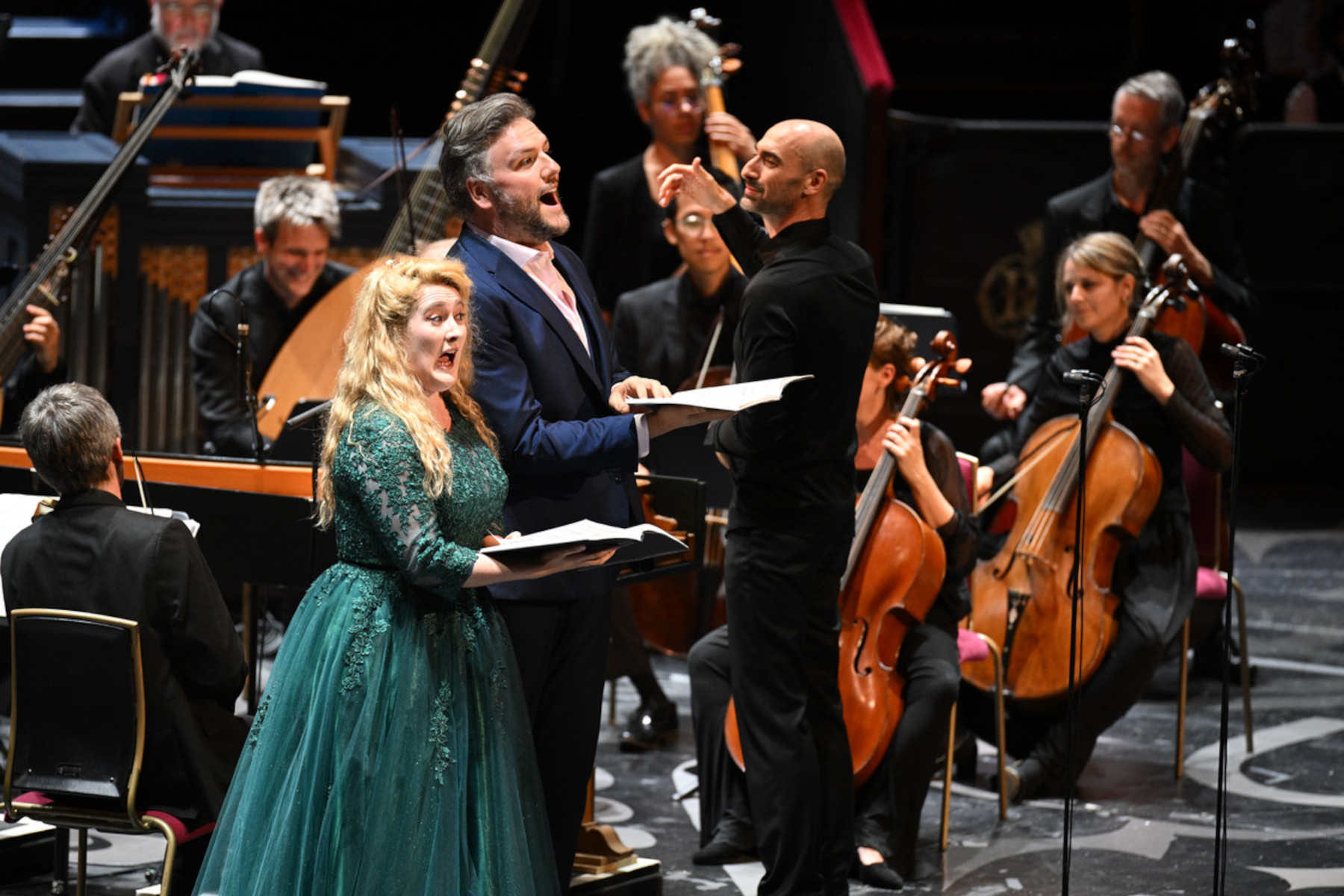
Musical Interlude: Well, let’s have a listen to a bit of it now. We’re going to hear “Softly Sweet in Lydian Measures.” Rachel Redmond singing with the Irish Baroque Orchestra and Peter Whelan, our guest, conducting.
“Softly Sweet in Lydian Measures” from Alexander’s Feast by Handel, Rachel Redmond singing. Hillary Cronin, Hugh Cutting, and Stuart Jackson are the soloists at the Proms on Saturday evening, with the Irish Baroque Orchestra and Peter Whelan.
One of the things that’s often said about this piece is that Handel did it so well because of the quality of the words he was setting by John Dryden. I mean, he really rose to the challenge of writing, perhaps some of the greatest English writing he’d set at that point.
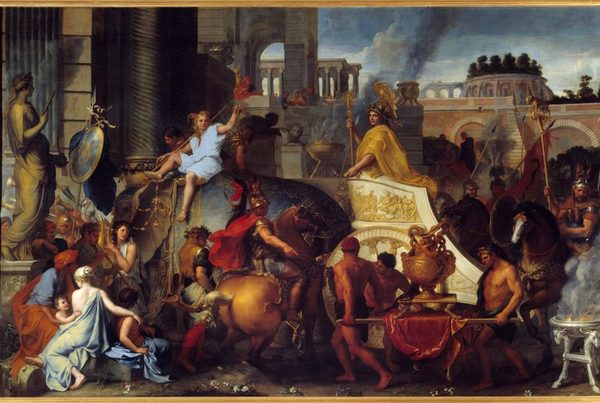
PW: Absolutely. It’s an amazing ode, and it’s a piece I didn’t know so well maybe a couple of years ago—it doesn’t get played so often. But as you say, the story is absolutely fascinating, basically about the power of music. You have Alexander and Thais, the greatest man and woman in the world, and they’re influenced by this guitar player, Timotheus, who they’ve booked for a wedding gig, who manages to change everything: the way they’re feeling, and the way they feel about each other. [Timotheus] uses his powers for good, and in the second half, he uses his powers for evil. It’s just really fascinating, and you never quite see what happens: You never hear Timotheus’ music, but you see the reaction from the soloists, the orchestra, and the choir. It’s an incredible piece.
Host: And for people who are thinking, well, I’m kind of worried about Handel, because the operas are often very long, and particularly to go and Prom, it’s actually quite a tight piece.
PW: It sure is, yeah, it’s punchy, it’s concert length. In fact, we even have to fill in some of the gaps between the first from the second and third parts where we’ve included some wonderful bracing music from the Due Cori, which features our wonderful horn players, but it’s a real celebration of music and text and everything that Handel is great at.
Host: You mentioned that Dublin when Handel was there was the second city of the British Isles, often called the Second City of Empire at that point. It had an incredibly rich and lively musical life, didn’t it? A huge number of foreign musicians from across Europe found themselves in Dublin.
PW: Absolutely, and that’s something we explore with the Irish Baroque Orchestra. It’s been a journey for us. Growing up, of course, in school, we learned about Handel’s Messiah being first performed in Dublin, and that was a jumping off point for me. I was really keen to discover who were the musicians that Handel knew? What was the music scene in Ireland? And as you say, it was really rich. You had people like Geminiani living there training these amazing violinists who were working all over Europe and working in Handel’s orchestra in London, too.
Host: You’re going to be taking many of those composers and names more established, too, I think, to the New World, because you’ve just become music director, artistic director of the Philharmonia Baroque in San Francisco. Congratulations!
PW: That’s right. I’m so excited! It’s a wonderful place. I was with the orchestra earlier in the year. It always feels like a first date when you meet a new bunch of people, but they’re just wonderful. They feel like family straight away. Of course, it’s amazing to think that a lot of them trained and studied in Europe as well. And there’s a huge mixture of really passionate musicians over there, and it’s a great place as well, with all those clean lines to play Baroque music.
Host: And two great cities looking out over the water, it’s going to be a fantastic existence between Dublin and San Francisco! We’re going to finish Peter with you playing the bassoon with Ensemble Marsyas in music by Johann Friedrich Fasch. You started out as a bassoonist. I think you still teach bassoon?
PW: That’s right, I have a couple of amazing students at the Royal Academy, who are doing me proud all of the time, but yes, I still do a little bit of playing and teaching, but not so much.
Host: When you have time, you’re a busy, busy man! Good luck on Saturday, and on Sunday at Snape Maltings. Thank you. Peter Whelan, thank you very much.
PW: Thank you.
Music: Peter Whelan playing the bassoon with Ensemble Marsyas, the Bassoon Concerto in C by Johann Friedrich Fasch. Peter Whelan will conduct Alexander’s Feast by Handel at the Proms on Saturday and then on Sunday at Snape Maltings.