
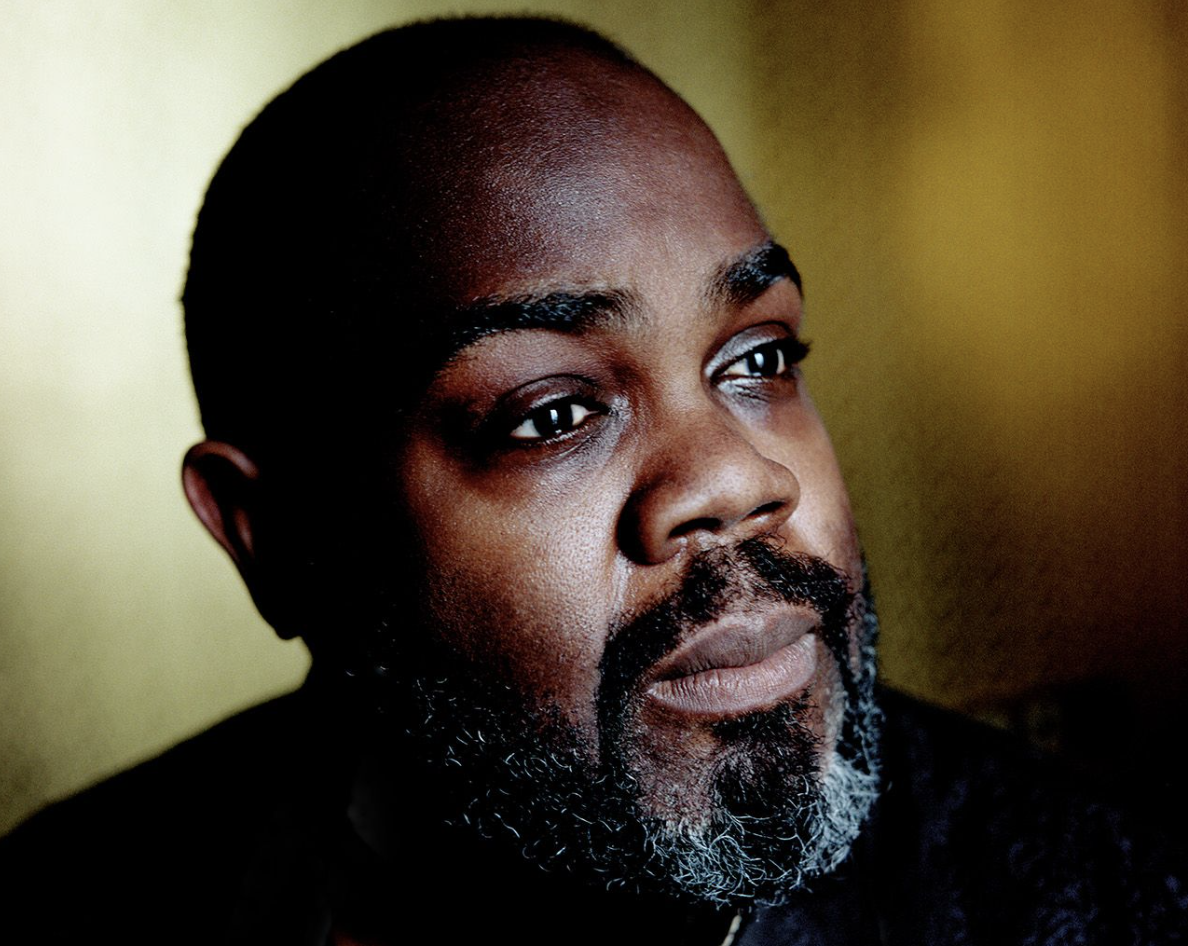
Praised as “a voice of effortless beauty” by The New York Times, countertenor Reginald (“Reggie”) Mobley joins Philharmonia Baroque for Pearls of Sorrow, a program pairing 17th century Baroque works with African American spirituals from the same era. Mobley shares what draws him to this repertoire and the connections between the two that shape our March concerts.
Welcome, Reggie! Can you tell us about how you conceived of this program?
This project grew from a feeling I’ve carried with me for many years — a desire to bring together the two musical worlds that have shaped who I am. As a countertenor, much of my repertoire lives in Bach, Handel, and the Baroque tradition, while my personal background is deeply rooted in African American traditions — gospel, spirituals, jazz, and more. Chris [Conductor Christine Brandes] and I developed this program together from a concept I’ve long wanted to explore: placing Black American slave songs and spirituals alongside music from 17th-century Germany, particularly from during and after the Thirty Years’ War, to reveal the powerful connections between them.
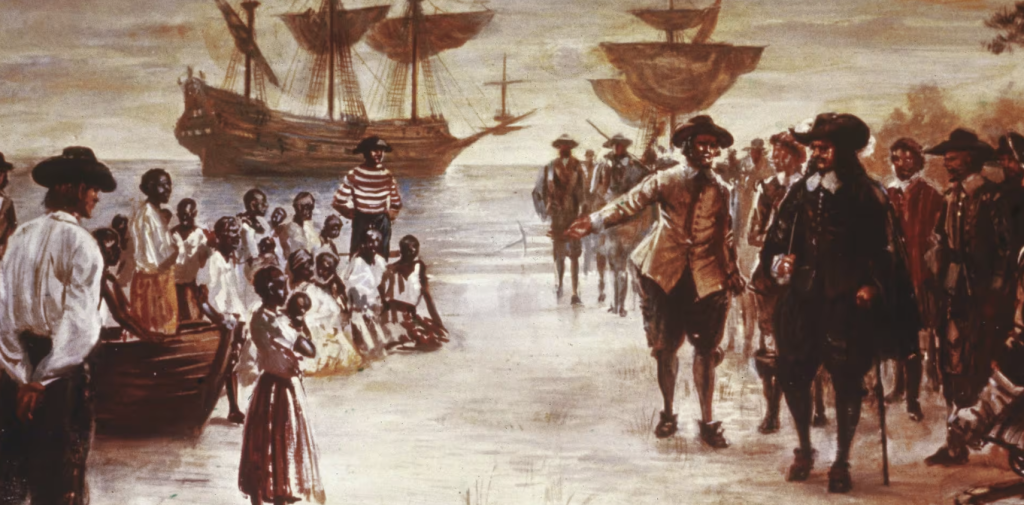
Painting of first Africans arriving in Virginia, 1619 (Hulton Archive/Getty Images)
What are some of the through-lines that connect the slavery in the Thirty Years’ War and slavery beginning in America? How did those historical events impact the music from those times?
One strong connection is time. The Thirty Years’ War began in 1618, and barely a year later the first slave ship arrived in Virginia at Jamestown. These two profound and devastating histories unfolded almost simultaneously. One conflict lasted about thirty years; the other stretched across centuries, with repercussions that are still felt today. That reality is one of the reasons I felt this concert needed to exist.
Another connection is not just when these events happened, but who they happened to. At the end of the Thirty Years’ War there was confusion, horror, and deep pain — and much of that grief was processed through music, through belief and faith, through the things people could still hold onto. I believe the same was happening here; you only need to listen to a single spiritual to hear it. Two communities separated by an ocean found a similar outlet for sorrow, revealing a human connection stronger than any border, language, or style.
There is something about us that links us across longitudes and latitudes, and even across time itself. Just as they loved, felt hunger, pain, and hope, so do we — and so will the people who come after us. This concert places these traditions side by side to show how tightly they are connected, and perhaps to remind us to keep holding onto one another, even in an age when technology both connects us and pulls us apart.
Why does this story matter right now?
We’re living in a moment when people can feel more divided than ever, even as technology keeps us constantly connected. My hope is that this concert offers a reminder of our common ground — that despite differences, histories, or borders, there is something fundamentally shared between us. Through these works, perhaps we can recognize pieces of ourselves in one another and rediscover a sense of unity. I’m looking forward to sharing this time together.
Preview the Music
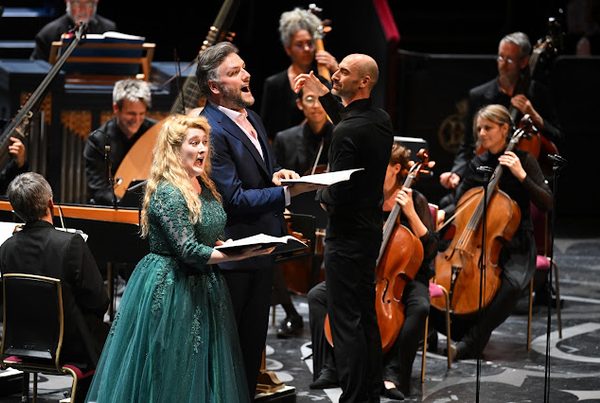
You can hear internationally acclaimed early music specialist Reginald Mobley in Pearls of Sorrow, with Philharmonia Baroque Orchestra, led by conductor Christine Brandes. The program unfolds in five chapters, moving through sorrow and pain to release, resilience, and freedom. You’ll hear European Baroque works and African American spirituals on period instruments—music from the same era that’s connected by shared human experience.
Concert Dates
Friday, March 13, 2026 – 7:30 PM | Herbst Theatre, San Francisco
Saturday, March 14, 2026 – 2:30 PM | First Congregational Church, Berkeley
Sunday, March 15, 2026 – 2:30 PM | Bing Concert Hall, Stanford
Get tickets online or call the Box Office at (415) 295 1900, Monday-Friday, from 10 AM to 4 PM.