
St. Paul’s Cathedral, London — Christmastide, 1739
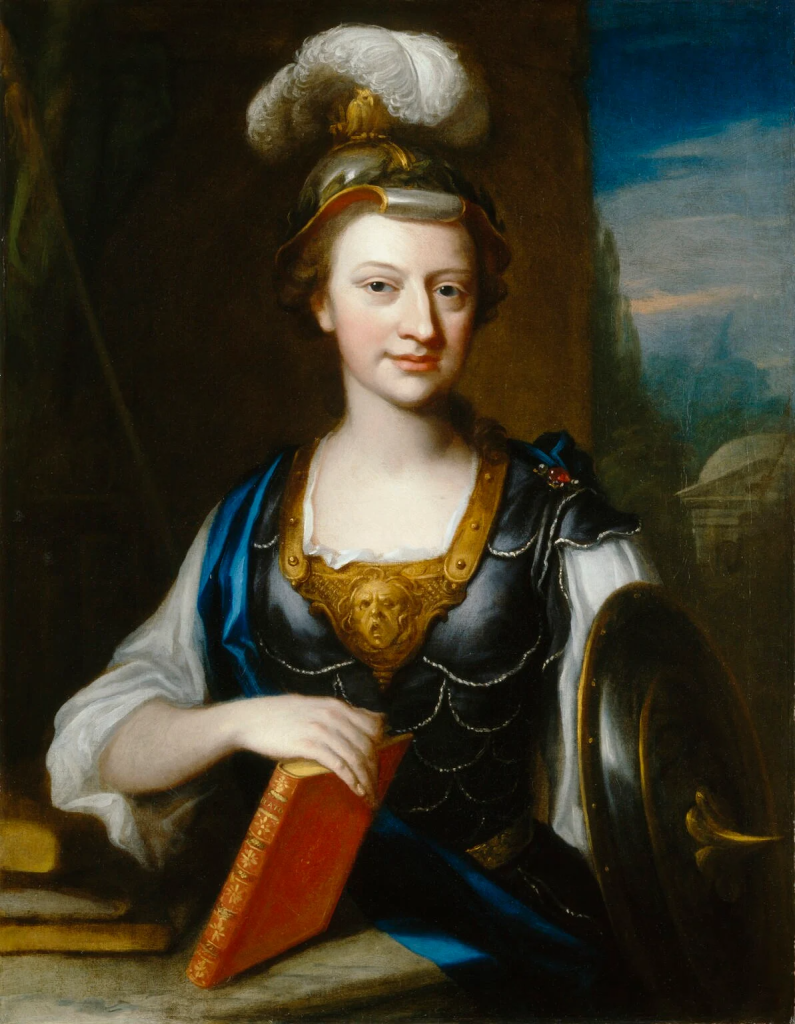
London glittered under a damp frost tonight, the air thick with coal smoke and the scent of roasted chestnuts. Linkboys darted ahead of the carriages with their torches, and the city’s church bells rang out above the rooftops. Our hired coach jolted up Ludgate Hill, wheels clattering on the wet cobbles, until the great dome of St Paul’s appeared ahead, pale and ghostly against the night. My cousin, Mrs. Ellison, insisted I wear my crimson silk with black ribbons—“suitably festive,” she said. I would have preferred my wool dress, but I yielded. It is Christmas, after all, and one must try to look the part.
We greeted Miss Robinson on the cathedral steps and took our seats. The nave was crowded: merchants and their wives sat beside powdered nobles, the usual distinctions of rank forgotten for a while as all were drawn together by the promise of festive music. As my eyes were drawn upward by the arches to Wren’s great dome, I thought of my father in Kent, reading his service aloud to the small congregation, and felt a pang of guilt for trading that quiet piety for London’s spectacle. Yet there is devotion here, too—even in the noise and bustle of city life.
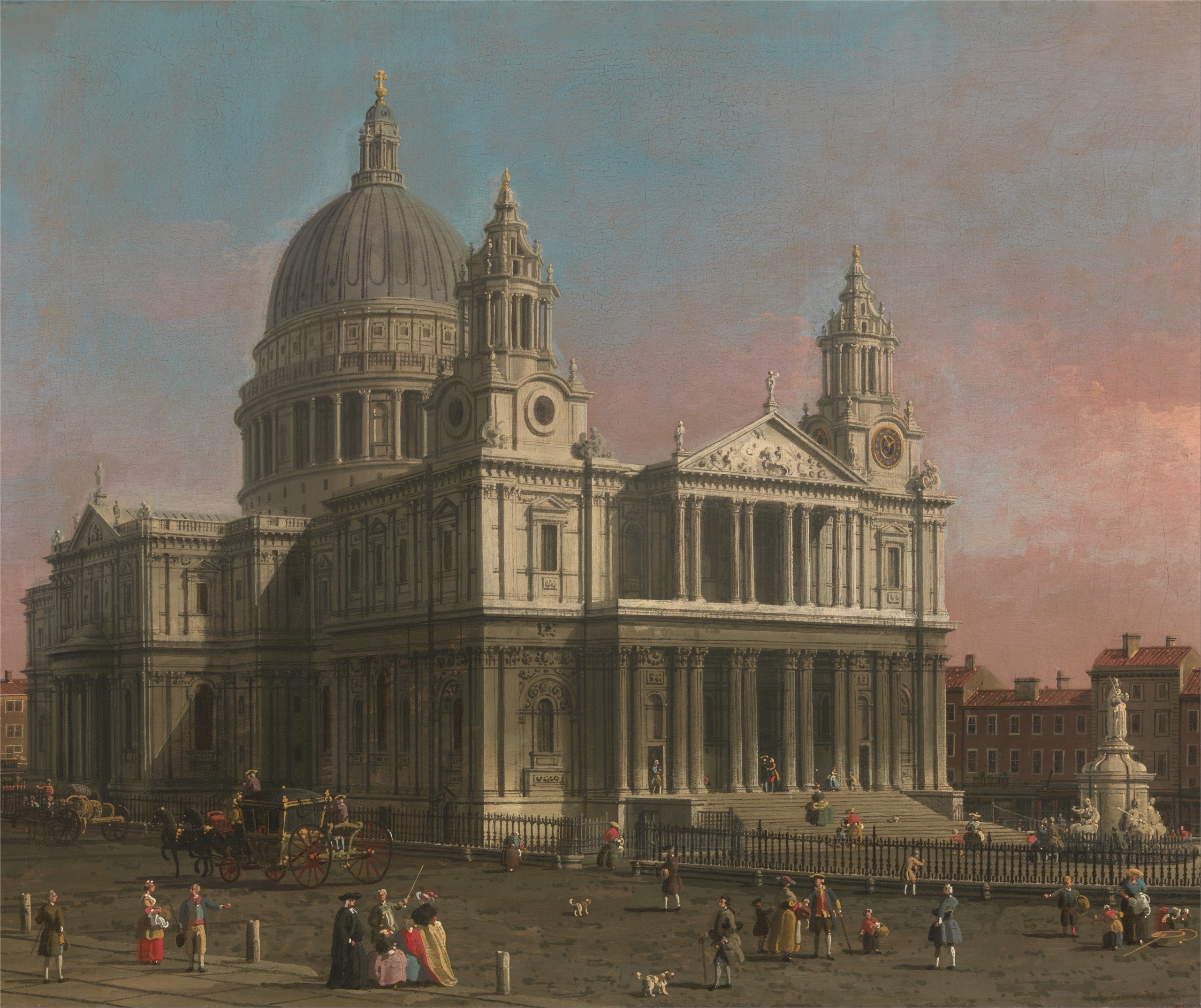
The choir began with Quem Pastores Laudavere—“Whom the shepherds praised”—its familiar melody and Latin verses carrying me back to childhood lessons, when I first puzzled over declensions and the like. Corelli’s Christmas Concerto followed, the violins weaving gentle strains, and its final Pastorale calling to mind shepherds’ voices drifting across a hillside. Then came two new hymns, each fresh with invention. As a writer myself, I admired how these composers boldly wove the familiar into the new: proof that invention need not forsake tradition, rather it may refresh it.
Finally came a Gloria by the Venetian Vivaldi—a surprise, for he is known here mostly for his lively concertos rather than for choral music. The opening burst of sound, joyful and commanding, seemed to startle the congregation, yet it soon gave way to passages of tender beauty and reflection. Combining splendor and devotion, it was a fine and spirited conclusion to the program. Some near us muttered that it was too showy for the season, but I could not agree.
“I think the Almighty can bear an occasional trumpet,” I whispered, motioning toward the disapprovers. Miss Robinson smiled and murmured, “It’s enough to make the angels dance.” Mrs. Ellison hushed us good-naturedly, though her own eyes were bright with delight.
As we emerged from the cathedral, I felt renewed and uplifted, my habitual solitude woven into a greater chorus. Outside, the linkboys were shouting for hire, their torches hissing in the night air. Mrs. Ellison was eager to find our carriage, fretting over her hem in the damp, while Miss Robinson and I lingered at the doors a moment, laughing softly at the confusion of cloaks and carriages and promising to meet again before the season’s end.
Later, by candlelight, I turned to my verses. Miss Robinson insists I share more of them—she has greater faith in my works than I do. Yet tonight, my head hums with a new idea, and I find myself reaching for paper. Perhaps it is only the echo of the choir still ringing in my ear, but the lines come quickly, bright and insistent.
Learn more about the Elizabeth Carter Diaries project.
View the next diary entry—Part 3: Baroque Garlands (1744, age 27)—or read the first diary entry here: Part 1 – Fury and Heartbreak (1735, age 17)
Historical Note
This diary entry imagines 22-year-old Elizabeth Carter attending a Christmastide concert at St Paul’s Cathedral with her (fictional) cousin Mrs. Ellison and her real-life friend Elizabeth Robinson during what was to become one of the coldest winters on record. Between Christmas Eve 1739 and February 1740, The Thames froze solid from London Bridge to Westminster, halting river traffic and prompting the spontaneous creation of a “Frost Fair” on the ice. Stalls, printers, food vendors, and entertainers set up directly on the frozen river, while Londoners skated, danced, and purchased printed souvenirs made “on the Thames.”
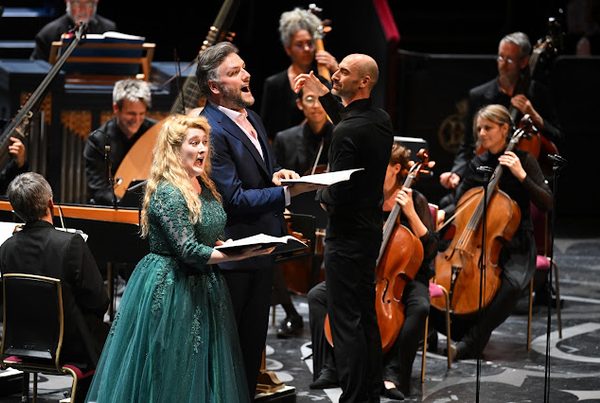
Christmas music in 18th-century London combined tradition and innovation. Corelli’s Christmas Concerto, composed in the 1690s and published in 1714, was already an established holiday favorite. Audiences were accustomed to hearing fresh works alongside familiar ones, in the same way that Philharmonia’s Gloria concerts pair Baroque classics with new works by Caroline Shaw and Roderick Williams.
Vivaldi’s Gloria (RV 589) was composed around 1715–16 for the Ospedale della Pietà (“Hospital of Mercy”) in Venice, however it was only rediscovered in 1926 and first performed in modern times in 1939. Its inclusion here is imaginative, evoking the kind of Venetian choral brilliance that was admired in London in Carter’s time.
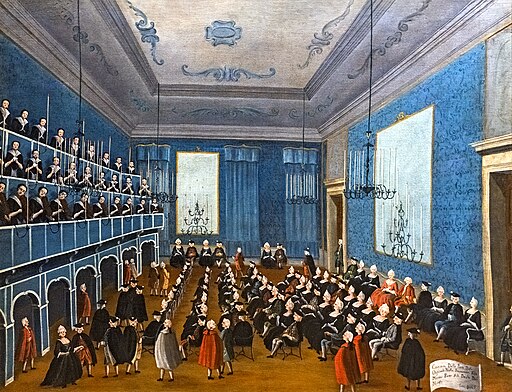
The Pietà itself is noteworthy. Originally a charitable institution for abandoned and orphaned girls, it became a center where musical training offered both livelihood and independence. Under Vivaldi’s direction, its ensembles grew so accomplished that their performances drew donors and foreign visitors, earning the Pietà a reputation as one of Europe’s premier musical establishments. In a society offering women few public roles, it was a rare source of opportunity for talent and ambition.
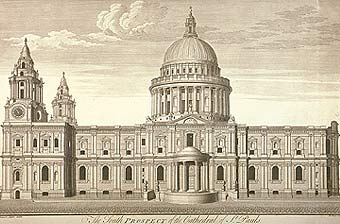
St Paul’s Cathedral, designed by Sir Christopher Wren and completed in 1710 after 35 years of construction, rose from the ashes of the Great Fire of 1666. Its grand dome dominated the London skyline and served as a monument and spiritual landmark where Londoners of every class congregated. The stone interior creates a powerful natural resonance that can muddy words but which amplifies the sound of choirs and instruments. High within the dome is the Whispering Gallery, a circular walkway above the cathedral floor that is famous for its acoustics: a whisper against its curved wall can be heard clearly on the opposite side over a hundred feet away.
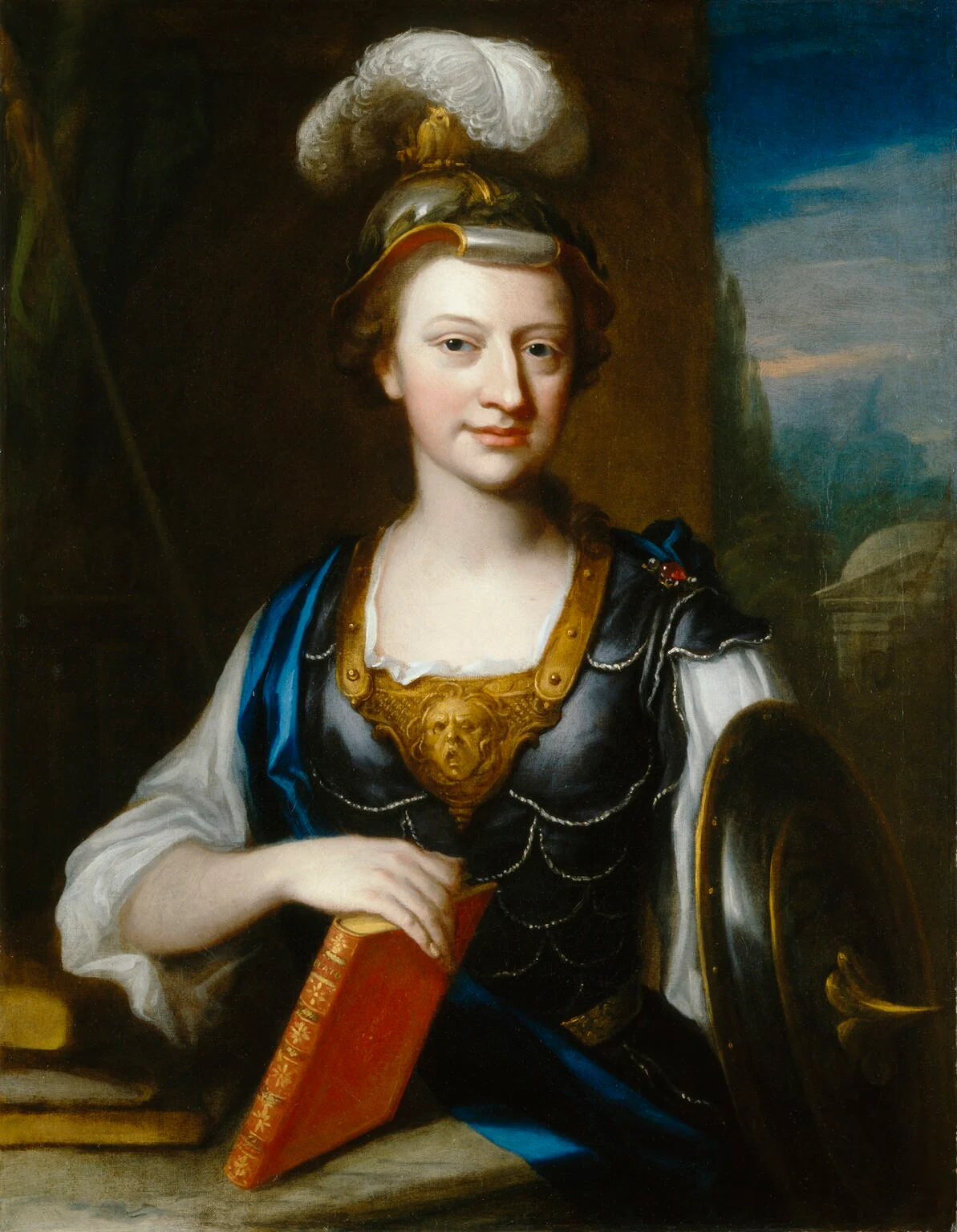
Elizabeth Carter (1717–1806)
By 1739, Elizabeth Carter was firmly established in London, having moved there around 1737. Her early poetic contributions to The Gentleman’s Magazine were so well received that editor Edward Cave invited her to join the journal’s circle of contributors. Among those admitted in the same year was Samuel Johnson (1709–84), who later became one of England’s greatest essayists and lexicographers, and with whom Carter formed a lifelong friendship.
Carter’s literary activities quickly expanded around this time: she edited a volume of her father’s sermons, published two collections of her own poetry, and translated works by Jean-Pierre de Crousaz and Francesco Algarotti. These projects earned her recognition as a serious young intellectual in London’s literary world.
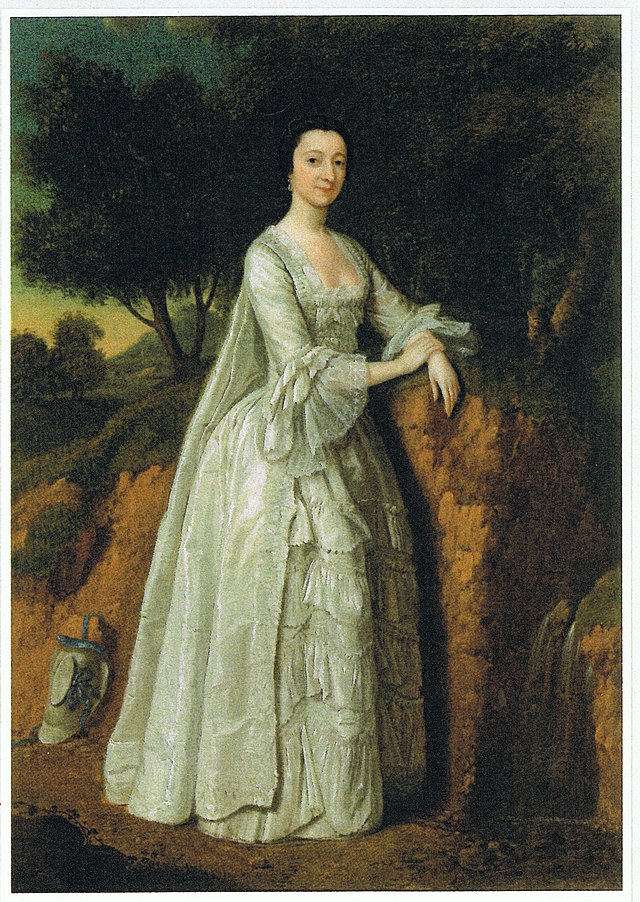
Elizabeth Robinson (1718–1800) likely knew of and admired Carter at this time, however the two women would not meet until 1756. Robinson’s early letters reveal a pragmatic view of marriage as a social contract rather than a romantic ideal — a sensibility Carter seemed to share, even as the two women were barely in their twenties. In 1742, three years after the fictional meeting described in this diary entry, Robinson would marry a wealthy coal magnate nearly thirty years her senior. As Elizabeth Montagu, she became the celebrated hostess of the Blue Stocking Society, where some of the era’s leading thinkers and writers gathered. Carter’s friendship with Montagu would link her to this influential network of educated women, whose conversation and correspondence helped shape the moral and intellectual debates of the time.
Celebrate the holidays with Valérie Sainte-Agathe and Philharmonia Baroque Orchestra & Chorale. Vivaldi’s Gloria—a joyful choral masterpiece—shines with new brilliance when performed on period instruments, transporting you to the festive sound world of 18th-century Venice.
- Friday, December 5, 2025 – 7:30 PM | Herbst Theatre, San Francisco
- Saturday, December 6, 2025 – 2:30 PM | First Congregational Church, Berkeley
- Sunday, December 7, 2025 – 2:30 PM | Bing Concert Hall, Stanford
Tickets: From $40 | $20 tickets available for Under-30s in SF & Berkeley only. Save more with a subscription—as low as $84 for 3 concerts. Get tickets online or call the Box Office at (415) 295 2111.

This project was conceived and developed by Theresa Madeira, Marketing Director of Philharmonia Baroque, drawing on her academic background in history (BA, Oxford University), her passion for storytelling and classical music, and her professional commitment to sharing what makes Philharmonia unique.
By performing on period instruments with attention to historical style, Philharmonia brings audiences as close as possible to hearing the music as its first listeners did. The Elizabeth Carter Diaries series aims to provide another point of access to that experience, inviting readers to step into the world of the 18th century and imagine hearing the music in its original context.
Learn more about the Elizabeth Carter Diaries project.
View the next diary entry—Part 3: Baroque Garlands (1744, age 27)—or read the first diary entry here: Part 1 – Fury and Heartbreak (1735, age 17)