
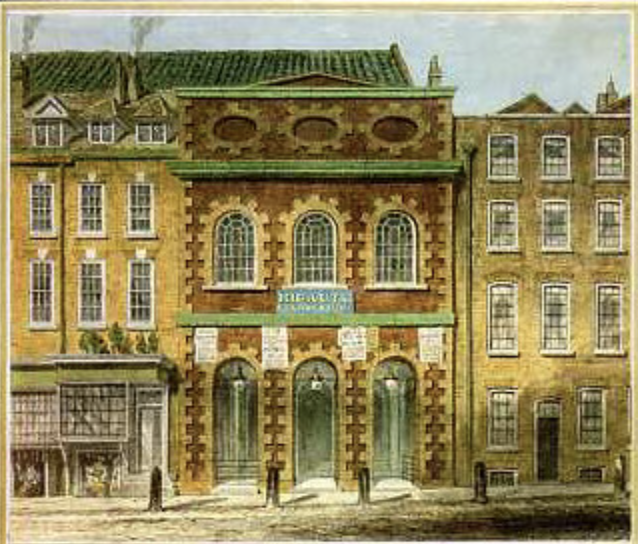
The King’s Theatre in Haymarket, London — May 18, 1803
I divide my time now between Deal and London, and I do not come up to town without reason. The journey grows no shorter, and the city no quieter. The streets are more crowded than I remember, the movement of carriages and people more constant, and the business of the town more visible at every turn. Conversation, too, is more animated, and not always at ease, turning readily to events abroad and the unsettled state of the continent. The American states are frequently invoked in such discussions, spoken of as places where new forms of liberty have been attempted, though not without their contradictions.
Yet when word reached me of a new symphony to be heard at the King’s Theatre—music arriving from Vienna, and spoken of with some curiosity—I resolved to be present. I wore my mother’s pearls, as I have done on such occasions for many years, and was glad of the company of my two nieces, taking pleasure in observing how they attend to the music and the occasion, each in their own way.
I have attended concerts at the King’s Theatre since my youth, and though much has changed, its purpose still feels familiar. The program brought together music by C. P. E. Bach, Mozart, Mendelssohn, and Beethoven—works that differ noticeably from the music I first knew. Where earlier music often proceeds with steady motion, these pieces turn more abruptly, with shifts in mood and gesture that reward closer attention.
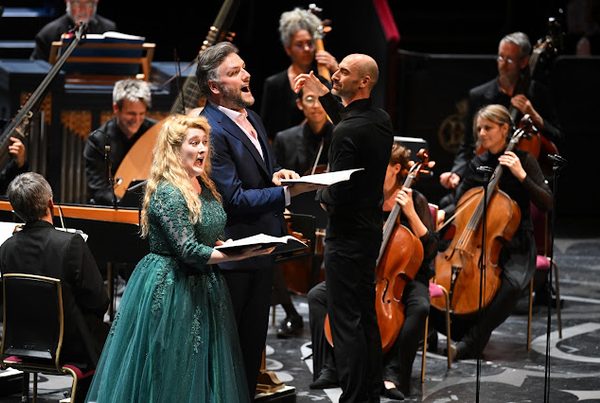
It was in this setting that the orchestra struck the opening chords of Beethoven, a composer newly heard in London. The music moved forward with confidence, neither decorative nor indulgent, and not everyone approved. A lady near us declared with some force that it could not compare with the music of her youth. I held my peace. I have lived long enough to distrust immediate judgments, whether warmly in favor or sharply opposed. Time is the more reliable arbiter.
As the symphony unfolded, I found myself reflecting on the music I have known: the Italian cantatas of my early years, the sacred works of Handel and Vivaldi, and the refinement of Rameau and Mozart. Each has given me something to carry, and now this new voice enters alongside them. One need not claim authority over what is new in order to listen to it seriously.
When the final chords sounded, applause filled the hall, and I joined with gladness. Even after so many years, music continues to surprise me, to quicken my spirit, and to affirm what I have always believed: that learning, listening, and feeling are steadfast companions for life.
Historical Note
By 1803, the King’s Theatre in the Haymarket was one of London’s principal concert venues, presenting Italian opera alongside orchestra programs that brought together performers and repertory from across Europe. The original theatre burned down in 1789 and was rebuilt on the same site, reopening in 1791.
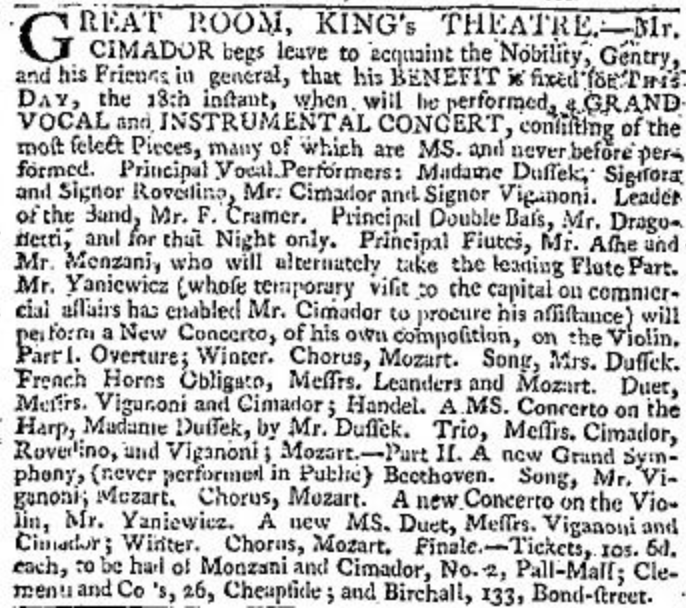
Ludwig van Beethoven’s Symphony No. 1 in C major, Op. 21 received its first documented London performance at the King’s Theatre on 18 May 1803, three years after its premiere in Vienna. By the turn of the 19th century, symphonies were gaining popularity in London, shaped especially by the music of Joseph Haydn and Wolfgang Amadeus Mozart. The four-movement structure and overall design of Beethoven’s Symphony No. 1 would have been familiar to audiences, but its sound was bolder and more direct than earlier symphonies, starting from the very first chord.
For audiences accustomed to the works of George Frideric Handel and the Baroque repertoire long familiar in London, the music heard in Philharmonia’s season finale, Kinks and Quirks, would have marked a shift. While Baroque music uses extended melodic lines and steady rhythmic patterns, later 18th-century composers favored contrast and interruption. In the music of Carl Philipp Emanuel Bach, phrases break off, accents arrive unexpectedly, and moods change quickly. This approach also shaped the music of Mozart, Beethoven, and the young Felix Mendelssohn. The program looks beyond Carter’s lifetime through the inclusion of an 1822 violin concerto by Mendelssohn, written when he was just thirteen.
The world in which this music was heard had changed profoundly since Carter’s youth. The American Revolution (1775–83) and the French Revolution (1789–99), followed by Napoleon’s rise to power in 1799, reshaped political life across Europe and intensified debates about authority, rights, and social order. In Britain, these changes were accompanied by reform movements, the expansion of public discourse, and growing awareness of the injustices of the transatlantic slave trade. Intellectual circles such as the Blue Stockings, influential in Carter’s middle years, came to be viewed by some as unfashionable or politically suspect.
The music of this time was shaped by the same political, social, and economic forces that influenced public life more broadly. Kinks and Quirks reflects a period of transition, as new musical approaches emerged alongside familiar ones.
Elizabeth Carter (1717–1806)
Elizabeth Carter was one of the most respected intellectual figures of 18th-century Britain. A scholar, poet, and translator, she was widely admired for her learning, discipline, and independence at a time when women were excluded from universities and formal education.
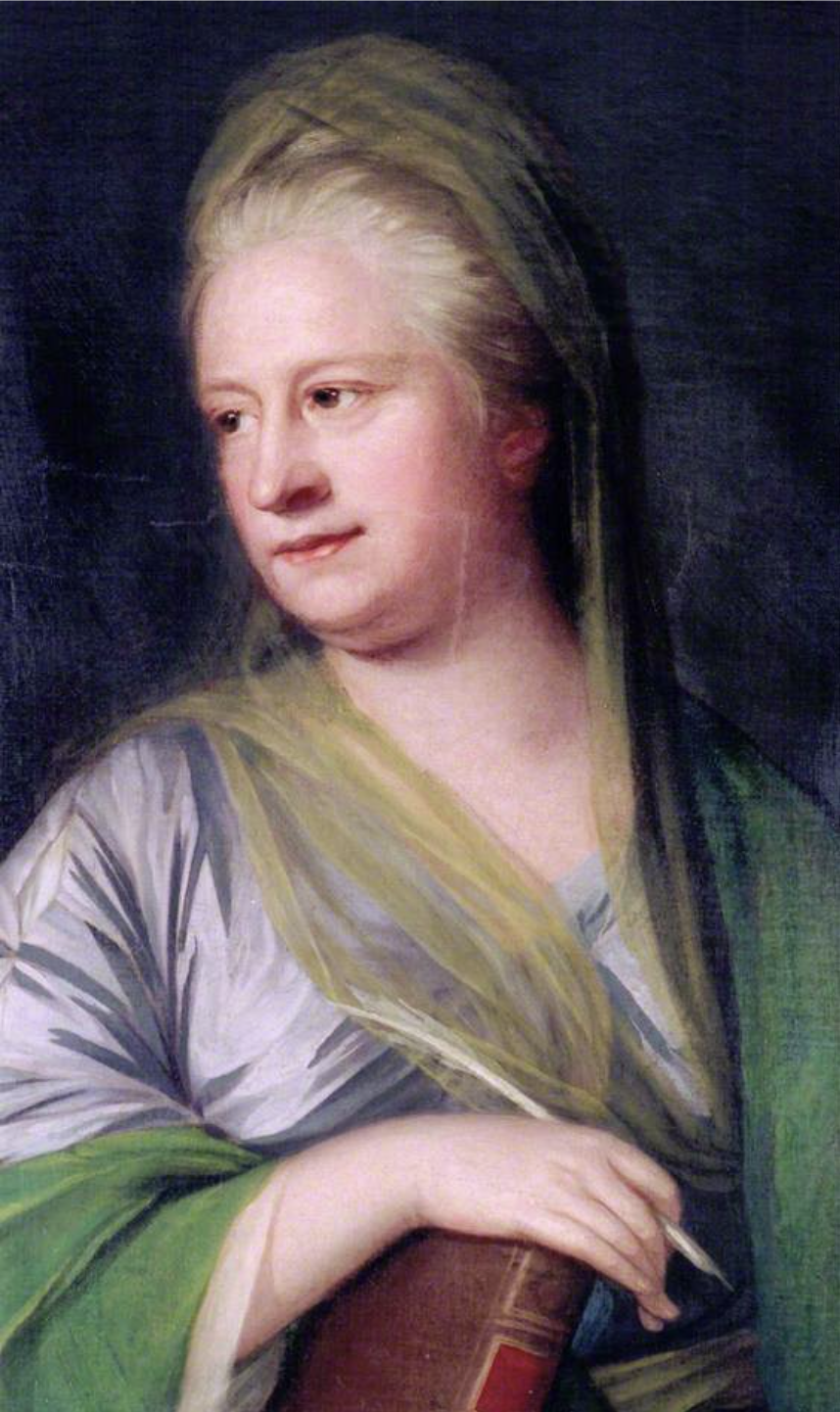
In 1758, she published her English translation of the Discourses of Epictetus, the Stoic philosopher born into slavery. The book was widely read and introduced generations of English readers to Stoic philosophy, with its emphasis on reason, moral responsibility, and human dignity.
Carter supported herself through her writing and translations, supplemented by stipends and patronage from influential friends. She had opportunities to marry but chose to remain single, maintaining control over her intellectual and personal life. She was a central member of the group later known as the Blue Stockings, who gathered for conversation, reading, and music, often at the home of Elizabeth Montagu.
Carter’s contemporaries included some of the most well-known writers in English literature, including Samuel Johnson (1709–1784), Fanny Burney (1752–1840), and Jane Austen (1775–1817). Unlike these figures, Carter did not write novels or large-scale works that remained in wide circulation, rather her reputation rested primarily on translation, scholarship, and correspondence. As a result, she is less widely known today, despite her considerable influence in her own time.
Her long life spanned the era of Handel through to the arrival of Beethoven. She remained active in reading, writing, and correspondence throughout, and continued to participate in the cultural life around her. Her sustained curiosity and attention make her a fitting guide to the music in Philharmonia Baroque’s 2025/26 season, which traces this period of change.
Further Reading
You can learn more about Elizabeth Carter’s world and the lives of Elizabeth Montagu, Catherine Talbot and others in Susannah Gibson’s The Bluestockings: A History of the First Women’s Movement. The book traces the different paths these women took through friendship, scholarship, patronage, and public life. Through their letters, gatherings, and daily routines, the book shows how each shaped a life of the mind on her own terms—sometimes in harmony, sometimes in tension with the expectations around them.
You can also read Francesca Wade’s excellent New York Times review of the book, which gives further context for these remarkable women.
Comments or Questions?
Whether you read one of Elizabeth Carter’s fictional diary entries or you read them all, we’d love to know what you thought. Please email your comments and suggestions to [email protected].
Philharmonia Baroque’s season finale, Kinks and Quirks, pairs Beethoven’s First Symphony with works by C.P.E. Bach, Mozart, and Mendelssohn—full of unexpected “kinks and quirks.” Performed on period instruments, the program includes Mendelssohn’s youthful Violin Concerto and C.P.E. Bach’s surprising Symphony in F major, led by audience favorite violinist Shunske Sato.
Concert Dates
Thursday, April 23, 2026 – 7:30 PM | Herbst Theatre, San Francisco
Friday, April 24, 2026 – 7:30 PM | First United Methodist Church, Palo Alto
Saturday, April 25, 2026 – 2:30 PM | First Congregational Church, Berkeley
Tickets: $40 to $125, and $20 tickets available for Under 30s. Details and tickets at philharmonia.org or call the Box Office at (415) 295-1900.

This project was conceived and developed by Theresa Madeira, Marketing Director of Philharmonia Baroque, drawing on her academic background in history (BA, Oxford University), her passion for storytelling and classical music, and her professional commitment to sharing what makes Philharmonia unique.
By performing on period instruments with attention to historical style, Philharmonia brings audiences as close as possible to hearing the music as its first listeners did. The Elizabeth Carter Diaries series aims to provide another point of access to that experience, inviting readers to step into the world of the 18th century and imagine hearing the music in its original context.
Learn more about the Elizabeth Carter Diaries project.
You can read the other diary entries here:
Part 1 – Fury and Heartbreak (1735, age 17)
Part 2 – Gloria (1739, age 22)