
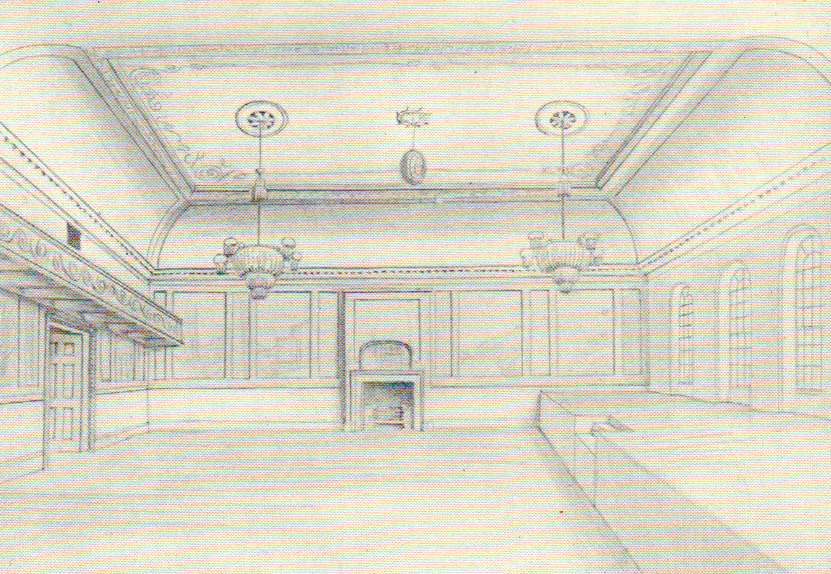
Hickford’s Long Room, London — February 1744
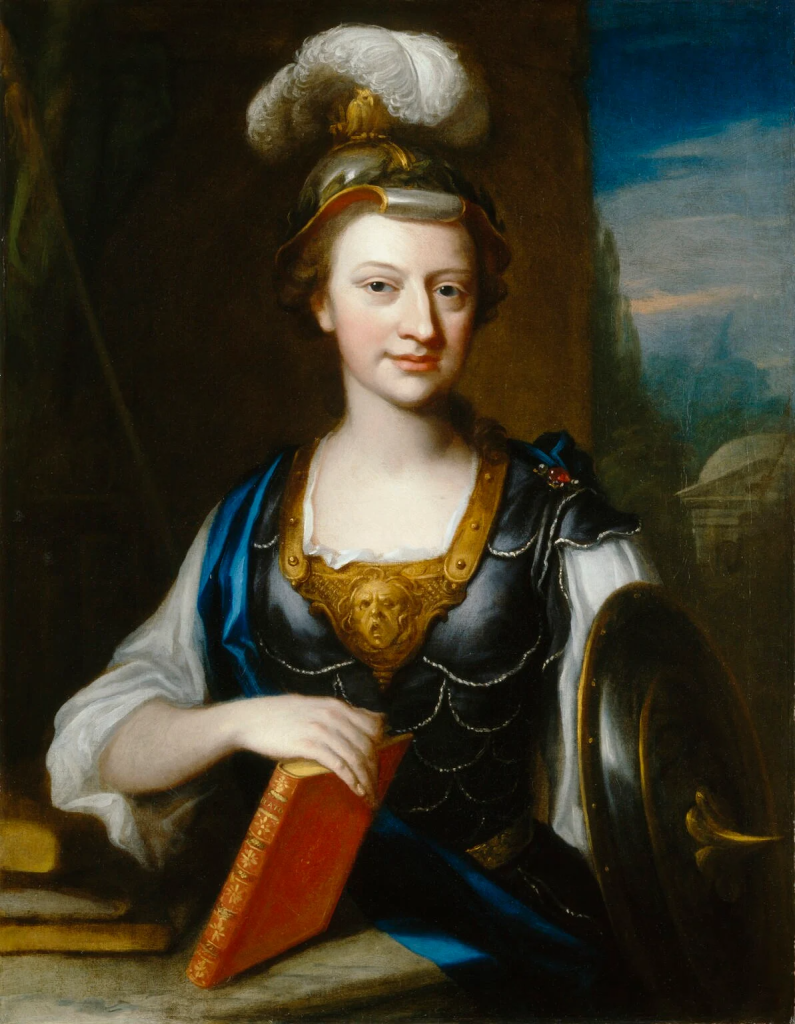
The evening was fair, with a hint of the coming spring in the air. I wore my pale green silk—last year’s gown freshened with a little new lace at the cuffs—and my mother’s pearls. At seven-and-twenty, I no longer occupy that brief moment when youth and fashion alone command attention, however I have long found more amusement in lively conversation than in gowns.
Miss Talbot, who is much in London this season, urged me to attend tonight’s concert at Hickford’s Rooms in Brewer Street, promising the contrast of Handel and Rameau would be worth the walk. She was right. The hall was bustling with carriages outside and chatter within: ladies fanning themselves, gentlemen bowing, and acquaintances exchanging remarks half to one another and half to the room.
Before the music began, a barrister was introduced to me, full of earnest discourse on his profession, as though I had asked for instruction in the law. Miss Talbot rescued me with a well-placed question about my verses, which seemed to startle him; the notion of a lady publishing was entirely foreign to him. I confess I laughed. My writings earn little profit, but friends copy them into albums, and from time to time an editor will include a piece. It pleases me that my words may travel beyond the walls of my chamber.
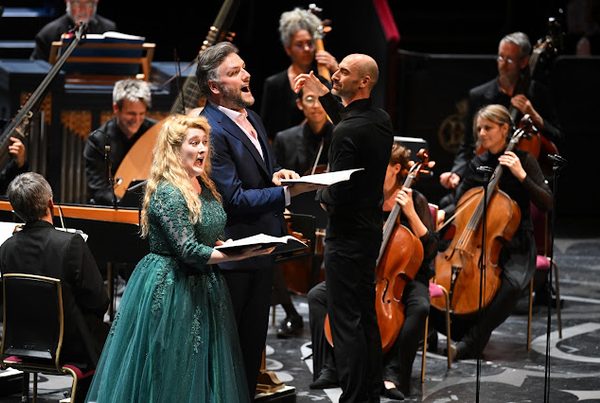
We made our excuses and found our seats as the choristers took their places and the orchestra tuned. The harpsichordist glanced along the massed ranks of players and singers, and with a small motion of his head, the music began.
Handel’s Dixit Dominus burst forth with a startling energy that recalled the force of Vivaldi’s Gloria I had heard at St Paul’s one Christmastide past. The choir’s surging lines and the orchestra’s fire lifted the room as though a cathedral had been raised in sound. Dixit Dominus Domino meo—“The Lord said unto my Lord”—begins a psalm that uses the language of power, authority, and judgment, and Handel sets it accordingly. One hears Handel everywhere in London now, and some pretend to be weary of him; yet this bold early work, written when he himself was scarcely two-and-twenty, left no room for such foolish complaints.
Then Rameau’s La Guirlande danced into the air, light and witty, the soloists’ lines leaping and intertwining with the ensemble with effortless agility. Opening with the hero Myrtil’s plaintive plea, “Peut-on être à la fois si tendre et si volage?”—How can one be so tender and so fickle at once?—I reflected on how this question seems to be discussed as often in drawing-rooms as on the stage. Rameau sets it with such elegance that one almost forgives the behavior it describes. I smiled at a clever turn in the French text, catching Talbot’s eye; she smiled too, while the barrister beside us remained impassive in polite incomprehension.
As the final notes faded and Miss Talbot and I made our way toward the door, I imagined how my friend Dr. Johnson—already known in London for his moral essays and formidable conversation—would have enjoyed the evening, and what he might have made of such a pairing. I resolved to tell him this: that variety is the very soul of delight. Solemn music shines brighter when set beside wit, and wit takes sharper shape when set against solemnity. A garland of many blooms is far stronger and far more appealing than a solitary rose.
Learn more about the Elizabeth Carter Diaries project.
You can read the other diary entries here:
Part 1 – Fury and Heartbreak (1735, age 17)
Part 2 – Gloria (1739, age 22)
Part 4 – Pearls of Sorrow (1759, age 42)
Historical Note
This diary entry imagines 27-year-old Elizabeth Carter attending a subscription concert in the spring of 1744 at Hickford’s Rooms, a popular concert venue on Brewer Street in London’s West End. The venue was an important stop on London’s musical circuit and hosted many distinguished visiting musicians, including Francesco Scarlatti (1719 and 1724), Francesco Geminiani (c. 1732), and, later, a nine-year-old Wolfgang Mozart and his sister Nannerl (1765), who were billed as “Prodigies of Nature”.
By the 1740s, Handel had been a dominant figure in London’s musical life for more than two decades, and his music was everywhere. His Italian operas, once central to the city’s musical fashion, had begun to fall out of favor, prompting him to reinvent himself through English oratorio, which allowed him to keep the drama of opera while leaving behind sets, costumes, and spectacle. By 1744, at the time of this diary entry, Handel had largely regained his standing in London, his reputation renewed by the success of works including Messiah, which he composed and premiered in Ireland in 1742 during a period away from the intense pressures of London life.
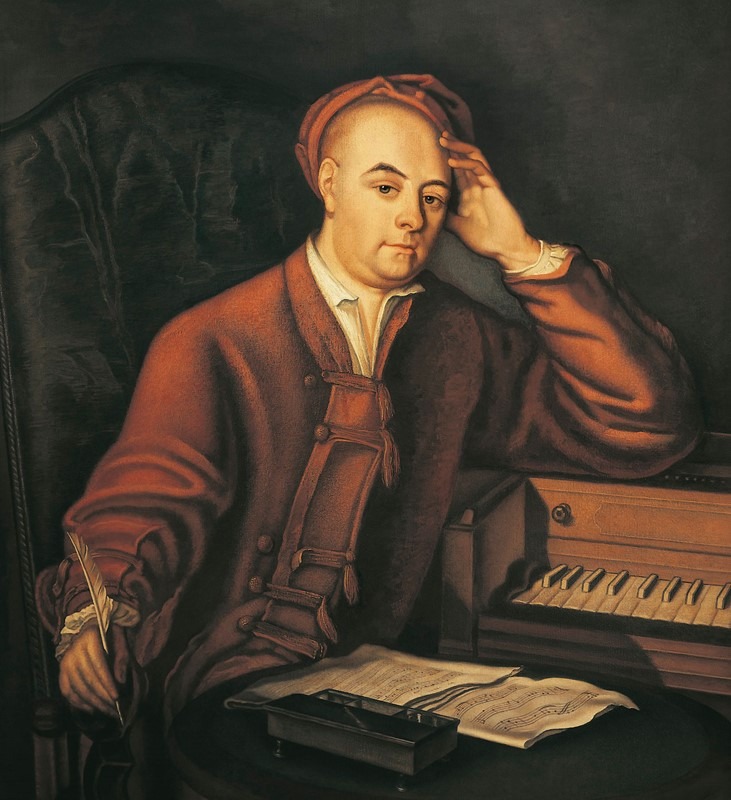
Dixit Dominus, however, belongs to a much earlier moment in Handel’s career. He composed the work in Rome in 1707 at the age of 22, during a period when Italian opera was temporarily prohibited by papal decree. With public opera closed, composers turned to sacred Latin texts capable of satisfying audiences’ appetite for drama, and Handel found such a text in Psalm 110, with its fiery Old Testament themes:
Dixit Dominus Domino meo: sede a dextris meis, donec ponam inimicos tuos scabellum pedum tuorum.
(“The Lord said unto my Lord: Sit thou at my right hand, until I make thine enemies thy footstool.”)
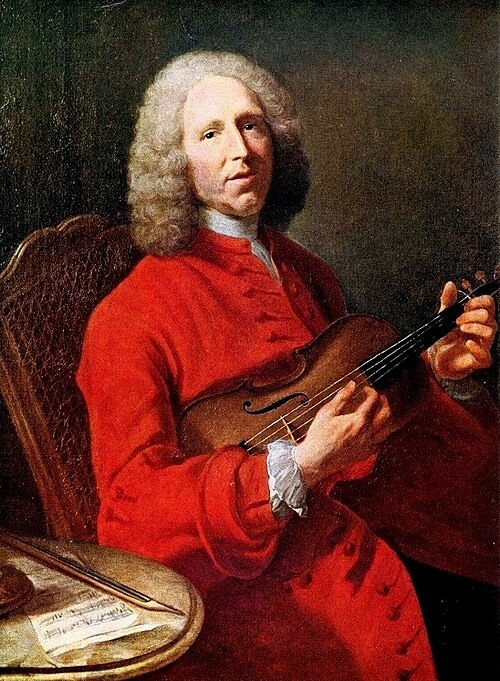
Rameau’s La Guirlande was not premiered until 1751 in Paris, and its appearance in this fictional diary is imaginative. (The version performed by Philharmonia Baroque in February 2026 is drawn from a 1763 revision and is being heard in a new edition for the first time in more than two centuries.) In the 1740s, however, French music would have been widely discussed in London, and excerpts and arrangements would have been circulated. Subscription concerts frequently juxtaposed Italian sacred works with French theatrical music: seriousness with wit, sacred authority with pastoral elegance—the same diversity Elizabeth Carter experiences in this imagined account.
Elizabeth Carter (1717–1806)
By 1744, Elizabeth Carter was firmly embedded in London’s intellectual life. Her poetry and translations had already appeared in print, and her learning—particularly her command of Greek and Latin—was widely admired by leading literary figures of the day, including the essayist and critic Samuel Johnson. Though her literary work brought little financial security at this stage, Carter was steadily establishing a public intellectual presence through periodicals, correspondence, and translation.
Around this time, Carter formed a close friendship with Catherine Talbot (1721–1770), whom she met in 1741 through a shared tutor in astronomy. Talbot’s circumstances differed markedly from Carter’s. Talbot’s clergyman father had died before she was born, and she and her mother were taken in by the Benson family, becoming part of the household of Catherine Benson and Thomas Secker, who would later become Archbishop of Canterbury, the highest office in the Church of England. Secker took a strong interest in Talbot’s education and guided her studies, giving her access to learning, books, and conversation within some of the most influential clerical and intellectual circles of the time.
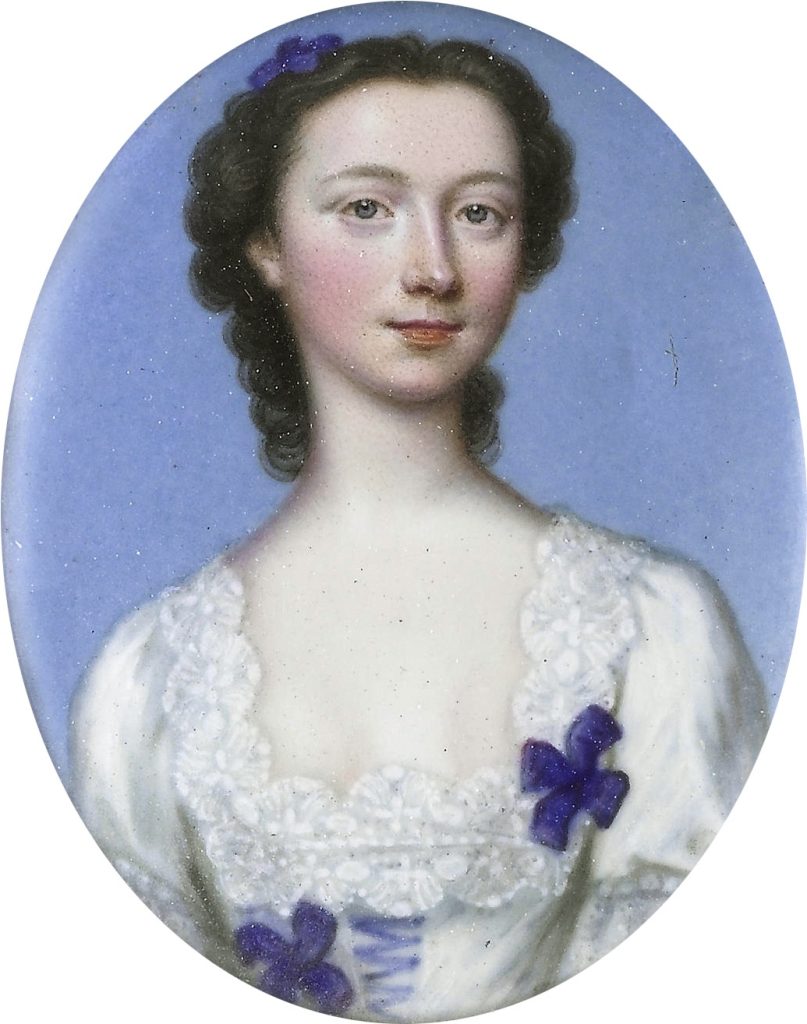
Talbot was thoughtful, devout, and intellectually ambitious, however her position within a clerical household—and her unmarried status—steered her toward a quieter path. Her writing circulated privately in letters and manuscript rather than in print. Carter’s trajectory was different as she consistently tested her ideas in public, putting her work into the world through periodicals and her expanding network of writers and thinkers.
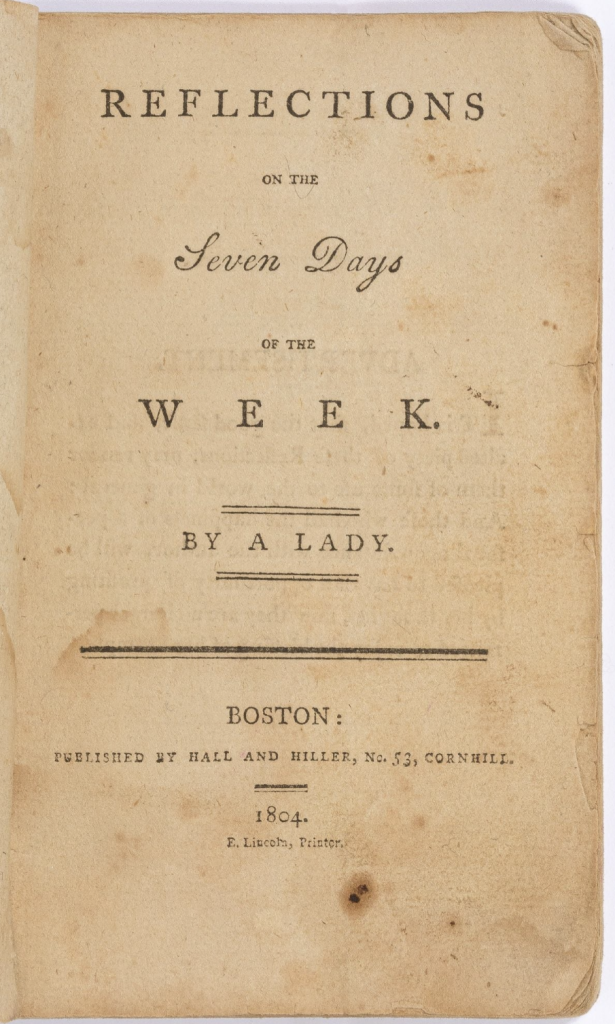
After Talbot’s death in 1770, it was Elizabeth Carter who edited and published her writings, ensuring that Talbot’s voice would be heard more broadly. The act reflects Carter’s role within her circle not only as a thinker, but as a steward—attentive to how women’s work might survive, circulate, and matter. That sense of responsibility, already evident in her friendships, would soon find fuller expression in Carter’s own major scholarly achievements.
Reflections on the Seven Days of the Week contained Talbot’s musings on religious and moral topics. Published posthumously by Carter in 1770, the book was constantly reprinted, giving Talbot the voice and audience she never had during her lifetime.
Hear Handel’s powerful Dixit Dominus paired with Rameau’s La Guirlande—French dance rhythms, operatic arias, and a lighthearted tale of romance nearly undone by a bewitched garland—in Baroque Garlands. One of the world’s foremost interpreters of 18th-century repertoire, Philharmonia’s longtime former Music Director Nicholas McGegan returns to conduct from the harpsichord. Performed on period instruments and with Philharmonia’s acclaimed Chorale, you’ll hear the music just as its first audiences did.
- Friday, February 6, 2026 – 7:30 PM | Herbst Theatre, San Francisco
- Saturday, February 7, 2026 – 2:30 PM | First Congregational Church, Berkeley
- Sunday, February 8, 2026 – 1:00 PM | Bing Concert Hall, Stanford
Tickets: $40 to $135 | $20 tickets available for Under 30s in SF & Berkeley. Save more with a subscription—as low as $84 for 3 concerts. Get tickets online or call the Box Office at (415) 295 2111.

This project was conceived and developed by Theresa Madeira, Marketing Director of Philharmonia Baroque, drawing on her academic background in history (BA, Oxford University), her passion for storytelling and classical music, and her professional commitment to sharing what makes Philharmonia unique.
By performing on period instruments with attention to historical style, Philharmonia brings audiences as close as possible to hearing the music as its first listeners did. The Elizabeth Carter Diaries series aims to provide another point of access to that experience, inviting readers to step into the world of the 18th century and imagine hearing the music in its original context.
Learn more about the Elizabeth Carter Diaries project.
You can read the other diary entries here:
Part 1 – Fury and Heartbreak (1735, age 17)
Part 2 – Gloria (1739, age 22)
Part 4 – Pearls of Sorrow (1759, age 42)