
At the Home of Elizabeth Montagu in Mayfair, London – March 1759

The air tonight was cool, the streets shining after a brief rain. I walked with Miss Talbot toward Mrs. Montagu’s house in Hill Street, where she had invited a small company for an evening of music and conversation. Such assemblies have become something more than diversion; they are an opportunity to place serious works before attentive minds, and to observe what questions are provoked.
As we walked, we debated—civilly, but with conviction—whether reason alone is enough to change the world, or whether feeling must be stirred before the mind will act. Miss Talbot was inclined toward sympathy as the necessary beginning, while I maintained that sympathy without principle may move us deeply and yet change nothing. We did not speak of gowns or suitors. We rarely do. At forty-two, I am long past the need for a chaperone, and I value instead the company of women resolved to think seriously.
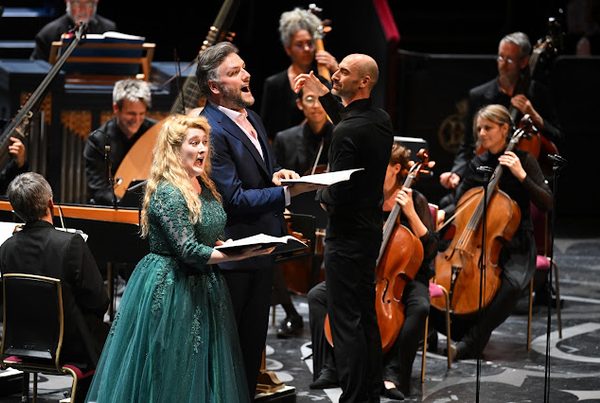
Mrs. Montagu received us warmly, the room already prepared, the candles lit, the company settled into attentive quiet. Though titled Pearls of Sorrow, she explained that the evening was intended not as an indulgence in grief, but as a progression—beginning in sadness and suffering, and moving steadily toward endurance, consolation, and the promise of freedom.
The music began simply and without display. In the works of Schütz, Buxtehude, and Bach, hardship was acknowledged with seriousness but also with control. The solo line of the countertenor unfolded with purpose, shaping distress into something that could be followed, understood, and ultimately borne. Next came songs unlike any I had known. Plain and unadorned, they belonged not to the traditions of Europe, conveying not private sorrow, but suffering borne collectively across time.
I found myself moved in a way that philosophy alone has never achieved.

In translating the writings of Epictetus—the Stoic philosopher who was himself born into slavery—I have long argued that adversity may refine the individual mind. But the music I heard that evening forced me to distinguish between hardship endured and suffering imposed. These songs spoke not of trials met by choice or chance, but of sorrow rooted in injustice, and of endurance demanded where liberty had been denied.
As the program drew to a close, Miss Talbot returned to our earlier dispute. You see, she said, feeling has carried the day. I answered that perhaps it had set the question before us. Feeling may draw our attention, however reason must dictate what is required of us once we have looked.
I left Hill Street steadied. The evening had yielded its pearl: moral clarity, and a sense of responsibility that cannot be set aside.
Historical Note
The German Baroque works heard in this program—by Schütz, Bach, Buxtehude, and their contemporaries—belong to a Lutheran tradition in which music gives voice to hardship and affliction, guiding listeners toward endurance and solace. By the mid-18th century, such works were increasingly heard outside their original church settings, in private London assemblies and salons where sacred music was treated as a subject for moral and intellectual reflection.
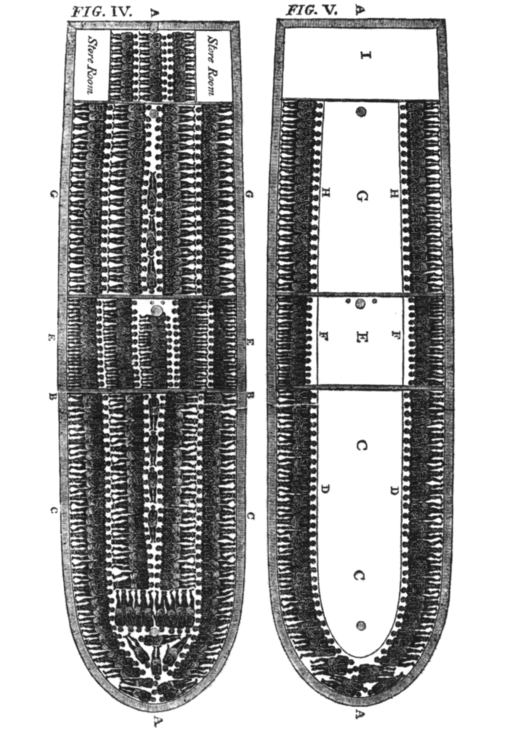
African American spirituals emerged from enslaved and formerly enslaved communities in the United States under the brutality of plantation slavery. Heard alongside the Baroque laments, these songs extend the program’s trajectory beyond individual suffering toward collective endurance, resilience, and the shared human longing for freedom.
In 1759, the transatlantic slave trade was at its height. Britain was a central participant, with British ships transporting tens of thousands of enslaved Africans each year to the Americas and the Caribbean. Enslaved labor underpinned much of the Atlantic economy, including sugar, tobacco, and cotton production. While organized abolitionist movements would not take shape until much later in the century, the moral contradictions between Enlightenment ideals of reason, liberty, and human dignity and the realities of slavery were becoming increasingly difficult to ignore.
Placed in this historical context, the music in Pearls of Sorrow reflects a world shaped by struggle and inequality, even as music and philosophy offered ways to confront hardship and imagine freedom beyond it.
Elizabeth Carter (1717–1806)
Elizabeth Carter was one of the most respected intellectual figures of 18th-century Britain. A scholar, poet, and translator, she was renowned for her learning, moral seriousness, and independence at a time when women’s intellectual ambitions were often discouraged.
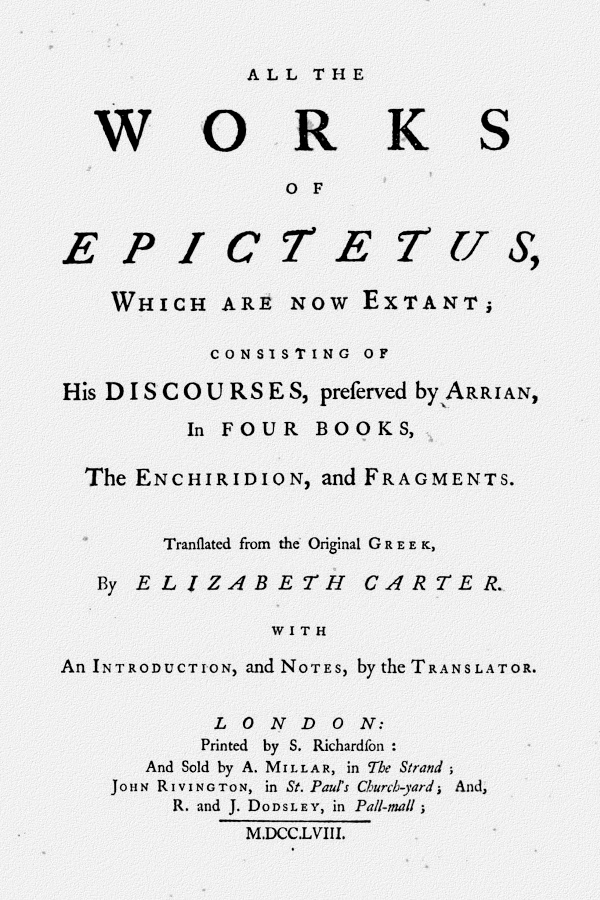
In 1758, the year before this diary entry, Carter published her English translation of the Discourses of Epictetus, the Stoic philosopher born into slavery. The book was widely admired and established her as one of the leading interpreters of ancient philosophy for English readers. Epictetus’s emphasis on reason, moral responsibility, and human dignity deeply shaped Carter’s thinking and her approach to both scholarship and life.
By 1759, Carter was forty-two, unmarried, and financially independent, supporting herself through her writing and translations. She was a regular participant in the circle of educated women and men later known as the Blue Stockings, who gathered—often at the home of Elizabeth Montagu—for conversation, music, and intellectual exchange. These gatherings valued learning and moral inquiry over social display.
In later decades, Carter would lend her voice to the abolitionist movement, becoming a member of the Society for Effecting the Abolition of the Slave Trade. She believed that reason carries moral responsibility, and that human dignity transcends rank, nation, and circumstance—convictions that would have been reinforced by the kind of musical encounter described in this diary entry.
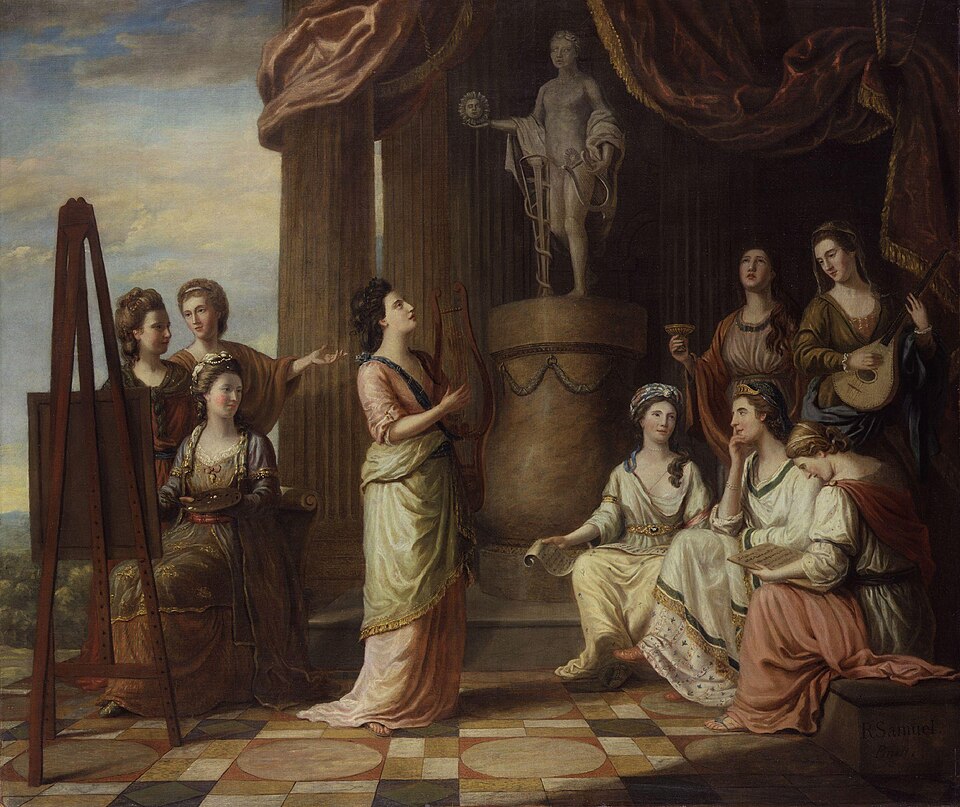
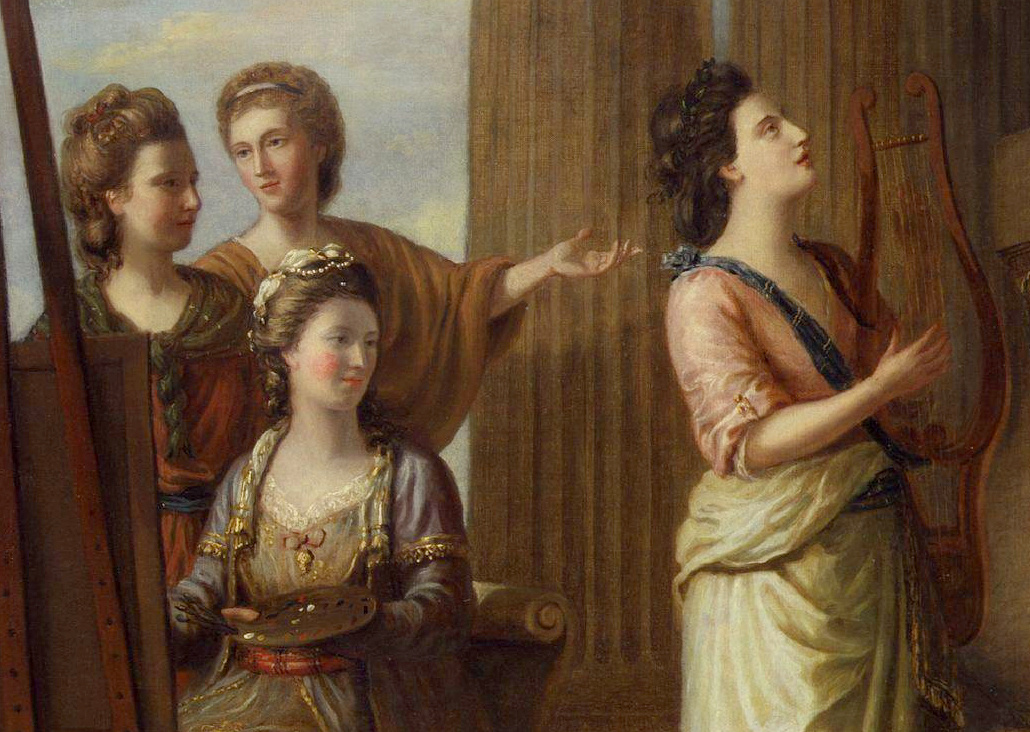
This painting was commissioned and promoted by Elizabeth Montagu and her circle to present contemporary women as the classical Muses, asserting women’s learning, creativity, and moral authority as central to British cultural life. Carter (far left) and Montagu (seated, second from right) appear among the figures.
Out of times of struggle come songs of resilience and hope. Pearls of Sorrow pairs music of reflection and renewal from 17th- and 18th-century Europe with the enduring spirituals born of the African American experience, revealing how, across centuries and continents, music connects us through strength, endurance, and shared humanity.
- Friday, March 13, 2026 – 7:30 PM | Herbst Theatre, San Francisco
- Saturday, March 14, 2026 – 2:30 PM | First Congregational Church, Berkeley
- Sunday, March 15, 2026 – 2:30 PM | Bing Concert Hall, Stanford
Tickets: From $40 | $20 tickets available for Under-30s in SF & Berkeley only. Get tickets online or call the Box Office at (415) 295 2111.

This project was conceived and developed by Theresa Madeira, Marketing Director of Philharmonia Baroque, drawing on her academic background in history (BA, Oxford University), her passion for storytelling and classical music, and her professional commitment to sharing what makes Philharmonia unique.
By performing on period instruments with attention to historical style, Philharmonia brings audiences as close as possible to hearing the music as its first listeners did. The Elizabeth Carter Diaries series aims to provide another point of access to that experience, inviting readers to step into the world of the 18th century and imagine hearing the music in its original context.
Learn more about the Elizabeth Carter Diaries project.
The next diary entry—Part 5: Kinks and Quirks (1744, age 27)—will be published in April. You can read the other diary entries here: Part 1 – Fury and Heartbreak (1735, age 17), Part 2 – Gloria (1739, age 22), and Part 3 – Baroque Garlands (1744, age 27).
You can read the other diary entries here:
Part 1 – Fury and Heartbreak (1735, age 17)
Part 2 – Gloria (1739, age 22)
Part 3 – Baroque Garlands (1744, age 27)